

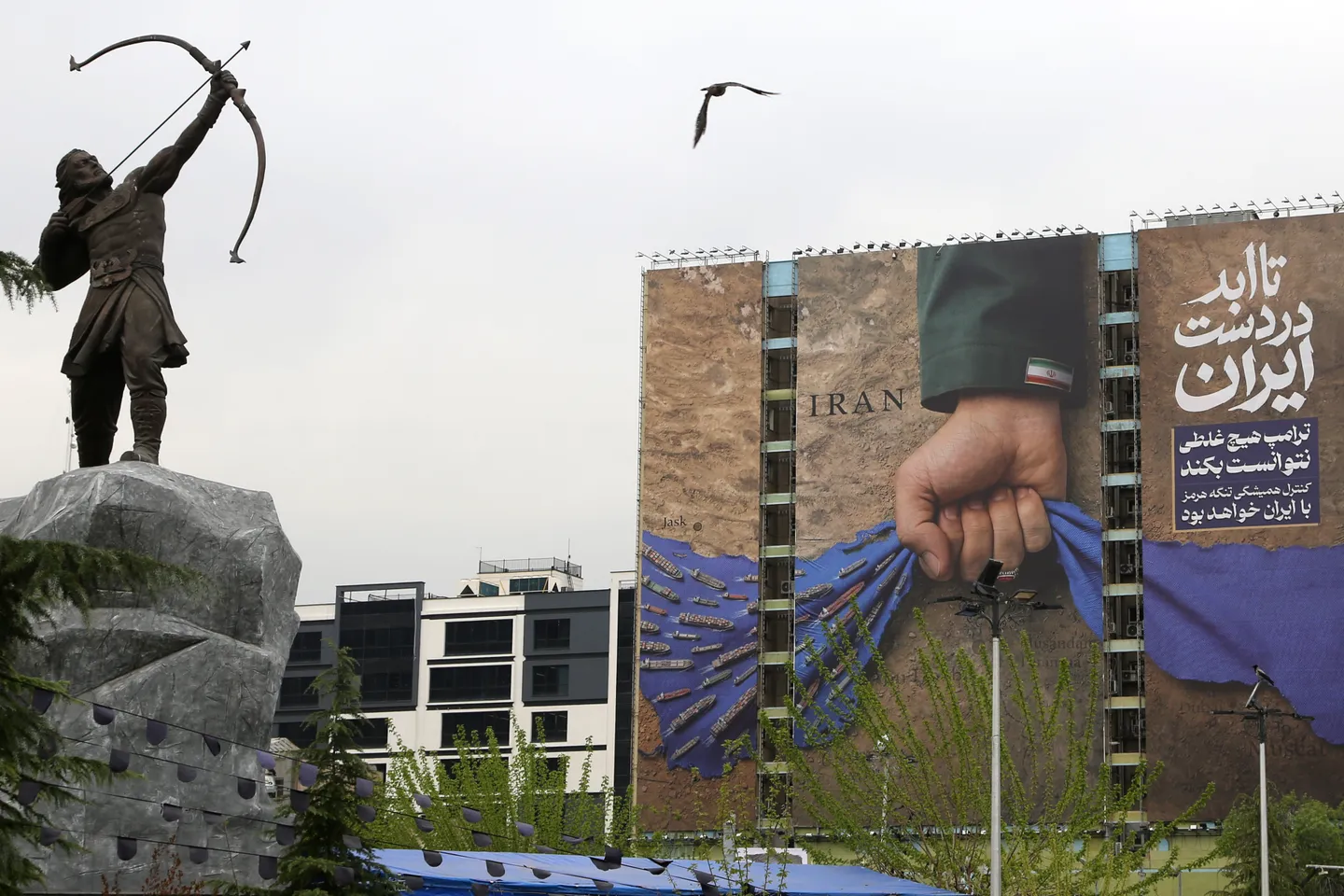
The 60-day ceasefire established under the Iran-US memorandum of understanding concluded on Monday without an extension, sparking concerns that the regional conflict is entering a significantly more volatile phase. As US President Donald Trump maintains his demand for Iran’s total surrender, Tehran has signaled a definitive shift in its strategic doctrine.
Iranian officials have indicated that the country is moving away from a purely defensive posture toward what they describe as a fully offensive approach. This strategy involves potentially expanding operations against US assets and regional allies. An Iranian official recently told Reuters that the nation is prepared to make difficult decisions and take action, warning that Iranian entities must be ready to escalate tensions within the Strait of Hormuz and the broader Middle East.
Mohammed Eslami, a political scientist at the European University Institute, notes that this transition toward an offensive stance is already evident both practically and institutionally. Within the Iranian political system, Supreme Leader Mojtaba Khamenei has appointed several senior military figures to key security positions that had remained vacant since previous conflicts.
Among these appointments is former IRGC commander Mohsen Rezaee, who was named as Khamenei’s representative on the Supreme National Security Council. While some observers view this as a promotion of hardliners, it follows the tenure of Mohammad Bagher Zolghadr, a former IRGC general whom The Economist described as an apparatchik who pushed for increased IRGC influence in response to US and Israeli actions.
The practical application of this shift is already visible, according to Eslami. While Iran has refrained from direct attacks on its own soil over the past week, it has targeted multiple ships in the Persian Gulf and launched several drone operations. This suggests a move toward imposing direct costs on the US and its partners rather than relying solely on traditional deterrence.
Yemeni political analyst Esam Alahmadi, a researcher at Selcuk University, argues that Tehran intends to shift the theater of war from its own territory to the surrounding region, stretching from the Gulf states to Yemen. The primary objective is not necessarily a conventional military victory, but rather to make the economic, political, and military costs of a prolonged conflict unsustainable for Washington.
By dispersing US forces across the Gulf, Iraq, the Red Sea, and Israel, Iran aims to force the Trump administration to prioritize the security of critical maritime corridors. These routes, stretching from Hormuz to Bab el-Mandeb, account for approximately 30 to 35 percent of global maritime traffic. Tehran appears to be betting on a war of attrition, believing that the US lacks the capacity or political will to sustain a long-term engagement.
Financial markets have reacted to these developments, with global stocks declining, government bond yields rising, and oil prices hitting multi-week highs. Analysts warn that this strategy could also include direct strikes on US naval vessels, which would pose a significant challenge to maintaining commercial and military traffic in the region.
Furthermore, Iran hopes to exploit US resource constraints. According to Eslami, Tehran anticipates that Washington will face difficult choices regarding the deployment of strategic munitions—such as Patriot and THAAD missiles—that are currently being depleted. The calculation is that the US will be hesitant to exhaust its stockpiles against Iran, leaving it vulnerable in potential future confrontations with China.
The risks of this escalation are substantial. Alahmadi warns that if an Iranian operation results in mass casualties among US personnel or the sinking of a naval vessel, the American response could be severe, potentially targeting Iran’s core military, economic, and oil infrastructure. There is also the danger that the conflict could expand beyond Tehran’s control, with regional allies triggering responses that Washington can no longer contain.
Concerns regarding the strain on US forces are also growing domestically. Reports have emerged regarding the anxiety of families with loved ones deployed on the USS Abraham Lincoln, which has faced operational difficulties during its extended deployment. As the situation evolves, the goal of reducing the US military presence in the region remains a central pillar of Iran’s long-term policy. The report also notes that rezaee, who commanded the IRGC against Iraqi forces during the 10-year-long military conflict, advocated the continuation of the war against Baghdad. The report also notes that analysts say it is unlikely to do so through a direct conventional war with the United States, if Iran is shifting from defence to offence. The report also notes that instead, Tehran is expected to widen the conflict, forcing Washington to defend multiple fronts simultaneously. The report also notes that drones, and network of allies, Tehran can force the United States to deal with multiple fronts simultaneously,” Alahmadi tells, through its missiles. The report also notes that iran doesn’t need to destroy US naval power entirely. The report also notes that unsettling many Americans at home, even a single damaging attack on a US vessel in the region could spread widely. The report also notes that replaced by USS George Washington, the carrier has now left the region. The report also notes that from Patriots to THAADs, as the Iran conflict has significantly consumed American missile stocks, with replacements expected to take years, the US is also depleting crucial munitions.