

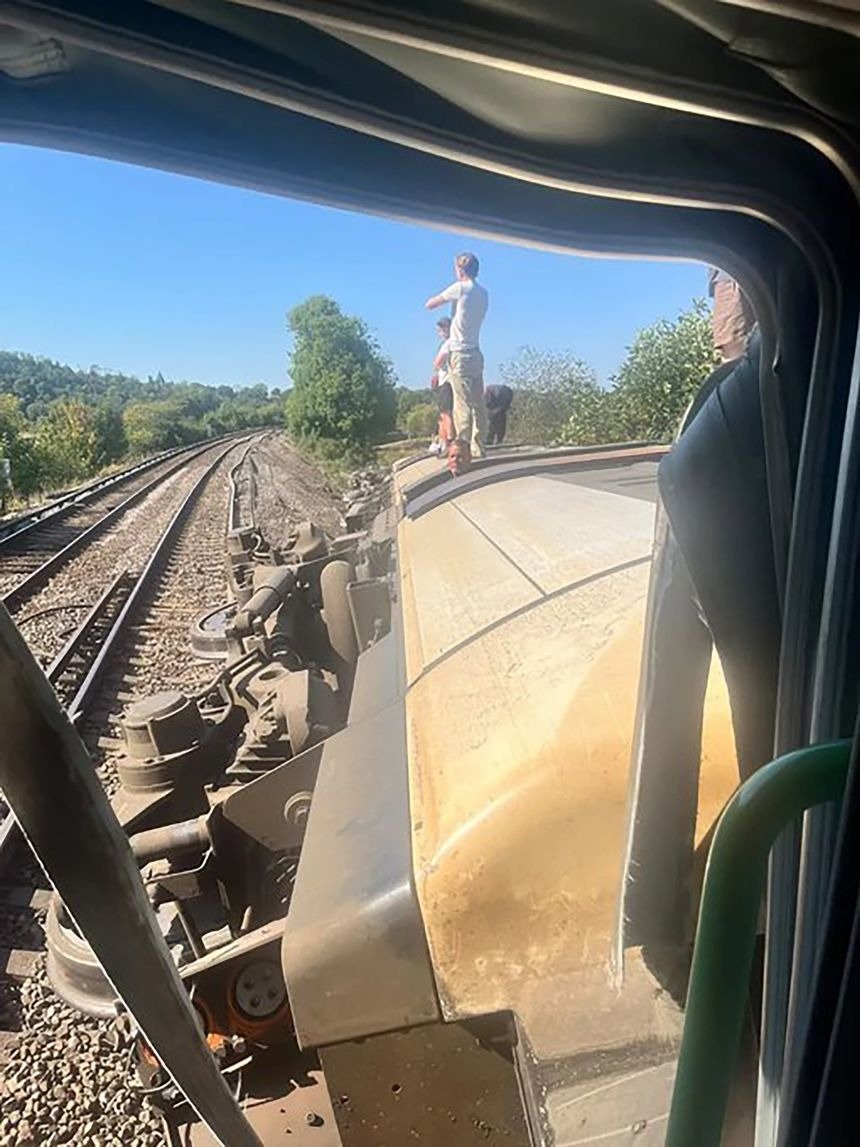
UK police and emergency services are currently on the scene following a passenger train derailment in southern England that occurred on Thursday. The incident took place at approximately 3:54 p.m. local time (10:54 a.m. ET) in the vicinity of Lewes railway station in East Sussex, located roughly 45 miles south of London, according to the British Transport Police (BTP). In a statement posted to X, the BTP confirmed their active involvement, stating, “We’re responding alongside paramedics and the fire service and will provide more information as soon as we can.”
The train was carrying approximately 150 passengers when it derailed. The South East Coast Ambulance Service reported on Thursday evening that two individuals sustained serious injuries, while an additional nine patients suffered less severe injuries. The service noted that all patients were assessed and treated on-site, with several transported to local hospitals. Passengers who did not require medical intervention were relocated to a nearby community center for support. Eyewitness accounts, including that of 56-year-old American passenger Yana Ludwig, described the event as “completely terrifying,” noting a sudden banging sound followed by the carriage tipping onto its side.
The East Sussex Fire and Rescue Service has deployed significant resources to the site, including ten fire engines, a Command Support Unit, and technical rescue teams. The service is coordinating with other agencies to assist passengers and has urged the public to avoid the area. UK Transport Secretary Heidi Alexander expressed deep concern regarding the incident, confirming that the government is working closely with the rail industry and local partners to provide necessary assistance to those affected by the crash.
While the cause of the derailment remains under investigation, officials are examining environmental factors. Southern England has been experiencing a significant heatwave, with temperatures reaching 35 degrees Celsius (95 degrees Fahrenheit) on Thursday. This extreme weather had already prompted the cancellation of some services and forced others to operate at reduced speeds. The UK’s Rail Accident Investigation Branch has dispatched a team of investigators to the site to begin the formal evidence-gathering process.
The TSSA transport union issued a statement emphasizing the priority of passenger safety and wellbeing, while expressing gratitude to the emergency responders and rail staff on the ground. National Rail has issued a warning of “major disruption” expected to last for several hours. The operator specified that no trains are currently running through the Lewes and Haywards Heath areas, advising commuters to seek alternative travel routes until further notice.
Southern Rail has formally advised the public against all travel in the affected region. All lines passing through Lewes railway station remain closed to allow emergency teams, rail engineers, and specialist staff to secure the site and assess the structural safety of the railway. The operator is working to ensure that the situation is stabilized before any resumption of service is considered.
This incident marks the second serious train-related emergency in the United Kingdom within the last two months. In June, a collision involving two passenger trains occurred near Bedford in south-central England, resulting in one fatality and dozens of injuries. Authorities remain focused on the current rescue operation in East Sussex as they continue to manage the aftermath of Thursday’s derailment. The report also notes that the incident happened around 3:54 p.m. The report also notes that everything just went topsy turvy,” said Ludwig, who was traveling on the train from London to Lewes, according to Britain’s PA Media news agency. The report also notes that “It seemed like a really long time but it probably was 10 seconds of that before the carriage actually fell on the side.”. The report also notes that there was no immediate indication of the cause of the derailment.