

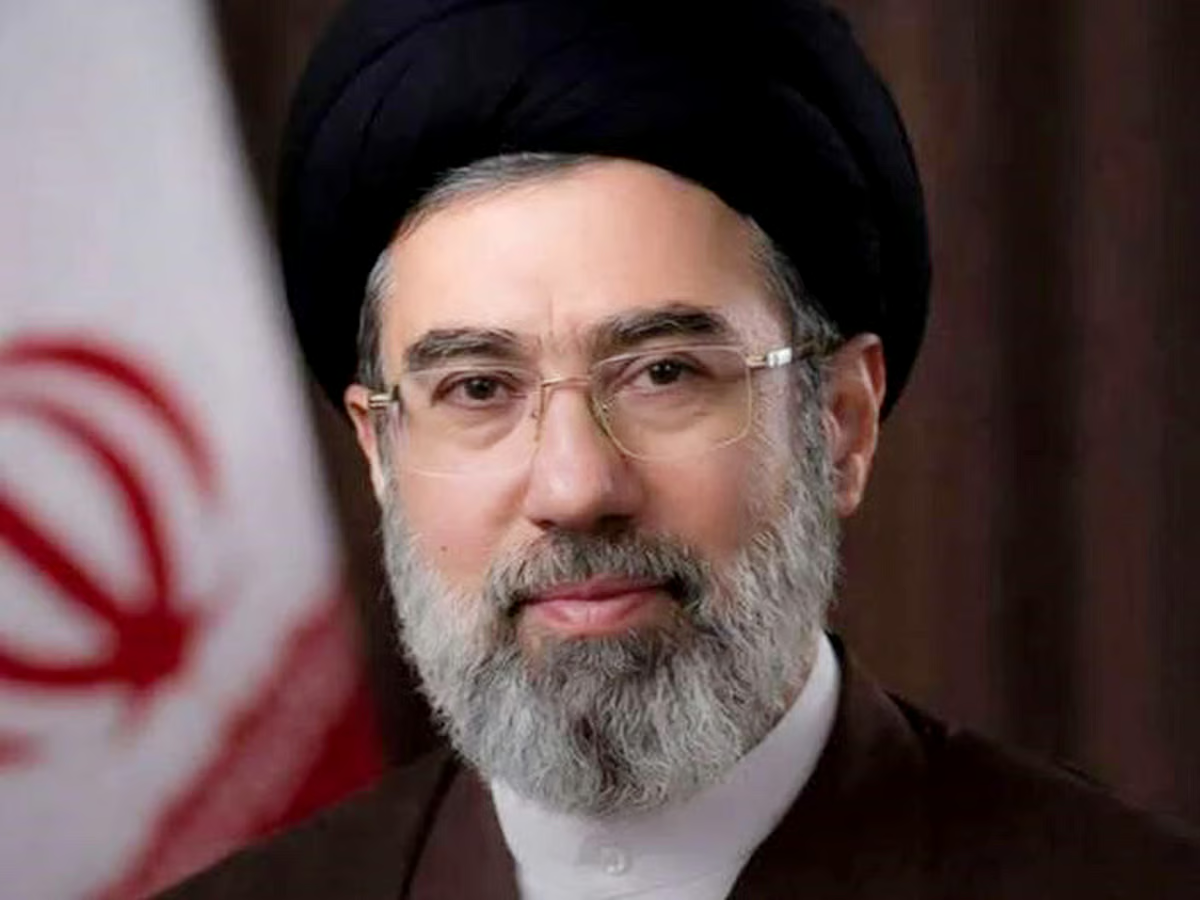
Iran’s Supreme Leader Mojtaba Khamenei has initiated a significant restructuring of the nation’s military leadership, issuing a series of decrees on Monday to appoint six new commanders across the armed forces, the Islamic Revolutionary Guard Corps (IRGC), and the Basij Resistance Force.
This reorganization marks the most substantial military shift since Khamenei assumed his position following the death of his father, Ayatollah Ali Khamenei, in a US-Israeli strike this past February. The appointments include Ali Abdollahi as chief of staff of the Armed Forces and Kioumars Heydari as his deputy.
Within the IRGC, Ahmad Vahidi has been promoted to major general and named commander-in-chief, while Mostafa Izadi has been appointed as his deputy. Additionally, Ali Azmaei has been named commander of the IRGC Navy, and Hossein Taeb has been placed in charge of the Basij Resistance Force.
These changes follow an earlier decree published on Sunday appointing former IRGC chief Mohsen Rezaee as the Supreme Leader’s representative to Iran’s Supreme National Security Council (SNSC). Rezaee replaces Mohammad Baqir Zolghadr, filling a vacancy left by Ali Larijani, who was killed in US-Israeli strikes in March. An account attributed to Khamenei on X cited Rezaee’s extensive experience during the Iran-Iraq war as the basis for his selection.
The reshuffle occurs amid persistent speculation regarding Khamenei’s health and his continued absence from public view. The Supreme Leader has not appeared in public since taking office and is widely believed to have been wounded in the same strike that killed his father.
Seeking to quell rumors, Iranian President Masoud Pezeshkian stated that Khamenei is “completely healthy” following a nearly seven-hour meeting. Pezeshkian noted that their discussion covered the Iranian economy, public livelihoods, and the impact of US sanctions, during which Khamenei emphasized the necessity of “unity and cohesion.”
Despite these assurances, questions remain regarding the leader’s accessibility. While the government has signaled plans to release images of Mojtaba Khamenei following recent video footage, President Pezeshkian has previously acknowledged that direct contact with the Supreme Leader remains very difficult, leading to lingering public uncertainty about the nature of their recent meeting.