

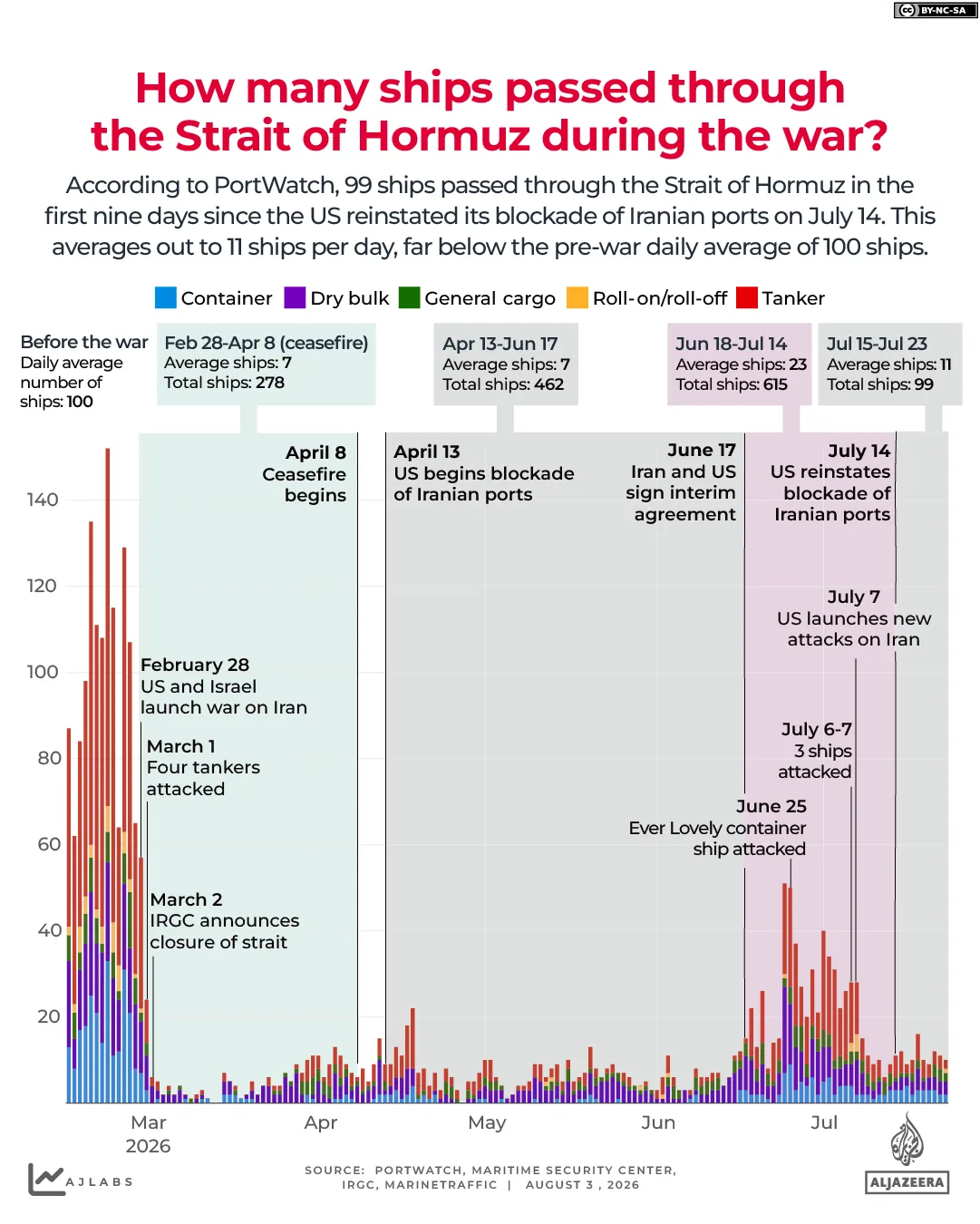
Iranian authorities are currently evaluating a finalized maritime arrangement with Oman regarding the Strait of Hormuz. Despite the progress in these bilateral talks, senior Iranian officials have emphasized that the comprehensive reopening of this critical waterway remains contingent upon the United States fulfilling specific commitments.
Foreign Minister Abbas Araghchi stated on Saturday that the agreement with Oman is nearing completion. However, he warned that restoring full transit operations depends on the US adhering to the terms of a June memorandum of understanding (MoU), which Tehran alleges Washington has violated. Iran’s grievances include the US support for a southern Omani transit route without prior coordination, the failure to halt Israeli military actions in Lebanon, and the continued freezing of Iranian assets held abroad due to sanctions.
The Islamic Revolutionary Guard Corps (IRGC) has maintained a distinct stance on the matter. Spokesperson Hossein Mohebbi clarified on Saturday that the reopening of the strait involves a specific mechanism independent of the Omani negotiations. He asserted that the US must meet conditions set by the Islamic Republic, noting that the IRGC views the strait not merely as an economic corridor but as a strategic power asset tied to Iran’s geography.
The IRGC has urged the administration of US President Donald Trump to refrain from interfering in the talks with Oman, which officials describe as being in their final stages. Parliamentary officials, including the national security commission spokesperson Hassan Qashqavi, confirmed that the framework for the arrangement is set, pending final approval from Iran’s leadership.
President Masoud Pezeshkian has publicly committed to defending the June MoU with the US, dismissing rumors of his potential resignation amid internal pressure from hardliners who oppose diplomatic engagement with Washington. The Ministry of Foreign Affairs indicated that a joint statement with Oman could be forthcoming if a deal to restore partial traffic is secured.
Under the proposed arrangement, inbound vessels would utilize a northern lane within Iranian territorial waters, while outbound traffic would be directed through a southern lane in Omani waters, coordinated with Tehran. Reports suggest this interim agreement is intended for an initial 60-day period with potential for extension. Discussions have also reportedly covered the clearance of naval mines from a central corridor, the transit of military vessels, and the implementation of a coordinated fee system.
Significant questions remain regarding the US naval blockade of Iran’s southern ports and the withdrawal of military assets, which Tehran insists are necessary steps for a full reopening. The broader geopolitical context remains fraught, as the future of Iran’s nuclear program and the impact of long-standing US sanctions continue to weigh heavily on the nation’s economy.
Tensions in the region were highlighted on Saturday when the United Arab Emirates reported that a vessel belonging to the Abu Dhabi National Oil Company (ADNOC) was struck by a missile in the Strait of Hormuz. While there were no casualties, the UAE Ministry of Foreign Affairs condemned the act as piracy by the IRGC, labeling it a direct threat to regional stability and global energy security.
Simultaneously, the Iran-aligned Houthi movement in Yemen continues to engage in hostilities. On Friday, the group launched a deadly attack in Marib against the Saudi-backed Yemeni government, prompting a military response. The Houthis also targeted Najran in southwestern Saudi Arabia on Thursday, following claims of two separate attacks on Saudi oil tankers.
Maritime traffic in the Bab al-Mandeb and Hormuz straits remains volatile. While activity has rebounded slightly from the lows seen on Wednesday, it remains well below pre-war levels, with some vessels disabling transponders to avoid detection. Despite these security concerns, global energy markets have responded positively to the prospect of a diplomatic breakthrough, with Brent crude closing at approximately $83 per barrel on Friday.
Domestic markets in Iran also showed signs of recovery on Saturday. The national currency strengthened to 1.85 million rials against the US dollar, recovering from recent all-time lows of 1.94 million. Additionally, the Tehran Stock Exchange main index rose by 112,000 points—an increase of over 2 percent—to reach 5.52 million, nearing record highs.
In a televised interview, President Masoud Pezeshkian said he would “strongly defend” the MoU signed with the US in June and once again rejected speculation that he would abandon his office, despite claims by hardliners
The Ministry of Foreign Affairs said earlier that a joint statement could be expected with Oman if a deal is reached to bring back some traffic to the strait, which has been mostly disrupted since the US and Israel attac
US media have said the interim agreement is envisaged for 60 days and can be extended.
In a televised interview, President Masoud Pezeshkian said he would “strongly defend” the MoU signed with the US in June and once again rejected speculation that he would abandon his office, despite claims by hardliners that he has used the threat of resignation as a way of combatting opponents who are against a diplomatic resolution with the US.
The Ministry of Foreign Affairs said earlier that a joint statement could be expected with Oman if a deal is reached to bring back some traffic to the strait, which has been mostly disrupted since the US and Israel attacked Iran on February 28.
There are questions over what will happen with a US naval blockade of Iran’s southern ports and a drawback of US military assets, which Iran has said will be necessary on the way to fully reopening the strait, through which about 20 percent of the world’s oil passes in peacetime.