

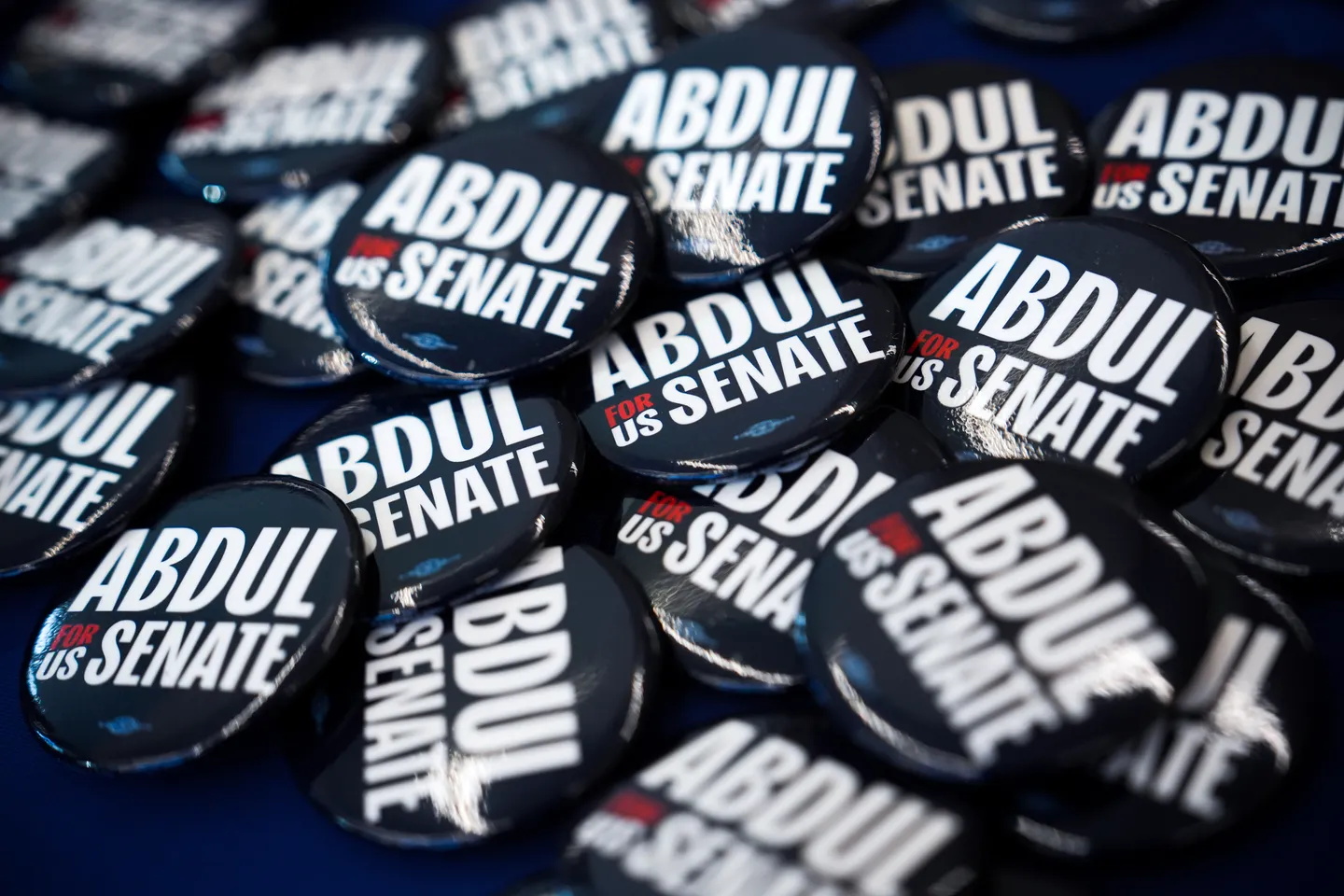
The recent primary elections held across Michigan, Missouri, Kansas, Virginia, and Washington have provided a critical look at the current state of the Democratic coalition and the ongoing influence of Donald Trump within the Republican Party. As the election season progresses, these results serve as a testing ground for shifting political alignments.
In Michigan, progressive candidate Abdul El-Sayed secured a narrow victory over Representative Haley Stevens for the Democratic Senate nomination. Winning by fewer than two percentage points, the result was significantly tighter than polling had anticipated. El-Sayed, who campaigned on platforms including Medicare for All and a cessation of military aid to Israel, now faces former Representative Mike Rogers in the November general election. The closeness of this primary outcome is particularly notable given that Michigan was carried by Donald Trump in 2024.
The race also highlighted the limits of external spending. The pro-Israel lobbying group AIPAC and its affiliated PACs invested over $30 million in an attempt to defeat El-Sayed—the largest single-candidate expenditure in the organization’s history—yet failed to secure the desired outcome. However, the group saw success in Missouri, where AIPAC-aligned funding helped Representative Wesley Bell defeat a comeback attempt by former Representative Cori Bush by a substantial margin.
Progressive candidates saw further success down the ballot in Michigan. The party nominated Sunrise Movement co-founder William Lawrence in the competitive 7th District and state Representative Donavan McKinney, who successfully ousted incumbent Representative Shri Thanedar in Detroit’s 13th District. These victories follow a broader trend of left-wing primary successes in states like New York and Colorado, though the defeat of Cori Bush serves as a reminder that these outcomes remain district-dependent.
Republican efforts to alter state governance faced significant pushback from voters. In Missouri, citizens rejected a legislature-backed proposal that would have increased the difficulty of passing future constitutional amendments. Similarly, Kansas voters defeated a measure that sought to transition the selection of state Supreme Court justices from gubernatorial appointments to elections—a move widely interpreted as a response to the court’s rulings on abortion rights.
The influence of Donald Trump on the Republican base appeared inconsistent across the states. While his endorsed candidates successfully secured gubernatorial nominations in both Michigan and Kansas, and his preferred candidate won a House primary in Washington, the party faced an unexpected loss in Michigan’s 8th District. In that race, a Trump-endorsed candidate was defeated by Thomas J. Smith, a contender who had suspended his campaign weeks prior to the vote. This result has surprised Republican strategists who viewed the district as a key opportunity to flip a seat that Trump won in 2024.
Washington, DC — The votes are counted, the surprises are in, and the Democratic Party’s identity crisis just got a testing ground in the reddest of purple states.
Here are our five top takeaways from these crucial primary elections.
El-Sayed’s win was a squeaker, not a landslide
AIPAC’s money didn’t buy the outcome it wanted
However, the split record, when seen alongside polling showing Democratic favourability towards Israel slipping in recent years, has left even some establishment Democrats publicly distancing themselves from AIPAC contributions.
Progressives padded their wins down the ballot
Red states reject GOP attempts to rewrite rules