

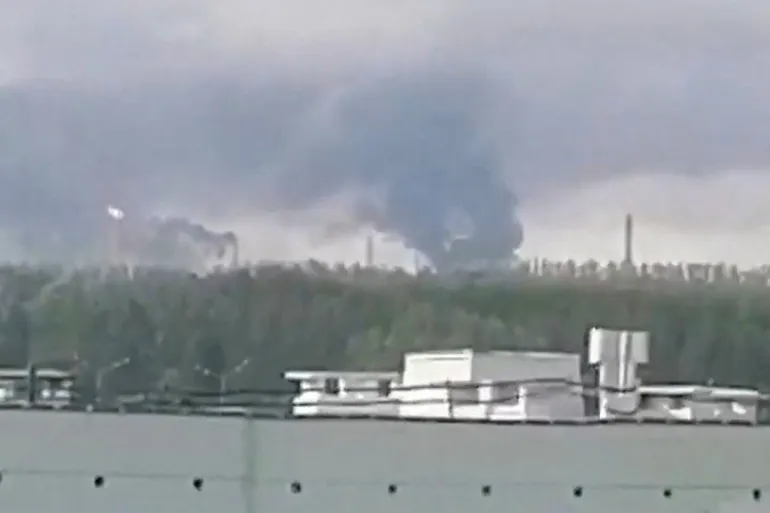
At least 13 people, including a child, have been killed in a Ukrainian drone attack on the Russian city of Nizhnekamsk, authorities said, as Ukraine’s military confirmed it targeted an oil facility in the region. Monday’s attack in the Tatarstan region, located approximately 800km (497 miles) east of Moscow, left at least 39 others wounded, according to regional authorities.
Regional head Rustam Minnikhanov denounced the attack as “barbaric” and stated that civilian infrastructure had been struck in a post on Telegram. The Uzbek consulate in Kazan announced that at least seven of the 13 people killed were Uzbek citizens. Between two and three million citizens of Uzbekistan, Central Asia’s most populous country, work in Russia, with the Uzbek economy partly based on remittances from these migrants.
Uzbekistan has attempted to strike a diplomatic balance amid Russia’s war on Ukraine, maintaining close ties with Moscow while simultaneously stressing support for Kyiv’s territorial integrity. The Russian defence ministry reported that it intercepted more than 450 Ukrainian drones overnight, as both sides continue to engage in heavy, reciprocal attacks.
Nizhnekamsk plays a crucial role in Russia’s oil exports, hosting one of the country’s largest and most advanced refineries. Ukraine’s military claims it successfully struck the site during the overnight operation. Svetlana Petrenko, spokesperson for the Investigative Committee of Russia, confirmed a child was among the dead. Petrenko added that Kyiv had struck industrial facilities and civilians “who had no connection” to the country’s military. Russia has launched a criminal investigation into the strike, which it has officially classified as a “terrorist attack.”
Reporting from Moscow, Al Jazeera’s Yulia Shapovalova noted that a day of mourning has been declared in Tatarstan. “This attack follows several similar strikes on the exact same industrial zone in June and July this year,” Shapovalova reported. She added that Ukraine’s persistent long-range drone attacks are designed to dismantle Russia’s war economy by crippling fuel production, disrupting military logistics, and exposing vulnerabilities in domestic air defences.
Meanwhile, Major Robert “Magyar” Brovdi, the commander leading Ukraine’s drone operations, stated that recent strikes in Crimea mark the first phase of a campaign aimed at rendering the peninsula unusable as a staging ground for Russian forces. Russia illegally annexed Crimea in 2014. “Crimea falls within the key conceptual pillars on the path to ending the war,” Brovdi said.
In an interview with the Associated Press, Brovdi revealed that his forces were currently equipped at just 14 percent of what they would need to carry out the campaign at full capacity. He added that his units would be able to strike seven times more targets if funds previously pledged by Western allies were delivered with greater speed. Despite these resource shortfalls, Ukraine’s summer campaign in Crimea has already inflicted significant damage by striking rail bridges, oil depots, and power infrastructure to disrupt supply lines.
In Ukraine, at least five people were killed in the eastern Kharkiv region in what officials described as a “massive artillery attack” by Russian forces on a residential area. In a statement on Telegram, the regional prosecutor’s office said the assault occurred in a village in the Chuhuiv district, adding that investigations into potential war crimes are currently under way.
Ukrainian President Volodymyr Zelenskyy said in a post on X on Sunday that attacks on Russian oil refineries would continue and that Moscow was “beginning to feel” the consequences. He also accused Russia of refusing to end the war and indicated he would speak to mediators this week to discuss peace efforts. Concurrently, Ukraine has cut its grain export forecast for the 2026/27 July-June season by up to 12 percent, Agriculture Minister Taras Vysotskyi told Reuters, blaming Russian attacks on the country’s southern Odesa port hub. “We are currently targeting 38–40 million tonnes,” Vysotskyi said, noting that the ministry had previously forecast exports of 43 million tonnes before the escalation. Earlier this month, Vysotskyi estimated that losses to the agricultural sector from the port blockade could reach $3bn, as Ukraine relies on seaports for more than 90 percent of its grain exports.
“We are currently targeting 38–40 million tonnes,” Vysotskyi said in the first official export forecast since escalating Russian attacks late last month effectively halted shipments from Odesa ports, which are vital to U
“We are currently targeting 38–40 million tonnes,” Vysotskyi said in the first official export forecast since escalating Russian attacks late last month effectively halted shipments from Odesa ports, which are vital to Ukraine and the global agricultural market.