

A harrowing report from the Office of the UN High Commissioner for Human Rights has exposed the severe conditions facing the Rohingya population in Myanmar. In one instance, a child no older than six was forced to clear human remains from the ground in Buthidaung, Rakhine State—the site of a 2024 massacre in Hoyyar Siri village. This child was among many Rohingya labourers coerced into constructing a displacement camp, a military base, and a settlement for non-Rohingya residents on land previously occupied by three Rohingya villages.
The scale of these abuses is staggering. In January 2026 alone, local sources in northern Rakhine documented at least 2,353 instances of forced labour, with children as young as six involved in 75 of those cases. Ravina Shamdasani, Chief Spokesperson for the UN Human Rights Office, noted that these figures likely represent only a fraction of the reality. The office has received numerous reports of extreme cases involving forced recruitment, early marriage, and sexual violence against children.
Approximately 600 displaced Rohingya are currently held under guard at a camp for survivors of the 2024 massacre, with no ability to leave. Reports indicate that this detention is a deliberate effort to suppress information regarding the massacre. Conditions inside are described as dire; escapees have reported eight deaths within a few months, including a pregnant woman and five infants. Detainees also face systematic torture, including beatings with bamboo and rubber pipes, burns from cigarettes and matches, and being suspended upside down.
One man recounted a horrific experience where he was tortured in Buthidaung prison and left for dead in scrubland. His son, who had been arrested with him, died in custody, and families were subsequently coerced into signing statements falsely attributing such deaths to natural causes. These actions reflect a broader strategy of terror, surveillance, and rights suppression that the military has intensified since the 2021 coup to neutralize opposition.
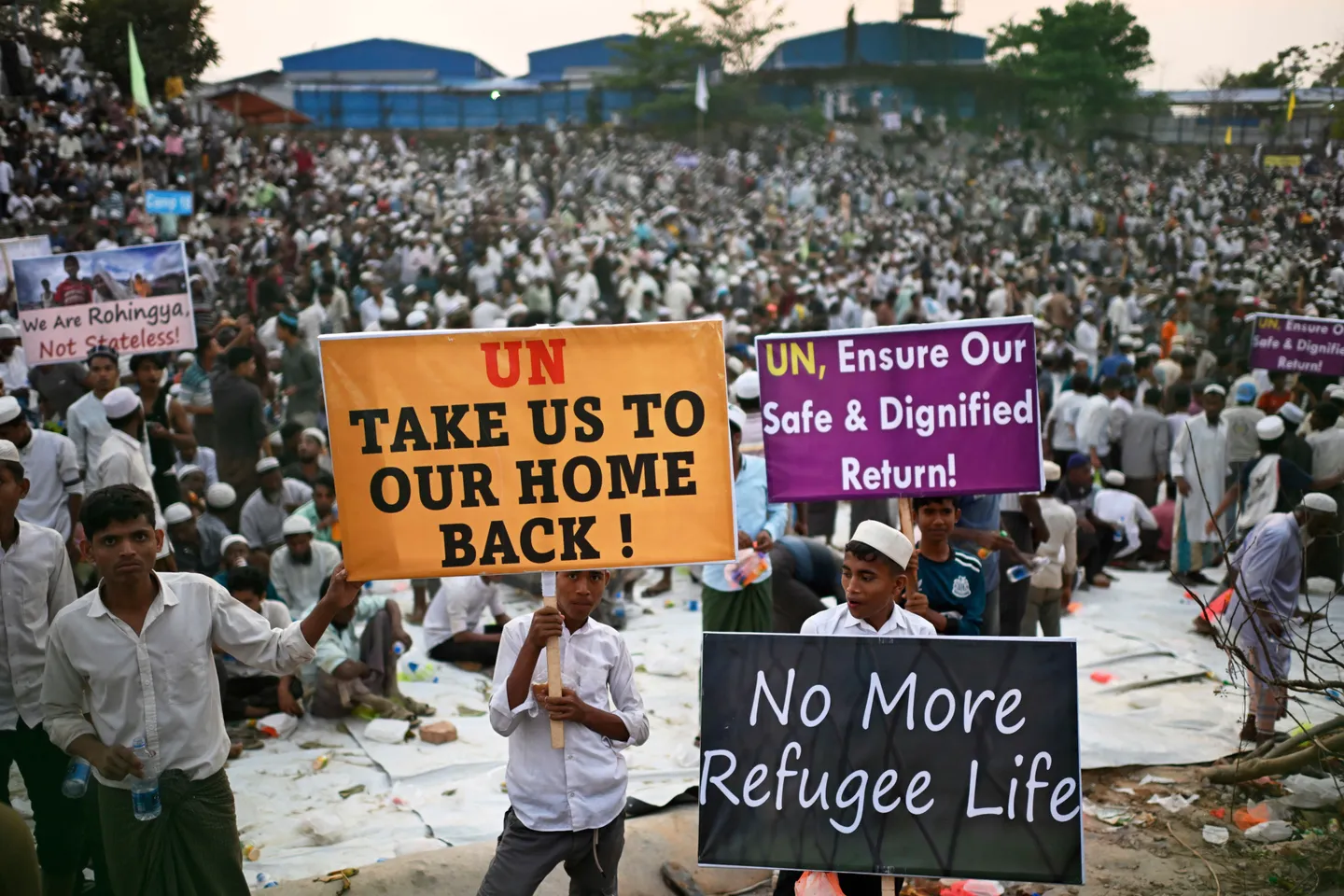
The Rohingya, a Muslim minority, have faced decades of systematic persecution, including the 1982 law that denied them citizenship and basic rights. The 2017 military campaign, which forced over 700,000 people into Bangladesh, was later identified by UN investigators as having genocidal intent. Today, the situation has grown more complex as the Rohingya are caught between the military and ethnic armed groups like the Arakan Army, both of which have utilized forced recruitment for logistical and portering purposes.
International accountability efforts remain ongoing but have yet to provide immediate relief. In 2019, The Gambia initiated a lawsuit against Myanmar at the International Court of Justice (ICJ) for violations of the Genocide Convention. While the case is progressing, no judgment date has been set. Because the ICJ focuses on state responsibility, the new UN findings serve as critical evidence for the factual record rather than direct criminal evidence.
Parallel legal avenues are also being pursued. The Prosecutor at the International Criminal Court has requested an arrest warrant for former Senior General Min Aung Hlaing regarding the 2017 campaign. Additionally, courts in Argentina, Timor-Leste, and Indonesia have invoked universal jurisdiction to address alleged international crimes linked to the Arakan Army and military leadership. While Shamdasani emphasizes that these multiple legal tracks strengthen the push for justice, she maintains that current measures are insufficient to halt the ongoing suffering of civilians. The report also notes that “Due to the lack of access to Rakhine and the ongoing restriction on communication, the full extent of abuses against Rohingya children is indeed challenging to quantify and detail,” Shamdasani tells. The report also notes that sources in the report say that their detention is meant to prevent information about the massacre from spreading. The report also notes that for decades, the Rohingya had been denied citizenship under Myanmar’s 1982 law, leaving most of the population stateless and subjecting them to restrictions on movement, marriage, healthcare and education. The report also notes that the 2017 campaign turned that institutionalised exclusion into mass atrocity. The report also notes that most of those displaced remain in camps in Cox’s Bazar, Bangladesh, now the world’s largest refugee settlement, with little prospect of a safe or dignified return, nine years later. The report also notes that leaving the Rohingya caught between competing armed actors and vulnerable to abuses from more than one side, the February 2021 military coup plunged the country into a broader civil war. The report also notes that the Arakan Army has taken control of territory once held by the military, but that shift has not brought safety for the Rohingya living there, in northern Rakhine. The report also notes that “What is included in the report does not mean to be exhaustive, but it should help paint a picture of the suffering, and the threats to which civilians in Myanmar are continuously exposed,” she adds.