

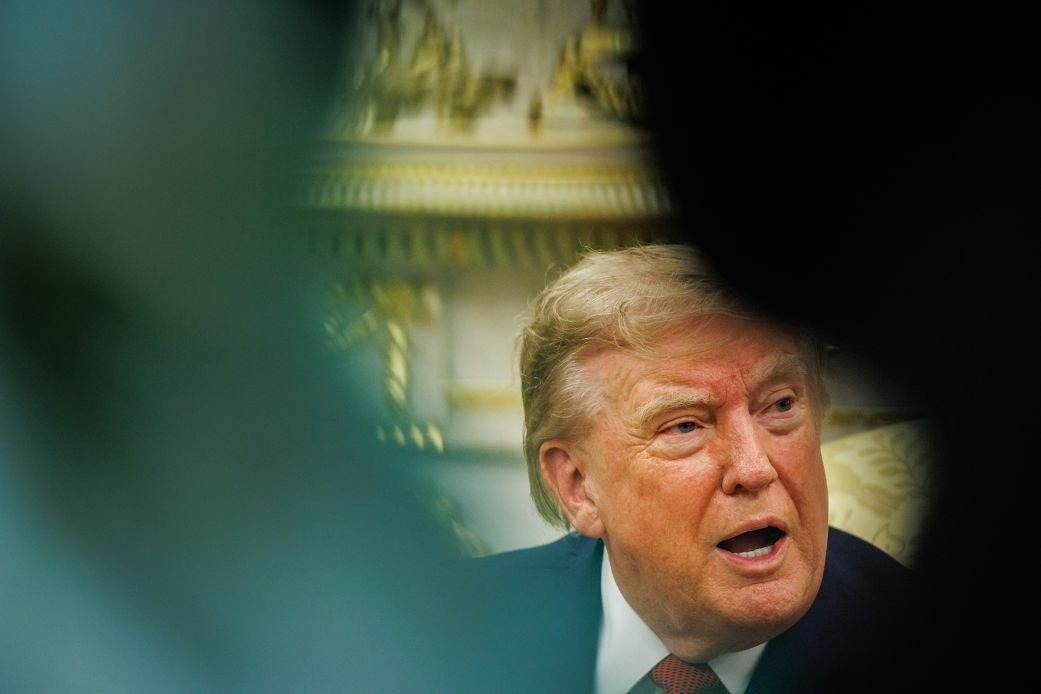
President Donald Trump has ordered his administration to suspend all diplomatic engagement with Iran, marking a significant pivot in his approach to the ongoing conflict. This directive, issued to top envoys including Vice President JD Vance and negotiators Steve Witkoff and Jared Kushner, follows a period of unsuccessful attempts to secure a breakthrough. While the administration previously maintained that a deal was imminent, Trump has now declared that no formal diplomacy is currently underway or scheduled.
The shift in strategy represents a move away from the initial goal to “hammer Iran ASAP,” with officials now signaling a long-term plan to “strangle them” through sustained economic pressure. This change in posture comes despite recent claims from Kushner, who suggested during a trip to the Middle East that conversations with Iranian figures were “more robust” and “positive” than ever. Iranian leadership has consistently denied the existence of direct talks, a stance that has previously drawn public frustration from the President.
Central to the current standoff is the status of the Strait of Hormuz. Although Trump asserted on social media that the waterway is open and that mines have been cleared, traffic remains minimal, and vessels continue to face threats from Iranian projectiles. The administration remains deeply dissatisfied with a potential arrangement involving Oman, which would grant Iran and Oman shared control over transit fees. Trump has explicitly rejected any proposal that includes tolls or charges, insisting that the strait must return to its prewar status of unrestricted international access.
White House officials are concerned that the proposed deal with Oman could inadvertently solidify Iranian influence over the waterway, rather than serving as a neutral resolution. Trump’s firm opposition to any form of Iranian control over the strait is a cornerstone of his policy, even as he continues to emphasize that his primary objective remains preventing Iran from acquiring nuclear weapons.
As the administration prepares to impose new, severe sanctions as early as this week, the military remains committed to a long-term blockade of Iranian ports. Defense Secretary Pete Hegseth has confirmed that American forces are prepared to maintain this presence indefinitely. However, the war has placed significant strain on U.S. military resources, with concerns mounting over the depletion of advanced munitions and the physical toll on naval assets like the USS Abraham Lincoln.
Despite internal and external pressure to find an exit strategy, Trump has resisted calls to expedite a withdrawal. He continues to view economic strangulation as the most effective path to forcing the regime to accept his terms. The standoff is further complicated by the mutual perception that the other side is under political duress; while the U.S. faces questions about the war’s cost, Iranian officials believe Trump is increasingly vulnerable to domestic pressure to end the conflict.
The President’s stance remains uncompromising. In a recent social media update, he posted a map of the Strait of Hormuz labeled “US Territory,” a clear signal that he does not intend to reduce the American military footprint in the region in the near future. While he has threatened to take action against Oman for its role in the negotiations, he maintains that the U.S. is prepared to manage the situation unilaterally if necessary. The report also notes that and that a new deal was just around the corner — as he’s asserted repeatedly since the ceasefire signed in June fell apart — Trump announced there was no diplomacy unde, and instead of claiming talks were proceeding well. The report also notes that the officials said, but Trump has still been unsatisfied with Tehran’s unwillingness to bend to his demands. The report also notes that “They’re engaging in a very strong way and that’s quite positive,” he said, adding: “We are having very positive and active conversations.”. The report also notes that for weeks, President Donald Trump has tried willing positive developments with Iran into existence, without much success. The report also notes that on Tuesday, he seemed to adopt a new approach. The report also notes that all water mines have been removed or detonated.