

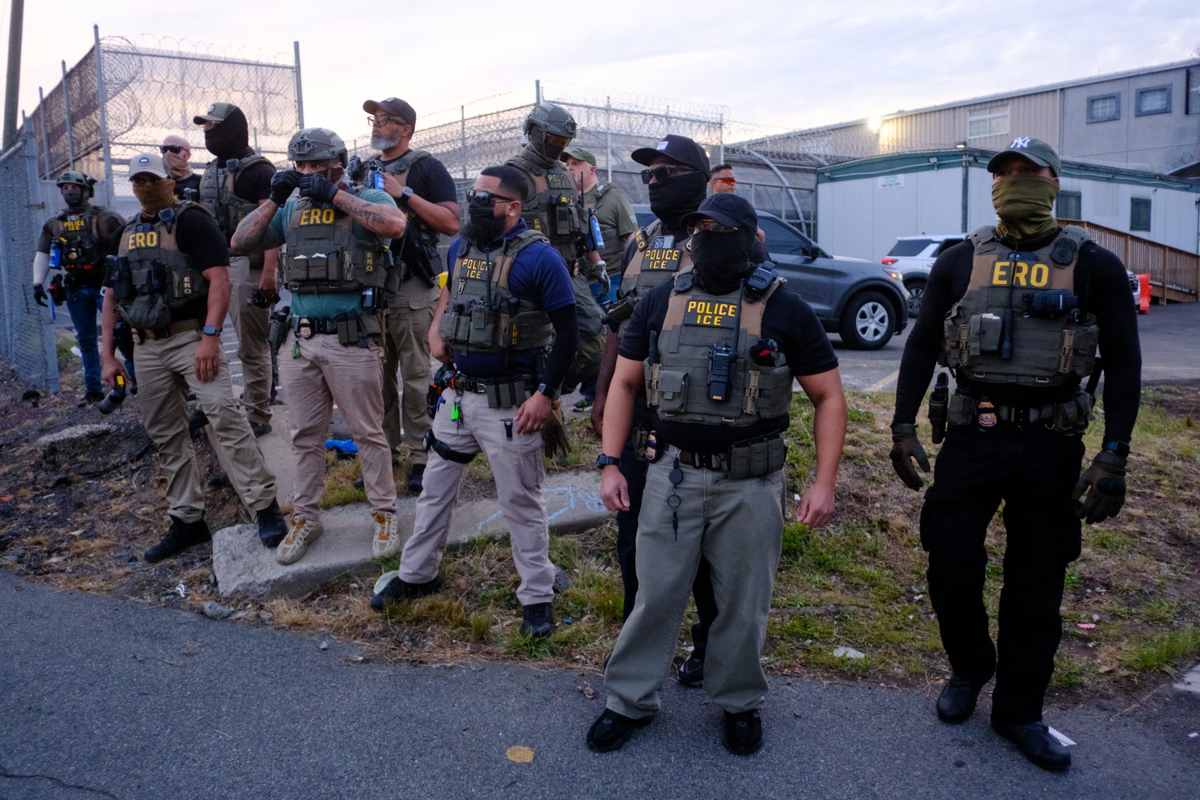
Since Donald Trump’s return to the presidency, more than 60 individuals have died while in the custody of or during encounters with Immigration and Customs Enforcement (ICE). This toll includes two Latino immigrants who died within the same week: Lorenzo Salgado Araujo in Houston and Joan Sebastián Durán Guerrero in Maine. While many Latinos feel increasingly targeted due to their background, a significant portion of those enforcing these restrictive policies share that same heritage.
Public surprise often follows reports that Hispanic agents were involved in fatal encounters, such as the January incident involving Alex Pretti. This reaction stems from a common misconception that Latinos are inherently opposed to strict immigration enforcement. However, historical data indicates that Latinos have long served as both targets of and participants in nativist and anti-immigrant campaigns.
Today, Latinos constitute a majority of Border Patrol officers and account for approximately 20% to 30% of ICE agents. This trend is not entirely new; it dates back to the 1950s when various Latino organizations and leaders backed initiatives like Operation Wetback, which aimed to deport hundreds of thousands of undocumented migrants. Such support was often driven by concerns over labor competition, as employers frequently used migrant workers to suppress wages and undermine union efforts.
During the 1960s and 1970s, this perspective persisted within some labor movements. For instance, the United Farm Workers union sometimes viewed undocumented workers as threats to their organizing goals, with members occasionally reporting migrants to authorities or conducting their own border patrols. While the civil rights movement and the rise of Black Power later encouraged many Mexican Americans to reject assimilationist pressures, the underlying anxieties regarding status and economic security remained.
These tensions were evident during the 1994 California ballot initiative, Proposition 187, which sought to restrict social services for immigrants. Although only a quarter of Latino voters ultimately supported the measure, polling leading up to the vote showed that nearly half had considered backing it. This reflects the precarious position many Latinos occupy, where they may feel compelled to support policies that promise security or belonging, even at the expense of other immigrants.
The political landscape shifted further with the rise of the MAGA movement in 2016. Donald Trump successfully courted Latino voters, and by the 2024 election, he had expanded his support base, particularly among men and in regions along the US-Mexico border. This trend aligns with a broader right-wing shift that prioritizes opposition to multiculturalism and liberalism over biological notions of race, allowing for a more diverse coalition of supporters.
This political evolution has seen figures of color, such as Afro-Cuban Proud Boys leader Enrique Tarrio—who describes himself as a “western chauvinist”—and white supremacist influencer Nick Fuentes, whose father is Mexican American, gain prominence within far-right circles. For many, these movements offer a sense of inclusion and a role as defenders of tradition and order, rather than as outsiders.
Historian Eladio Bobadilla, author of “Dangerous Migration: Mexican Labor and the Fight for Immigrant Rights,” notes that while recent polls suggest some shift in Latino political leanings away from the Republican party, the history of Latino participation in enforcement is well-documented. Experts argue that treating this support as a paradox ignores a long-standing reality, and that acknowledging this history is essential to understanding the complexities of the current political environment. The report also notes that for decades, Latinos have joined the border patrol (and since it was established in 2003, ICE) in significant numbers. The report also notes that he did not merely retain significant Latino support; he expanded it, and when he ran for re-election in 2024. The report also notes that leader of the self-described “western chauvinist” Proud Boys, who is Afro-Cuban, or Nick Fuentes, the white suprem, consider figures such as the January 6 insurrectionist (and recipient of a Trump pardon) Enrique Tarrio.