

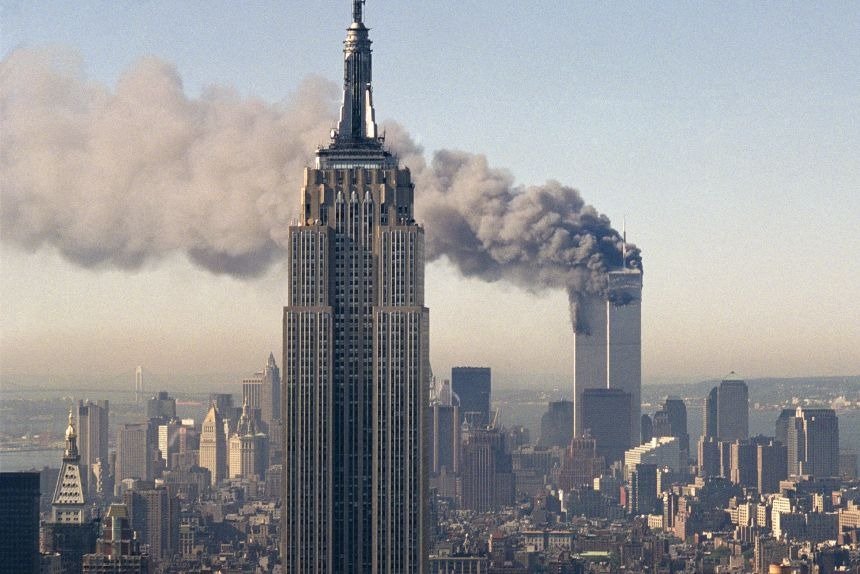
The Central Intelligence Agency has declassified and released more than 100 pages of presidential daily briefing documents, offering the public a rare look at the intelligence provided to Presidents Bill Clinton and George W. Bush regarding al-Qaeda and Osama bin Laden in the years leading up to the September 11, 2001, attacks. These records highlight a persistent stream of warnings that were presented to the White House but ultimately failed to prevent the tragedy.
One of the earliest and most striking warnings was included in a briefing for President Clinton on September 10, 1998. It cautioned that a group linked to Osama bin Laden “may fly an explosive-packed airplane into a US city.” While the actual events of 9/11 involved four hijacked planes used as missiles—two striking the World Trade Center, one hitting the Pentagon, and a fourth crashing in Pennsylvania after passengers resisted—the documents illustrate that the potential for such aerial threats had been identified years earlier.
The briefings detail a wide range of concerns, including intelligence reports suggesting bin Laden’s interest in kidnapping Americans, acquiring nuclear materials, launching chemical attacks, or targeting shopping centers in Washington. Despite these recurring alerts, the government struggled to synthesize the information. A 2004 investigation by the National Commission on Terrorist Attacks Upon the United States concluded that while the intelligence community had identified the threat, it failed to communicate the urgency or scope of the danger effectively, hampered by a fragmented intelligence apparatus.
Historians note that the CIA was in a period of transition during the 1990s as it moved away from its Cold War focus on the Soviet Union. Jeffrey Rogg, an intelligence historian at the University of Texas in Austin, observed that the agency’s internal structure made it difficult to act on specific threats. “Even if one element of the agency is screaming about a threat, it’s still a pretty big organization,” Rogg remarked, highlighting the challenges faced by small units like Alec Station, which was tasked with tracking bin Laden.
By the summer of 2001, the warnings had become more specific. An August 6, 2001, briefing titled “Bin Ladin [sic] Determined To Strike In US” noted that al-Qaeda members had been traveling to or residing in the United States for years and maintained a support structure capable of facilitating attacks. At that time, the FBI was conducting 70 active field investigations related to bin Laden, including reports of suspicious activity consistent with hijacking preparations and surveillance of New York federal buildings.
The declassified collection concludes with a document dated 4 a.m. on September 12, 2001. It references a “Kandahar-based Arab” who described the attacks as the culmination of two years of planning, characterizing the destruction as “the beginning of the wrath.” While the documents provide historical clarity, they also acknowledge that intelligence officials were often unable to corroborate the more sensational reports, such as the 1998 warning regarding the hijacking of a US aircraft, which left the government in a state of profound uncertainty regarding the exact nature of the impending threat. The report also notes that they show a drumbeat of warnings over the course of years that bin Laden was considering an attack in the United States or on American sites overseas. The report also notes that acquire nuclear bomb materials, launch chemical weapons attacks or kidnap an American — whose name is redacted — flicker through the pages, fragments of intelligence suggesting he wanted to attack a shopping mall in Washington. The report also notes that or how it had failed so badly to predict them, the documents do not fundamentally change intelligence historians’ understanding of what the US government knew before the attacks. The report also notes that and a silo’ed intelligence apparatus kept intelligence analysts at different agencies from putting the pieces together in a meaningful way.