

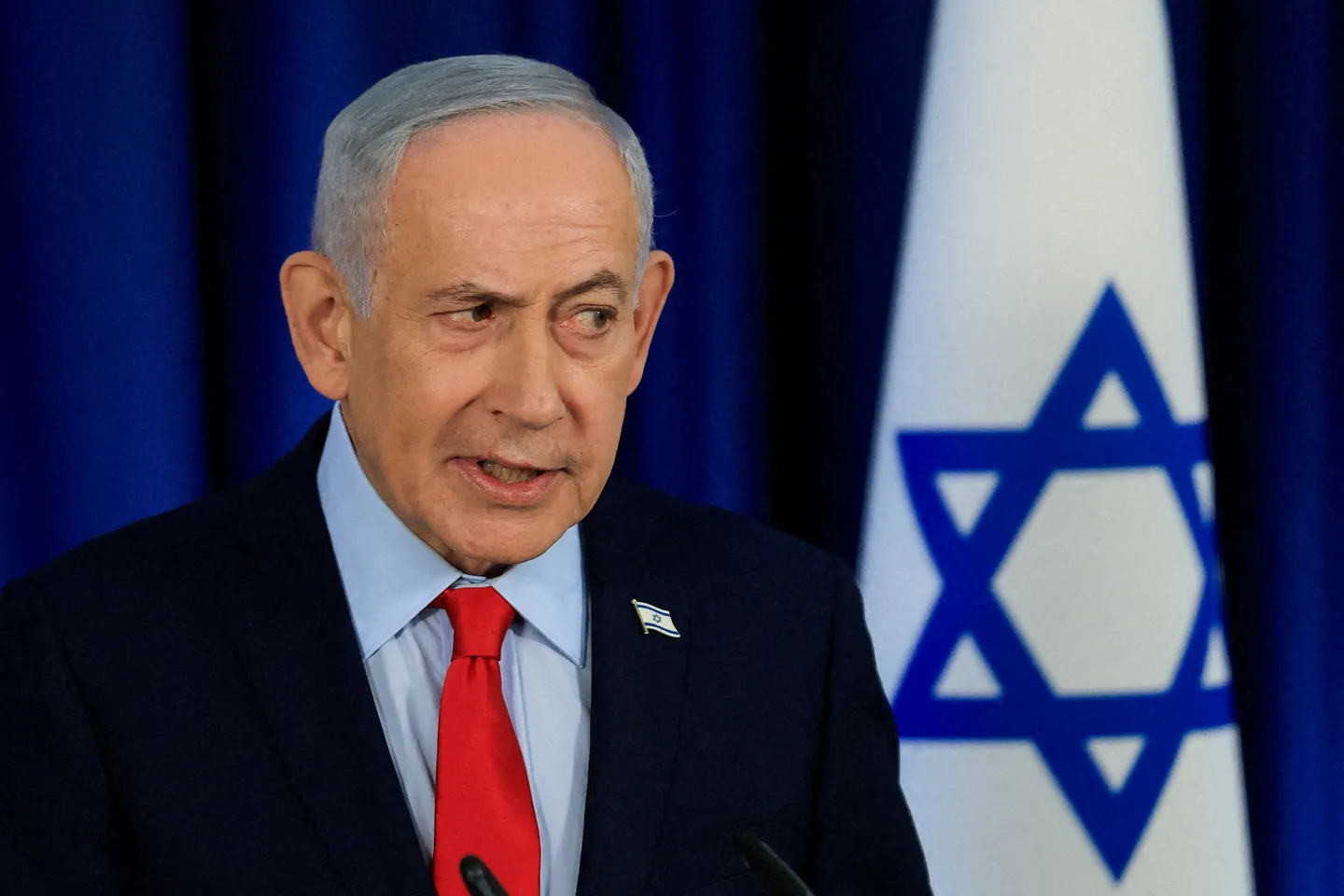
With national elections set for October 27, Prime Minister Benjamin Netanyahu’s Likud party has launched an effort to secure the disqualification of major Arab-majority political factions. The move targets the Ra’am party, led by Mansour Abbas, as well as the Joint List—a coalition comprising Hadash, Ta’al, and Balad. Likud officials have formally petitioned the Central Elections Committee, arguing there is “no room in the Knesset for those who harm” members of the Israeli security forces.
This electoral push arrives as both major political blocs struggle to secure a governing majority. Public opinion polls suggest that Netanyahu’s ultra-right coalition is unlikely to reach the 61-seat threshold in the 120-member Knesset. Simultaneously, the opposition led by former military chief Gadi Eisenkot and ex-prime minister Naftali Bennett is also projected to fall short of that mandate. Because Palestinian citizens, who make up one-fifth of Israel’s 10.3 million residents, represent a critical swing demographic, both sides face a reality where forming a government may hinge on Arab support.
Political analysts view this disqualification bid as a tactical maneuver to shrink Arab influence rather than a procedural cleanup of the ballot. Arik Rudnitzky, a researcher at Tel Aviv University’s Moshe Dayan Center, suggests the strategy serves two primary goals. First, it attempts to delegitimize parties like Ra’am as potential coalition partners for the opposition, making it harder for figures like Eisenkot to build a governing majority. Second, the tactic aims to suppress voter turnout; the calculation is that if an Arab party is excluded, many citizens may choose to boycott the election altogether, thereby boosting Netanyahu’s electoral prospects.
The electoral system in Israel relies on nationwide proportional representation, where voters support a party list rather than individual candidates. By attacking these lists, Likud hopes to obstruct the formation of any alternative government. Rudnitzky notes that this current cycle is distinctive because, despite these pressures, Palestinian-Israeli citizens appear increasingly motivated to participate. There is a growing sentiment within Arab communities that this election is vital to their future, with projections indicating higher turnout compared to the 2022 polls.
Ra’am has become a specific focus of these attacks due to its unique position. As the first Arab list to participate in a governing cabinet during the 2021-22 Bennett-Lapid administration, the party demonstrated it could engage in mainstream governance by focusing on civic issues like crime and infrastructure in Arab towns. Furthermore, Ra’am has included a Zionist candidate in the second position on its slate, signaling a commitment to a broader integration model. Rudnitzky suggests that as Ra’am becomes a more viable partner for a “government of change,” the pressure to challenge its legitimacy intensifies.
Broader analysis from Ozden Zeynep Oktav of Istanbul Medeniyet University indicates that a weakened Netanyahu, facing declining domestic support, is increasingly resorting to more exclusionary rhetoric. Oktav observes that the Ra’am leadership has gained confidence, openly calling for the recognition of an independent Palestinian state, which has made it a convenient target for right-wing disqualification efforts.
Zahide Tuba Kor, a researcher in Middle Eastern studies, characterizes the participation of Arab citizens as the fundamental factor behind Israel’s persistent political instability since 2018. Following years of boycotts, the mass mobilization of Arab voters fundamentally altered the Knesset’s composition, making it nearly impossible for right-wing Jewish parties to govern alone. This shift triggered a record-breaking cycle of five elections between April 2019 and November 2022.
While historical attempts to manage this influence included trying to split the Arab vote or encouraging support for Likud, these tactics often faltered. Following the events of October 7, 2023, the political landscape has shifted significantly, making it harder for any party to openly court external Arab support. Should the Supreme Court ultimately intervene to overturn these bans, analysts warn that Likud will likely frame the ruling as an affront to the “will of the people,” a narrative that could further undermine public confidence in the judiciary’s role in managing controversial political disputes. The report also notes that who comprise one-fifth of the country’s population of 10.3 million – to form a government, this means either political bloc will need support from Arab parties – typically backed by Palestinian citizens of Israel. The report also notes that experts say the latest disqualification drive led by Likud is not merely an attempt to achieve a legally sanctioned clean-up of the electoral field. The report also notes that lower Arab turnout would improve Netanyahu’s chances of remaining in power. The report also notes that not away from them, rudnitzky says that this cycle is different from earlier attempts to ban Arab parties precisely because Palestinian Israelis are being pulled towards the polls.