

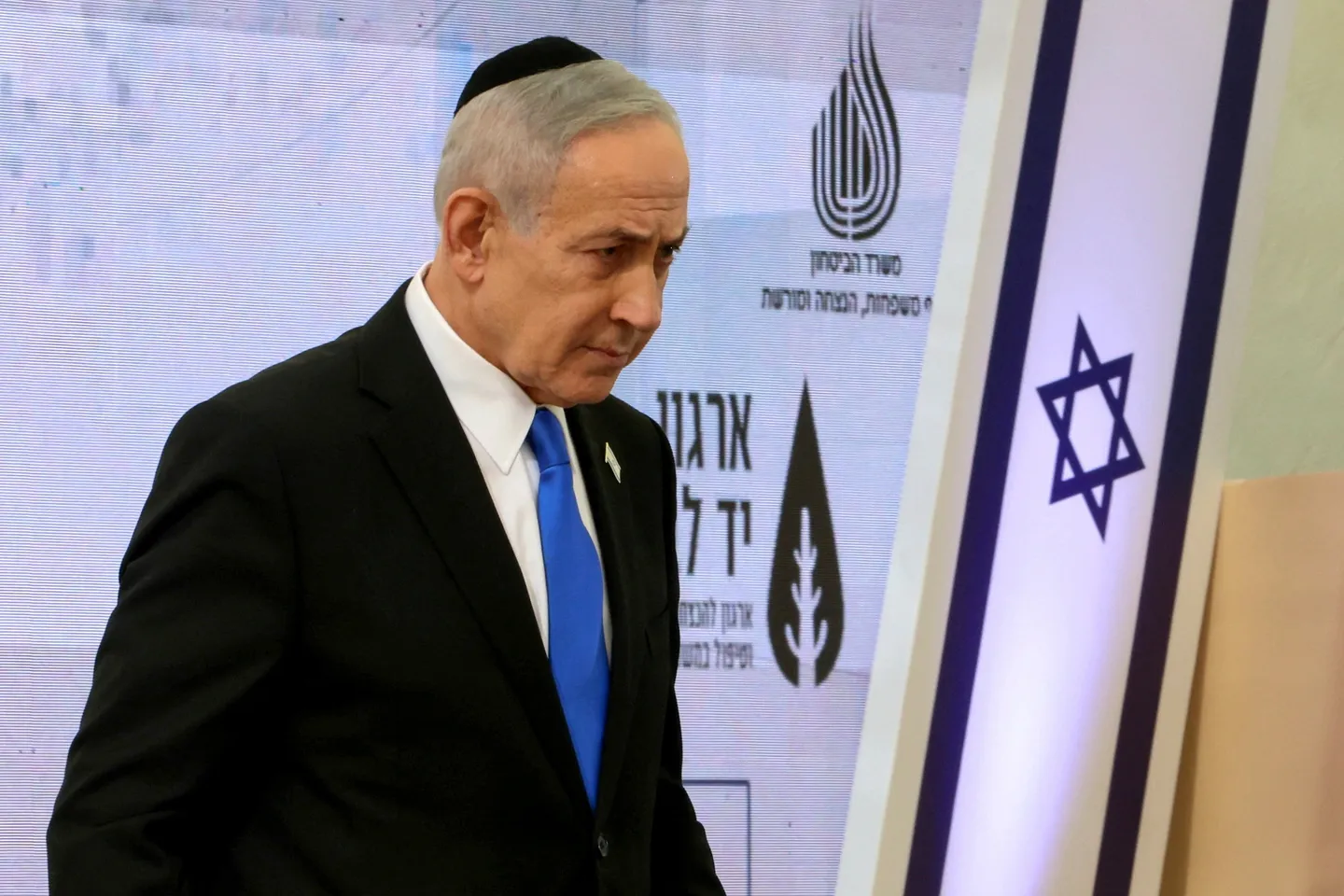
Tensions between Tel Aviv and Ankara have intensified following an Israeli aerial strike on the Abu al-Duhur Military Airbase in Syria’s Idlib province. While the attack caused no casualties, it resulted in significant destruction to the base’s runway and storage infrastructure. The office of Israeli Prime Minister Benjamin Netanyahu defended the operation, claiming it was necessary to prevent Syrian authorities from allowing Turkish forces to deploy at the site, which they argued would violate the existing security status quo.
Netanyahu further escalated the rhetoric by warning Türkiye against any military buildup that “descends south because it threatens us.” This aggressive stance has drawn sharp criticism from Ankara, which condemned the strike as a violation of Syria’s territorial integrity and unity. Türkiye urged the international community to take a firm stand against such actions. The United States also weighed in, with envoy to Syria Tom Barrack characterizing the strikes as an “unnecessary escalation” that undermines regional stability.
Political analysts and experts suggest that these military actions are less about immediate security and more about domestic political maneuvering. With Israel’s national elections scheduled for October, Netanyahu—the longest-serving prime minister in the country’s history—is currently struggling with poor polling numbers. Observers argue that he is attempting to manufacture a security threat to rally public support and distract from his precarious political standing.
Gokhan Batu, a Levant studies analyst at the Ankara-based Centre for Middle Eastern Studies, described the attack on the airbase as an “open challenge to Türkiye’s influence.” He noted that the timing of the strike is particularly significant, coming shortly after the Mecca Joint Defence Agreement, a collective deterrence pact involving Türkiye, Saudi Arabia, and Pakistan. According to Batu, Israel intended to signal that it remains undeterred by this new alliance, particularly as it remains deeply dissatisfied with Saudi Arabia’s participation in the pact.
The political backlash within Israel has been swift. Former Prime Minister Ehud Barak labeled the escalation “reckless and stupid,” suggesting the move was a deliberate attempt to manufacture anxiety ahead of the vote. Opposition leader Yair Golan echoed these sentiments, condemning the use of military force for political gain and describing Netanyahu as an “extremist and unreliable” leader.
The geopolitical landscape in Syria has shifted significantly since the December 2024 revolution that ended the Assad regime. While Israel has historically justified its interventions as a means to protect minorities, analysts argue this narrative has lost credibility as northern Syria has achieved greater stability and integration. Batu suggests that Israel is now attempting to weaken the emerging political order in Syria, which maintains close ties with Türkiye, by fabricating security pretexts.
Türkiye’s growing military-industrial capabilities are also complicating Israel’s regional calculations. Ankara has become a global leader in drone technology, with platforms like the Bayraktar TB2, Bayraktar Kizilelma, and the ANKA III air-to-air capable drones. Furthermore, the indigenous fifth-generation KAAN fighter jet is slated to begin service in 2029. Batu warns that these advancements could establish Türkiye as the region’s premier air power, a reality that Israel has not previously faced.
While experts like Selcuk Aydin Aydin of Bogazici University agree that the anti-Türkiye rhetoric is a calculated electoral strategy, they also caution that the situation carries real risks. Although a full-scale security clash between the two nations remains unlikely, the continued Israeli aggression is creating a “reputational problem” for Ankara. Batu noted that while Türkiye has maintained restraint thus far, it may become increasingly difficult for the government to continue doing so if the provocations persist.
Ultimately, analysts believe that Netanyahu is leveraging these regional tensions to distract from his domestic failures. By framing Türkiye as an adversary, he hopes to capitalize on public security concerns, even as the international community and his own political rivals warn that such provocations are dangerous and counterproductive to long-term stability. The report also notes that a NATO member, that possesses military capabilities far superior to those of the rest of regional actors, analysts say, israel’s rhetoric and actions risk broader confrontation with Ankara. The report also notes that he says that the region and wider world are going through a period of transition amid Washington’s reluctance to remain the sole security provider. The report also notes that analysts say Netanyahu’s multiple wars across the region are part of a well-thought-out plan to bolster his chances of winning the forthcoming national elections that he is widely expected to lose. The report also notes that “It strongly reeks of a political motive to go into elections with a string of security tensions that would fuel public anxiety,” Barak was quoted as saying. The report also notes that in northern Syria, Türkiye has carried out a series of successful anti-terror operations since 2016 to prevent the establishment of a terror corridor and ensure the peaceful settlement of residents.. The report also notes that the situation in Syria has developed “in a direction very different” from what Israel envisaged, Batu says, since the December 2024 revolution that toppled the dictatorial Assad regime. The report also notes that israel’s initial response challenged the legitimacy of the new government and fuelled instability. The report also notes that together with US efforts to limit Israeli action, is pushing Israel to find new justifications for intervention, he adds, washington’s rapprochement with Damascus.