

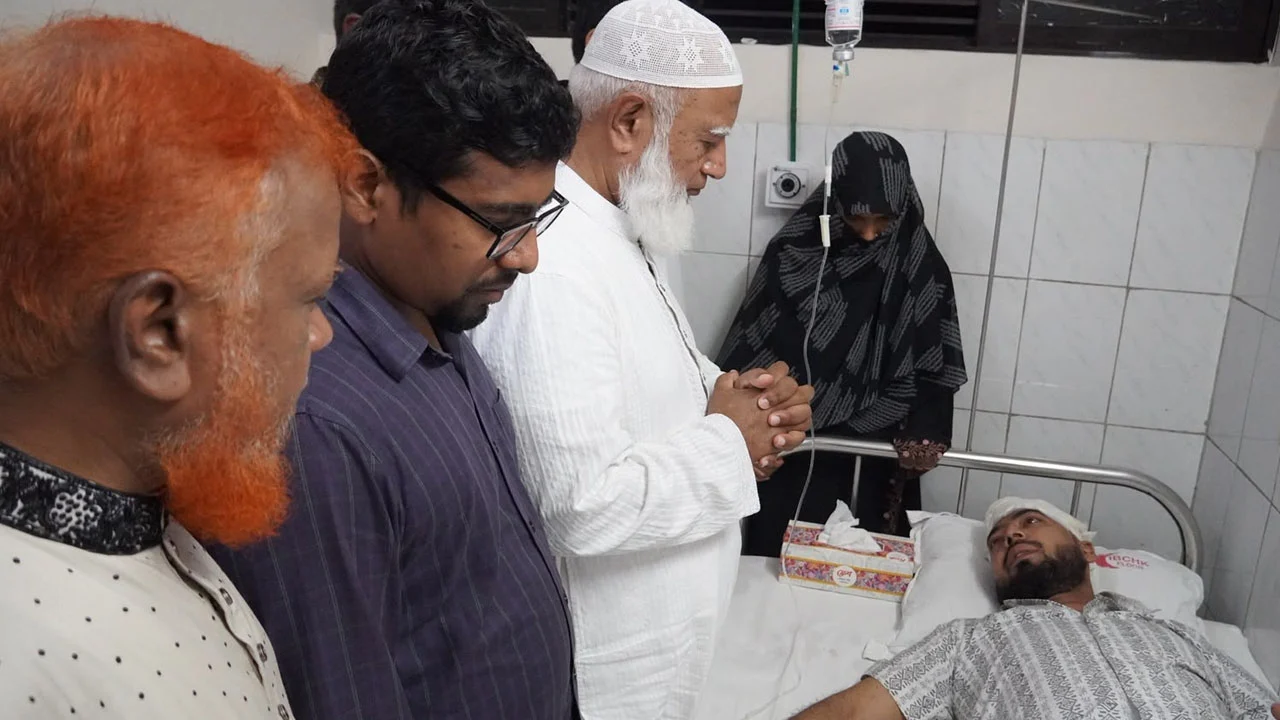
Bangladesh Jamaat-e-Islami Ameer and opposition leader Dr. Shafiqur Rahman visited the Islami Bank Central Hospital on Wednesday to check on students and activists from the Jagannath University branch of Islami Chhatra Shibir who were severely injured in recent attacks.
Speaking to reporters at the hospital, Dr. Rahman expressed deep concern over the violence that has unfolded across various educational institutions over the past four days. He alleged that activists from Chhatra Dal, Juba Dal, and Swechchhasebak Dal have been conducting armed assaults against peaceful members of Islami Chhatra Shibir.
Dr. Rahman drew parallels between these incidents and the tactics used during the Awami League era, noting that attackers are once again employing helmets and indigenous weapons. He specifically highlighted the situation at Dhaka Alia Madrasa, where he claimed Chhatra Dal members caused chaos. During the incident, the institution’s principal was reportedly assaulted while attempting to intervene, resulting in a severe head injury that required 11 stitches.
Addressing the BNP leadership, including the acting chairman, Dr. Rahman stated that the party has failed to learn from its past mistakes. He demanded to know what disciplinary actions are being taken against those involved in the violence, warning that failure to act would lead the public to believe the BNP is indirectly encouraging these disturbances.
The Jamaat leader further condemned the targeting of victims even while they were hospitalized, noting that the relatives of the injured, including the pregnant wife of one victim, were also subjected to attacks. He urged the government to move beyond empty rhetoric and ensure the impartial application of the law, rather than filing cases against the victims of the violence.
Dr. Rahman also pointed to the case of a young man named Alif, who lost his vision in the unrest. He expressed astonishment that while leaders from various parties have visited the victim, representatives from the ruling party have yet to do so. He emphasized that the government has a duty to act as a guardian for all citizens, regardless of political affiliation.
Warning against the misuse of power, he remarked that just as illnesses require specific medicine, the government should be mindful of its actions. He suggested that the current instability in educational institutions might be a distraction from broader national issues, such as the energy crisis and rising commodity prices, but cautioned that the public is not easily deceived.
Looking ahead, Dr. Rahman affirmed that his party would continue to protest on the streets to demand public rights and work toward implementing the people’s aspirations through a referendum. He concluded by stating that the party remains prepared to make any necessary sacrifices to ensure the rights and future of the Bangladeshi people.