

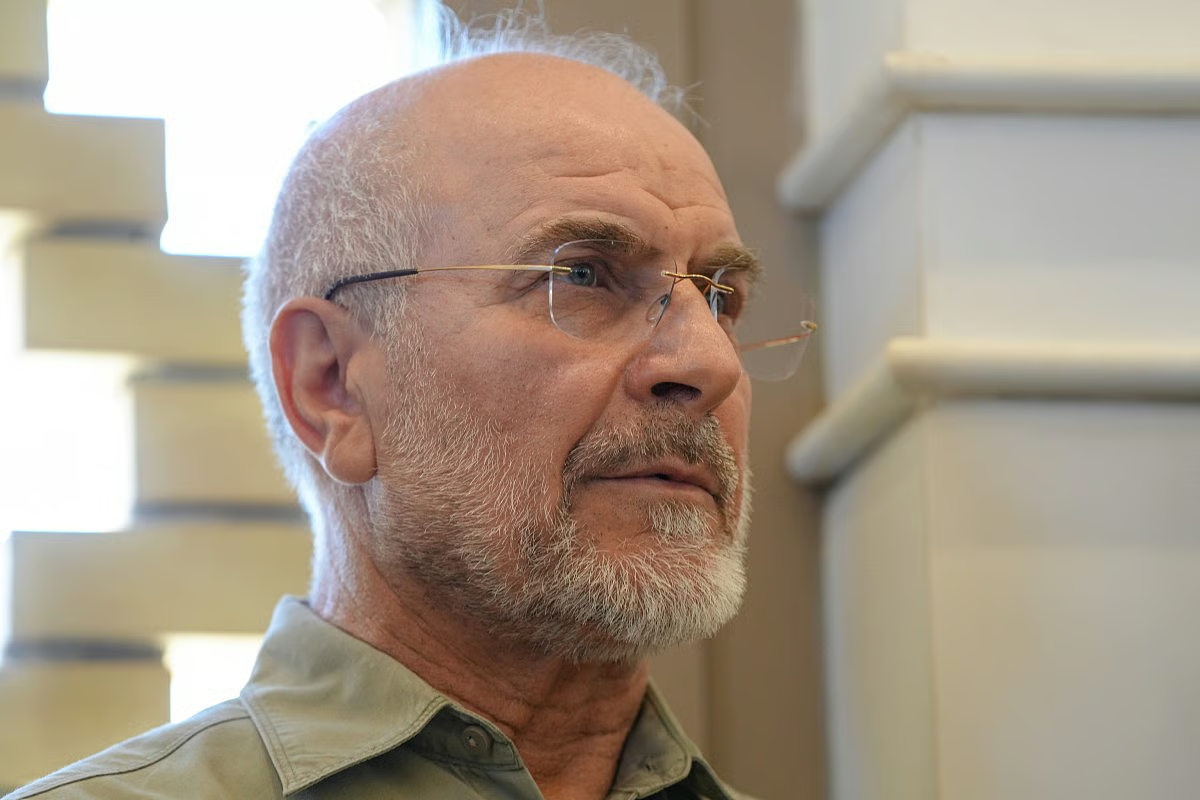
Iranian Parliament Speaker Mohammad Bagher Ghalibaf has launched a sharp critique of the current United States administration, dismissing its foreign policy and economic strategies as ineffective. Amidst the implementation of what the US Treasury describes as the most severe financial sanctions in history against Tehran, Ghalibaf has publicly mocked Washington’s approach, warning that such “frozen” policies will only lead to a stagnant American economy.
During a diplomatic visit to Iraq, Ghalibaf specifically targeted high-ranking US officials, including Treasury Secretary Scott Bessent and Defence Secretary Pete Hegseth. He characterized these figures as “way out of their league” and ill-equipped to manage high-stakes international diplomacy, while asserting that the “Iran boomerang” remains in active motion.
Ghalibaf argued that the US and Israel have shifted toward economic and “cognitive” warfare, acknowledging that they cannot succeed in a direct military confrontation. To counter these “unjust sanctions,” he announced that Iran is actively deepening economic ties with neighboring nations, prioritizing bilateral trade using national currencies rather than the US dollar.
Strategic Proposals and Regional Security
- Diplomatic Outreach: Tehran has reportedly received numerous messages from regional neighbors regarding a new, independent security order that operates entirely outside US influence.
- Economic Integration: Iran aims to link regional security with trade, encouraging neighboring states to maintain a stake in energy flows and transportation networks.
- Strait of Hormuz: A proposed regional management system, modeled on the Strait of Malacca, would involve Iran and other parties, potentially utilizing voluntary fees for navigation and safety services.
- Historical Context: Ghalibaf has a history of aggressive posturing, including his May 2026 social media declaration that US naval operations near the Strait of Hormuz had “failed.”
Key Policy Positions and Developments
- Ghalibaf’s 14-point proposal: Presented as the only viable path forward for regional stability.
- Legal Frameworks: Supreme Leader Khamenei has unveiled new legal structures governing the Strait of Hormuz.
- US Blockade: Ghalibaf has publicly challenged the efficacy of US-led maritime and economic blockades.
- Diplomatic Stance: Iran maintains that no formal talks with the US will occur until existing Memoranda of Understanding are fully honored.
- Regional Escalation: The Arab Parliament has formally called for action following recent Iranian strikes, while some Iranian lawmakers have suggested that seizing a US base would be a decisive military factor.
By fostering an independent regional security bloc, Tehran is attempting to blunt the impact of Washington’s financial pressure. The strategy emphasizes that regional stability and trade functionality are best managed by local stakeholders, effectively bypassing the influence of Western powers in the Persian Gulf and surrounding areas. The report also notes that iran’s Ghalibaf mocks US ‘clown crew’ as sanctions campaign intensifies.
Important Details
- The report also notes that ghalibaf assails ‘warmongering’ by Israeli regime.
- The report also notes that related Stories.
- The report also notes that iran’s Ghalibaf: No tallks with US till MoU fufilled.