

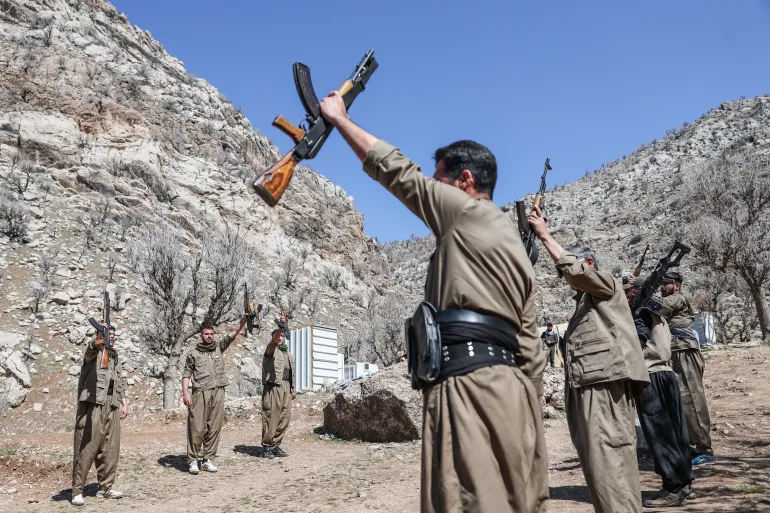
Iranian authorities are increasingly publicizing clashes with armed cells and border skirmishes as they navigate a volatile security landscape during the ongoing war with the United States and Israel. By framing these incidents as a national security struggle, the state aims to project an image of control and deterrence to both domestic and international audiences.
In a recent development, state media reported the arrest of an eight-member network allegedly linked to anti-revolutionary and pro-monarchy factions. The Islamic Revolutionary Guard Corps (IRGC) in Fars province accused these individuals of using Molotov cocktails and burning tires during nationwide protests that occurred in January. These arrests follow a broader crackdown that has seen the Intelligence Ministry announce the detention of 111 so-called monarchist cells across 26 provinces as of March 18.
The government views the January unrest as a coup attempt orchestrated by foreign-backed agents. While some Iranians have expressed support for the return of the monarchy—which was overthrown in the 1979 revolution—and figures like the foreign-based Reza Pahlavi have called for strikes, there is little evidence of major organized pro-monarchy armed groups operating within the country. Most recent demonstrations have been driven by economic grievances and domestic repression rather than a desire to restore the monarchy.
The humanitarian and legal fallout from the unrest has been significant. Thousands are believed to have died during the protests, and the judiciary has executed dozens of prisoners since the war began in late February. Furthermore, numerous students, journalists, healthcare workers, and businesspeople have been detained for activities deemed threats to national security. International bodies, including the United Nations, have condemned the state’s response as brutal.
External pressure remains a core component of the conflict. US President Donald Trump and Israeli Prime Minister Benjamin Netanyahu have openly discussed the objective of regime change in Tehran. US Treasury Secretary Scott Bessent suggested that economic pressure, including 100 percent inflation and military pay issues, could incite further public uprisings or internal divisions within the IRGC.
Beyond internal dissent, Iran faces a persistent threat from ethnic armed groups near its borders. Kurdish fighters based in northern Iraq represent a significant non-state challenge. In early March, reports indicated that between 5,000 and 8,000 fighters from groups such as the Kurdistan Free Life Party (PJAK), the Democratic Party of Iranian Kurdistan (PDKI), and the Kurdistan Freedom Party (PAK) were discussing potential cross-border operations with US and Israeli representatives. Although these plans did not materialize into a full-scale operation, the IRGC responded by reinforcing border provinces.
In the southeast, separatist Baloch fighters continue to pose a security risk. Security forces reported breaking up a cell belonging to Jaish al-Adl in late August, seizing explosives and weaponry. Despite such operations, the group continues to launch sporadic attacks against police and IRGC personnel.
Analysts suggest that the intersection of external support and domestic instability could prove critical. Alex Vatanka of the Middle East Institute noted that the state perceives increased support for ethnic militants as an existential threat given the current war footing. Trita Parsi of the Quincy Institute added that while these militias may not currently threaten the government’s survival, they could become a major liability if the conflict escalates, particularly if the US opts to deploy ground troops following the mid-term elections. The report also notes that the leaders of Iran’s Islamic Republic have in recent weeks also expressed concern about more potential protests as public discontent rises amid deteriorating economic conditions. The report also notes that the Iranian government has since then announced a large number of arrests of people it says are supporters of the monarchy. The report also notes that the Kurdish armed groups were considered by the Trump administration to lead a limited ground operation in western Iran to complement extensive air strikes by US and Israeli fighter jets and warships, at the start of this year’s war. The report also notes that but the groups said they lacked sufficient weaponry and did not receive a clear signal from Washington to initiate the operation. The report also notes that but that they had kept the weapons for themselves, trump later repeatedly claimed that he had supplied arms to Kurdish forces. The report also notes that six arrested, and rifles, grenade launchers and explosives seized, one rebel fighter was reported to have been killed. The report also notes that “The Iranian state might see any signs of increased external support for ethnic militants to be of an existential kind this time around due to the war situation,” he told.