

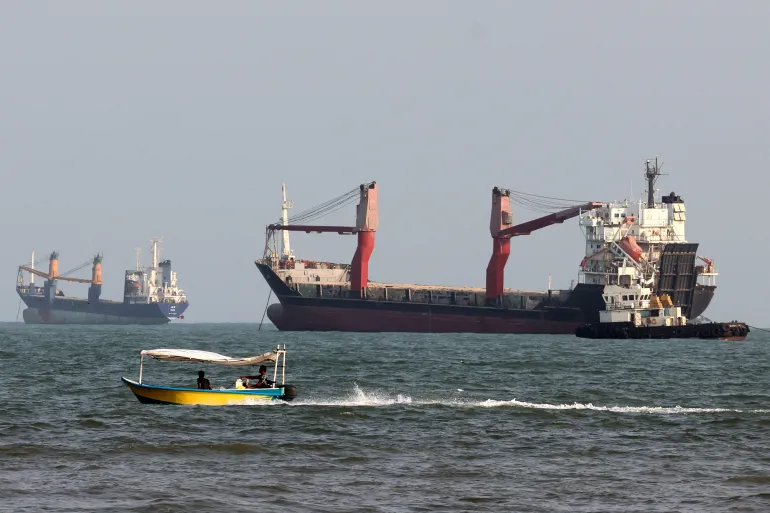
Iran has announced plans to implement a new restricted zone around the Strait of Hormuz, a critical global energy chokepoint. This development follows a period of renewed hostility between Tehran and Washington, characterized by reciprocal attacks on vessels in the waterway—a situation experts have described as a dangerous escalation.
Mohsen Rezaei, Secretary of Iran’s Supreme National Security Council, stated that the zone’s details would be finalized in the coming days. According to state media, the area will span from the US Navy’s blockade line, extend toward the Strait of Hormuz, and encompass portions of the Persian Gulf. Iranian officials have warned that any vessel entering this designated zone will be placed on an Iranian sanctions list.
The announcement follows the collapse of a 60-day memorandum of understanding (MoU) signed on June 17, which had briefly halted military hostilities. The agreement failed due to ongoing disputes regarding control over the strait, which Iran has leveraged throughout its conflict with the United States. Before the war, approximately 20 percent of the world’s oil and gas supplies transited through this passage.
Tehran is also coordinating with Oman to approve new maritime route maps. Deputy Foreign Minister Kazem Gharibabadi recently noted that Iran and Oman reached an agreement on a temporary maritime route, with entry points intended to pass through Iranian territorial waters. Rezaei emphasized that Iran would only commit to keeping the Strait of Hormuz open once the United States ceases its perceived sabotage, threats, and attacks.
While there has been no formal international or US response to the specific announcement of the new restricted zone, tensions remain high. On Sunday, US Central Command spokesperson Captain Tim Hawkins dismissed an Iranian claim that a US vessel had attempted to enter a restricted area as a total lie. This disagreement occurred shortly after Washington targeted three Iranian oil tankers, prompting retaliatory strikes from Tehran, including a ballistic missile fired toward US warships.
The current maritime environment is volatile, with at least 19 seafarers killed and dozens of ships attacked since March. Analysts suggest that Iran’s move may be a strategic attempt to provoke a broader US military response. Such a reaction could potentially serve Tehran’s political interests by justifying further strikes against regional US military facilities and neighboring Gulf countries, while simultaneously encouraging domestic support amid economic hardship.
Navigation through the strait remains active but at significantly diminished levels. US Energy Secretary Chris Wright reported that, when accounting for pipelines that bypass the waterway, total energy flows are currently at roughly two-thirds of pre-conflict levels. While the United Kingdom Maritime Trade Operations (UKMTO) Centre recorded 59 ships passing through the strait on Sunday, other maritime tracking data indicates a much lower and more inconsistent volume of traffic.
The struggle for control over navigation routes persists. Iran previously published a map of approved routes in April, forcing vessels closer to its coastline. Conversely, in June, Oman collaborated with the International Maritime Organization to establish a southern corridor. The Islamic Revolutionary Guard Corps has consistently objected to these alternative routes, insisting that only Iranian-approved paths are authorized. As the situation evolves, the viability of the Omani-brokered agreement remains a key factor in whether Iran proceeds with enforcing its proposed restricted zone or opts for a tactical withdrawal. The report also notes that so, where exactly will Iran’s proposed zone be, what restrictions will apply, and how does Tehran intend to enforce this. The report also notes that what did Iran say about the restrictive zone. The report also notes that the Stoic Warrior, subsequently used a route that took it close to the coasts of the United Arab Emirates and Oman before passing around the Musandam Peninsula, an Omani exclave, a Liberian-flagged tanker. The report also notes that traffic in the strait had picked up, following the 14-point MoU signed in June in the Swiss city of Geneva. The report also notes that the US agreed to end its naval blockade within 30 days, while Iran pledged to clear mines from the Strait of Hormuz and allow ships to pass “with no charge” for 60 days, under the MoU. The report also notes that about 20 million barrels of crude oil per day flowed through the waterway, before the conflict. The report also notes that “So Iranians are still causing trouble, but the United States Navy is winning that battle,” he said. The report also notes that which on Sunday said 59 ships passed through the Strait of Hormuz in the previous 48 hours, bolstering US claims was the United Kingdom Maritime Trade Operations (UKMTO) Centre.