

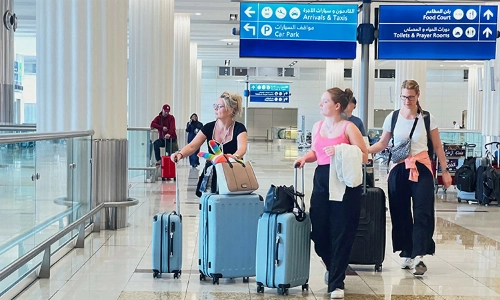
Dubai International Airport (DXB) recorded 31.5 million passengers during the first six months of 2026. This performance follows a period marked by significant operational challenges, though the airport saw a consistent recovery in demand and airline capacity throughout the second quarter. Despite regional airspace limitations impacting traffic earlier in the year, monthly guest volumes climbed steadily, moving from 3.5 million in April to 4.5 million in May, and reaching 5 million by June.
Paul Griffiths, CEO of Dubai Airports, noted that the first half of the year served as a rigorous test for the aviation system, highlighting the organization’s resilience. Griffiths emphasized that as capacity returns, demand is responding immediately, which is vital for DXB given the high volume of international transfer traffic. He stated that the airport community is well-positioned to support this returning demand and further solidify Dubai’s standing as a premier global aviation hub.
Operational data for the first half of 2026 shows that DXB handled 13 million passengers in the second quarter alone. Total aircraft movements for the six-month period reached 150,600, a 32.1% decrease compared to the previous year, with 62,500 movements recorded in the second quarter. By the end of June, the airport maintained connections to 217 destinations across 99 countries, serviced by nearly 50 international airlines. Passenger load factors have shown improvement, nearing 2025 levels as global connectivity continues to widen.
In terms of logistics and efficiency, DXB processed 751,340 tonnes of cargo and handled 30.3 million bags during the first half of the year. The airport maintained a high standard of service, with a mishandled baggage rate of 2.7 per 1,000 passengers, significantly better than the global industry benchmark of 4.9 per 1,000. Passenger processing remained efficient, with 98.98% of departing guests clearing passport control in under 10 minutes, 98.95% of arrivals clearing in under 15 minutes, and 99.34% of travelers passing through security in under five minutes.
Looking toward the remainder of the year, Dubai Airports is investing in a comprehensive enhancement program. This includes upgrading guest facilities, implementing a new remote departures experience, and expanding self-service and biometric systems. These initiatives aim to improve operational flexibility and passenger comfort. With the winter schedule approaching and a robust calendar of business and sporting events in Dubai, the airport anticipates stronger momentum for the second half of 2026. The report also notes that cargo volumes reached 751,340 tonnes during the first half, down 28.7% year on year, including 351,716 tonnes handled during the second quarter. The report also notes that dXB processed 30.3 million bags during the first half, 28% down year on year, including 12.7 million during Q2. The report also notes that improving connectivity and strengthening load factors signal resilient demand across key markets and growing confidence ahead of DXB’s traditionally busier second half, the steady return of international carriers. The report also notes that where international transfers account for a significant share of traffic, that is particularly important for DXB. The report also notes that experience, expanded self-service options, the continued evolution of biometric systems, smarter operational capabilities, improved passenger flow and targeted capacity improvements. The report also notes that deployment of technology and refinements to the design and functionality of key guest areas are also underway, creating more comfortable and intuitive spaces while enhancing movement through the airport and the comfort of waiting areas, across the airport. The report also notes that together, these initiatives will simplify journeys, increase operational flexibility and further enhance the seamless experience expected by the millions of guests who travel to and through Dubai’s gateway to the world.