

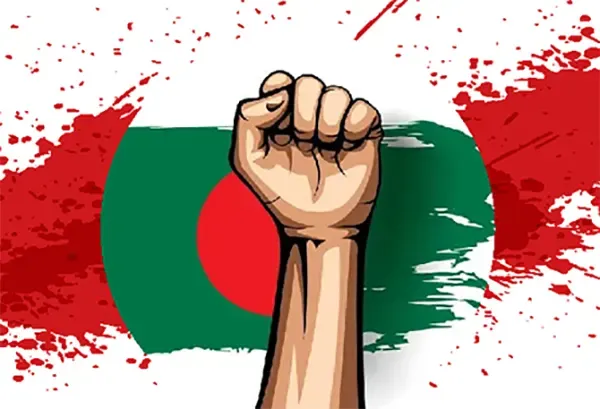
Today marks the second anniversary of August 5, a date etched in history as the “36th of July” 2024. This day represents a pivotal turning point in Bangladesh’s political landscape, signaling the end of a long-standing autocratic regime following a bloody student-led uprising. The movement culminated in the ouster of then-Prime Minister Sheikh Hasina, who fled to India—an unprecedented event in the nation’s independent history. The day is now observed as a national holiday, serving as a symbol of the public’s overwhelming demand for democracy, the elimination of discrimination, and state reform.
As the nation observes this anniversary, questions persist regarding how much of the public’s aspirations have been realized over the past two years. Following the uprising, an interim government managed the transition before handing power to an elected administration in February. In the subsequent general election, the Bangladesh Nationalist Party (BNP) secured a landslide victory. The political landscape has since evolved, with the Jamaat-e-Islami-led coalition taking its place as the primary opposition, while the National Citizens’ Party (NCP)—formed by student leaders of the 2024 movement—has emerged as a significant political stakeholder. The 13th National Parliament has already completed two sessions.
Prime Minister Tarique Rahman has initiated various cost-saving and public-oriented programs, though his administration faces significant hurdles, including economic instability, rising commodity prices, and challenges in the energy and law-and-order sectors. Tensions have also surfaced between the government and various political factions regarding the implementation of the “July Charter” and the conduct of referendums. Meanwhile, the Awami League, the party ousted during the uprising, remains in disarray; its top leadership, including Sheikh Hasina, remains in exile in India facing death penalty charges for genocide, and the party’s activities have been officially banned.
Analysts observe that while Bangladesh has successfully dismantled the structures of autocracy, the nation now navigates a complex environment of political friction and economic strain. Addressing these issues remains the primary challenge for the current government and political parties. The theme for this year’s commemoration is “Building the Nation in the Spirit of July, Bangladesh First.”
Official commemorations began at 6:01 AM today, with the Minister of Liberation War Affairs, the State Minister, and senior officials laying wreaths at the July Martyrs’ Memorial in Shahbag. A central discussion and reception for the families of martyrs and July fighters will be held at the Bangladesh-China Friendship Conference Center in Sher-e-Bangla Nagar at 12:00 PM. Acting President Hafiz Uddin Ahmed (Bir Bikrom) will attend as the chief guest, with the session presided over by Liberation War Affairs Minister Ahmed Azam Khan.
The day’s events extend nationwide, including programs in all districts, upazilas, city corporations, and Bangladesh missions abroad. Special prayers will be held in religious institutions, and public venues such as the National Museum, Military Museum, and Science and Technology Museum will remain open to children. Furthermore, a major highlight of today’s events is the inauguration of the “July Mass Uprising Memorial Museum” at Ganabhaban, the former official residence of the Prime Minister, which will be presided over by Prime Minister Tarique Rahman. Political parties, including the BNP, Jamaat, and NCP, have also organized independent programs, including visits to martyrs’ graves and commemorative discussions.