

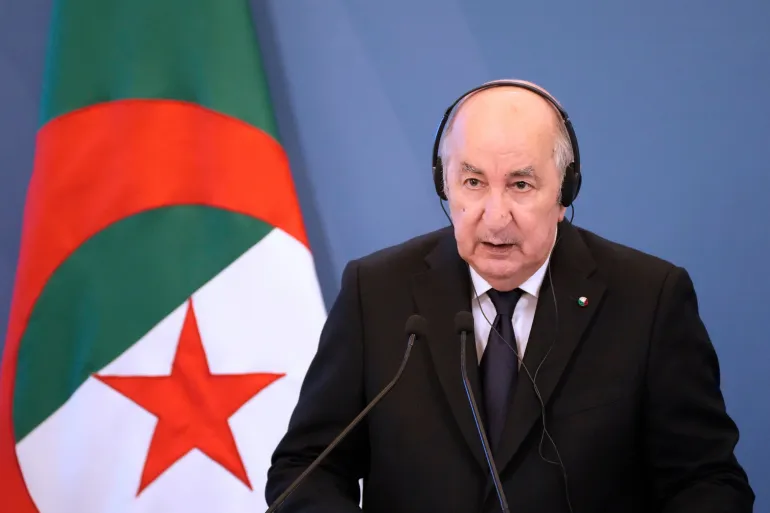
Algeria has officially severed diplomatic relations with the United Arab Emirates, citing a series of what it termed “provocative or hostile” actions by Abu Dhabi. The Algerian foreign ministry stated on Thursday that it had exhausted all diplomatic avenues to preserve bilateral ties, noting that the UAE’s conduct had become entirely unacceptable despite repeated warnings.
As part of the immediate fallout, the Emirati ambassador was summoned to the ministry, formally notified of the decision, and given a 48-hour deadline to comply with the expulsion. Further complicating the diplomatic rupture, the Algerian defence ministry announced that it would close the nation’s airspace to all UAE-registered civilian and military aircraft starting Friday. However, the ministry clarified that existing commercial flights to and from Algiers will remain exempt from this ban until the end of 2026, when current contracts expire.
The UAE foreign ministry responded on Thursday, expressing hope that the decision would be temporary. In a statement, the ministry emphasized its appreciation for the Algerian people and highlighted the strong bonds shared between the two populations, particularly regarding the Algerian community currently residing in the Emirates.
Anwar Gargash, a diplomatic adviser to the UAE president, commented on the situation via social media, suggesting that international relations should be built on “rationality, communication and clarity of interests” rather than ambiguous signals. While he did not explicitly name Algeria, his remarks appeared to address the ongoing friction.
The rift follows years of mounting tension between the two nations, driven by conflicting regional agendas. Algeria has remained a staunch opponent of normalization with Israel, whereas the UAE and Morocco—an Algerian regional rival—formalized diplomatic ties with Israel in 2020 through the U.S.-brokered Abraham Accords.
The two countries also hold opposing stances on the Western Sahara dispute. The UAE maintains a consulate in the territory and supports Morocco’s sovereignty claims, while Algeria provides backing for the Polisario Front, which advocates for an independent Western Sahara. Additionally, their interests have increasingly clashed in the Sahel, where the UAE has sought to expand its influence while Algeria’s own relationships with southern neighbors have suffered following recent military coups.
Algerian President Abdelmajid Tebboune has frequently criticized the UAE in public, describing it as a “micro-state” or “statelet” that destabilizes the region. In a televised interview this past July, Tebboune claimed the UAE has had a “very negative impact” on the region, stating, “Wherever they set foot, blood flows.” He added that he wanted the UAE to “stay away” to prevent similar instability within Algeria.
Tebboune noted during that same interview that he had considered a diplomatic break long ago, but had held off in an attempt to avoid further deepening divisions within the Arab world.