

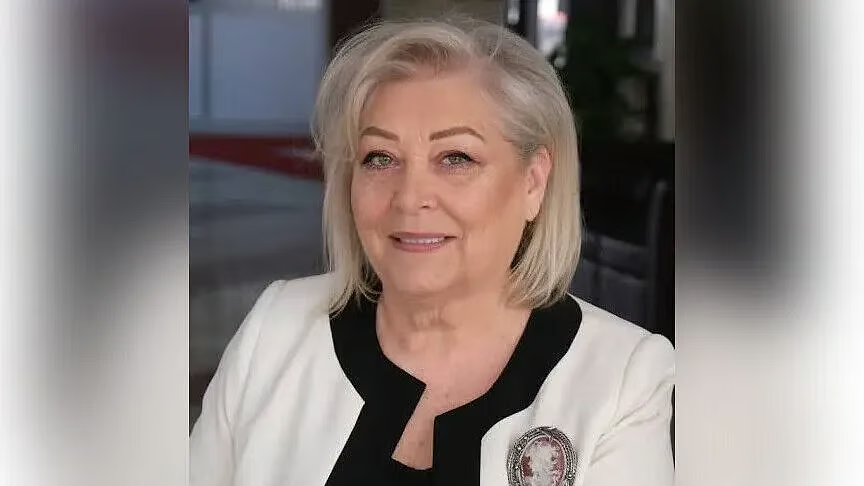
Kosovo’s parliament narrowly averted a government collapse during the early hours of Wednesday, October 7, 2026, by securing the election of Justina Shiroka Pula as the nation’s new president. The move, which resolved a long-standing political impasse, was achieved through a strategic legislative deal between Prime Minister Albin Kurti’s administration and the largest opposition party. Kosovo parliament voted to curb the powers of its special war crimes court in a last-minute session that narrowly avoided another governmental collapse in the early hours of Wednesday (Oct.
The agreement required a two-thirds majority, which was met by coupling the presidential vote with a controversial amendment to the laws governing the Kosovo Specialist Chambers (KSC). Based in the Netherlands, the court was established to prosecute crimes linked to the conflict with Serbia during the 1990s. The recent conviction of four senior Kosovo Liberation Army (KLA) members, including former president Hashim Thaci, had triggered widespread public protests in Kosovo, where these individuals are frequently regarded as independence heroes. Which was tightly negotiated ahead of a looming deadline to elect the country’s president at midnight (2200 GMT), came after the Kosovo Specialist Chambers (KSC) found four senior guerrilla figures guilty of war crimes last month, the amendment. Kosovo pauses controversial Serbian car plate scheme.
Thaci was sentenced to 25 years for crimes including illegal arrests, torture, and murder, a verdict that deepened the political divide. While the new legal amendment will dramatically restrict the KSC’s future scope, officials confirmed it will not impact the sentences of the four men already convicted, who have pledged to pursue appeals through the court’s existing mechanisms.
Under the revised legislation, the KSC’s jurisdiction will be limited to crimes occurring within Kosovo immediately following the war. Furthermore, the amendment introduces provisions that permit convicts to serve prison terms within Kosovo, caps maximum sentences at 15 years, and establishes a framework for presidential pardons. These changes were finalized only minutes before a strict midnight deadline, a failure of which would have triggered a fourth round of snap elections within two years. Limit sentences to 15 years and clear the way for presidential pardons, it would also allow convicts to serve their terms in Kosovo.
Justina Shiroka Pula, born in 1953, brings a background in economics and academia to the presidency. She is recognized as the first woman to lead the Kosovo Academy of Sciences and Arts and previously served as the nation’s energy minister. Her academic credentials include degrees from the Faculty of Economics in Pristina and postgraduate studies at the University of Zagreb. In 1977, she earned a doctorate from the University of Prishtina, where her thesis focused on demographic investments and the economic development of Kosovo.
Prime Minister Kurti, whose party had struggled for months to consolidate the necessary votes for a presidential candidate, faced criticism for the haste of the bill. Despite his previous reservations, he pursued the compromise to prevent the government’s collapse. Following the announcement of the vote results, celebrations took place in Pristina, including fireworks displays, as the country sought to move past the latest period of instability. With fireworks launched above the capital Pristina, the changes to the court sparked celebrations from thousands of protesters who had gathered nearby.