

An American airman, identified by the mission call sign “Bravo” to protect his identity, provided a first-hand account on Sunday of the intense rescue mission that saved his life after his F-15 was shot down in Iran this past April. During a television interview, Bravo described the terrifying moments immediately following the hit, noting that his parachute was damaged, forcing him to desperately attempt to “unfurl or pull pieces of the parachute loose” during his free fall.
The impact of the fall resulted in severe injuries, including a broken back, arm, and shoulder, alongside a sprained ankle and significant facial lacerations. Despite these physical traumas, the weapon systems officer managed to evade detection by Iranian forces. Equipped with only a tracking beacon, a communication device, and a pistol, he hiked up a 7,000-foot mountain ridge. He eventually found a crevice where he hid alone for hours while awaiting help, later describing the successful arrival of his rescuers as one of the greatest moments of his life.
The rescue operation spanned 50 hours and involved hundreds of intelligence and military personnel, including Army Delta Force and Navy SEAL Team Six operators. Before the ground team arrived, CIA operatives conducted a deception campaign to misdirect Iranian forces, who had issued a bounty for the airman’s capture. While the aircraft’s pilot was recovered shortly after the crash, Bravo remained in hiding as American aircraft dropped bombs to clear the vicinity of the ridge.
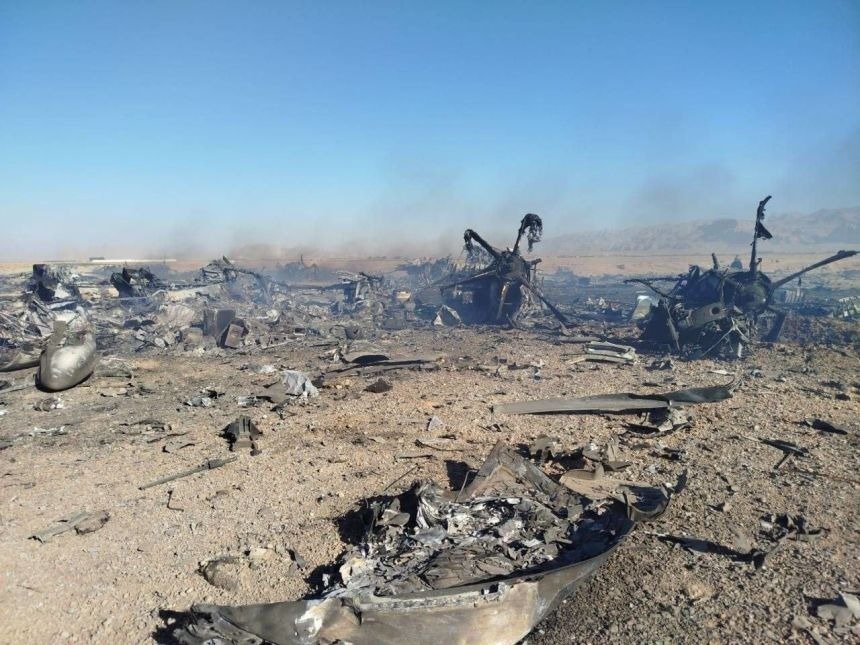
The complex mission faced unexpected complications when two MC-130J special operations transport aircraft sustained damage, leaving over 90 special operators briefly stranded. Following the successful recovery of the airman, the US military destroyed the two damaged aircraft to prevent sensitive technology from being seized by Iran before deploying replacement planes. Both crew members remain unidentified by the Pentagon to protect their safety and prevent the disclosure of sensitive operational information.
The public broadcast of the interview emerged amidst internal government friction. While the Pentagon officially stated that the decision to participate was made entirely by the airmen, reports indicate that Defense Secretary Pete Hegseth and his political appointees actively pushed for the interview despite reservations from both the service members and military leadership regarding the security of classified information. The pilot of the aircraft declined to participate in the segment.
Pentagon spokesperson Sean Parnell firmly denied that the department mandated the appearance, characterizing claims of coerced participation as a complete lie. He maintained that the department exercised significant care to ensure that operational methods and sources remained protected throughout the production. Despite the controversy surrounding the broadcast, Bravo expressed profound gratitude to those who risked their lives to secure his return from the mountains. The report also notes that the American airman rescued from Iran after his aircraft was shot down in April shared for the first time details about the risky recovery operation during a “60 Minutes” interview Sunday. The report also notes that “It was the most terrifying thing I’ve ever seen,” he said. The report also notes that “As soon as I found a spot that I felt provided some concealment, I started working toward communication,” “Bravo” told CBS’ Norah O’Donnell. “When I got to the moment where I could review and think about all that I’d gone through, I sent ‘God is good,’” he added, describing the first message he sent. The report also notes that also reported that political appointees within Hegseth’s office insisted the interview go forward despite reservations voiced by the military’s chain of command.