

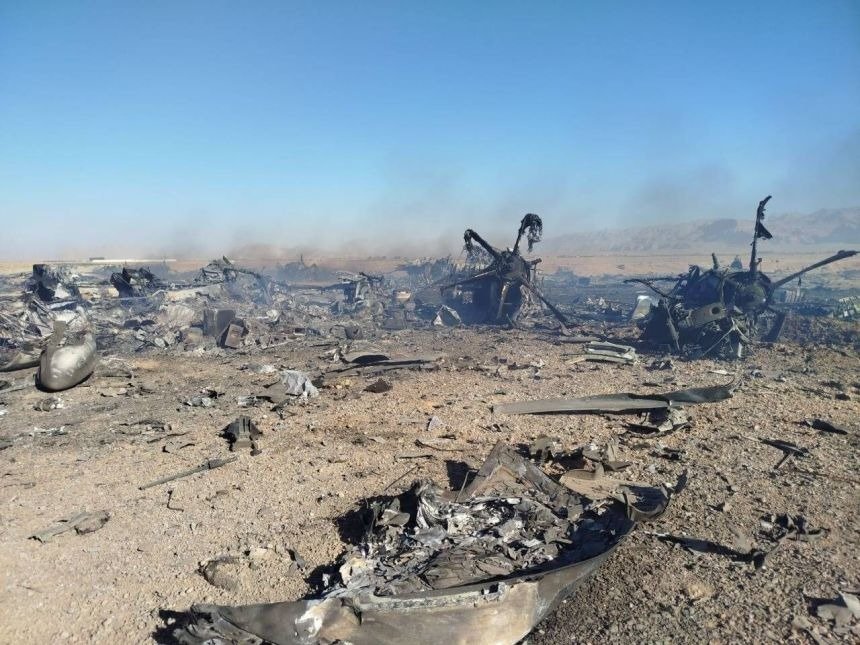
Defense Secretary Pete Hegseth and his political appointees actively lobbied for two F-15 crew members, shot down over Iran last April, to appear in a high-profile “60 Minutes” segment detailing their subsequent rescue. While the department sought to highlight a rare victory in the ongoing, increasingly unpopular conflict, the effort encountered significant resistance from within the military ranks.
Initial attempts to secure the airmen for the broadcast were met with hesitation. Multiple sources familiar with the matter revealed that at least one of the crew members expressed alarm at the possibility of being ordered to participate, while military officials remained wary about the potential disclosure of classified operational tactics. Despite these concerns, Hegseth’s political staff remained adamant that the crew members sit for interviews.
The tension cooled only after Hegseth held private meetings with the survivors. He ultimately gave them the choice to participate rather than mandating their cooperation. Consequently, the airman referred to as “Bravo” agreed to an on-camera interview, while the other, identified as “Alpha,” declined to take part in the report. The Pentagon has not publicly identified either individual.
The production was heavily orchestrated by Tami Radabaugh, a former Fox News producer who moved to the Defense Department as a senior adviser to Hegseth. She maintained close communication with the secretary throughout the process. CBS News also invested heavily in the segment, with editor-in-chief Bari Weiss personally lobbying Hegseth for exclusive access and pushing for the interviews to be prioritized following internal staff turmoil at the network.
Chief Pentagon spokesperson Sean Parnell vehemently denied allegations of improper pressure, characterizing the report as a “complete lie.” He maintained that the decision to participate rested entirely with the pilots, noting that the department took exhaustive precautions to protect sensitive sources and methods. Parnell further stated that any suggestion of coercion served only to denigrate the military personnel involved in the mission.
The rescue itself was a complex operation. After the aircraft was downed, the pilot was recovered within hours, but the weapons system officer spent more than a day evading Iranian forces. During this period, he navigated rugged terrain to reach a ridgeline 7,000 feet above sea level, carrying only a pistol, a tracking beacon, and a communication device before being extracted by American commandos supported by targeted airstrikes.
Gen. Dan Caine, chairman of the Joint Chiefs of Staff, reportedly shared concerns regarding the potential for the broadcast to inadvertently reveal tactical details to adversaries. However, he eventually opted to participate in the segment. The finalized broadcast, featuring correspondent Norah O’Donnell, captures the narrative of the rescue as part of a broader push by Hegseth to shape the public perception of the war in Iran.
For the Pentagon, managing such stories is often routine, with dedicated offices typically overseeing collaborations with media or entertainment productions. However, the hands-on involvement of the Defense Secretary in this specific production was described as unusually intensive, raising concerns among some uniformed service members who feared the incident was being leveraged for political narratives rather than purely informative purposes. The report also notes that which has become increasingly unpopular and put pressure on the secretary to claim victory, the episode underscores how Hegseth’s office is working to craft the narrative around the Iran war. The report also notes that additionally, the Department took great care to ensure operational security, sources, and methods were protected. The report also notes that to suggest otherwise is to denigrate every member of our military who participated in and supported the interview.”. The report also notes that including, were eager to interview the pilots earlier this year, and the media competition was intense, many major news outlets. The report also notes that at CBS, producer Keith Sharman, a 25-year veteran of “60 Minutes,” reached out to longtime US military contacts on the day of the rescue to start pursuing an interview. The report also notes that the lobbying effort went all the way to the top. The report also notes that who ultimately secured the interview, originally pitched a story for the previous season of “60 Minutes,” which ended in May, sharman and correspondent Norah O’Donnell.