

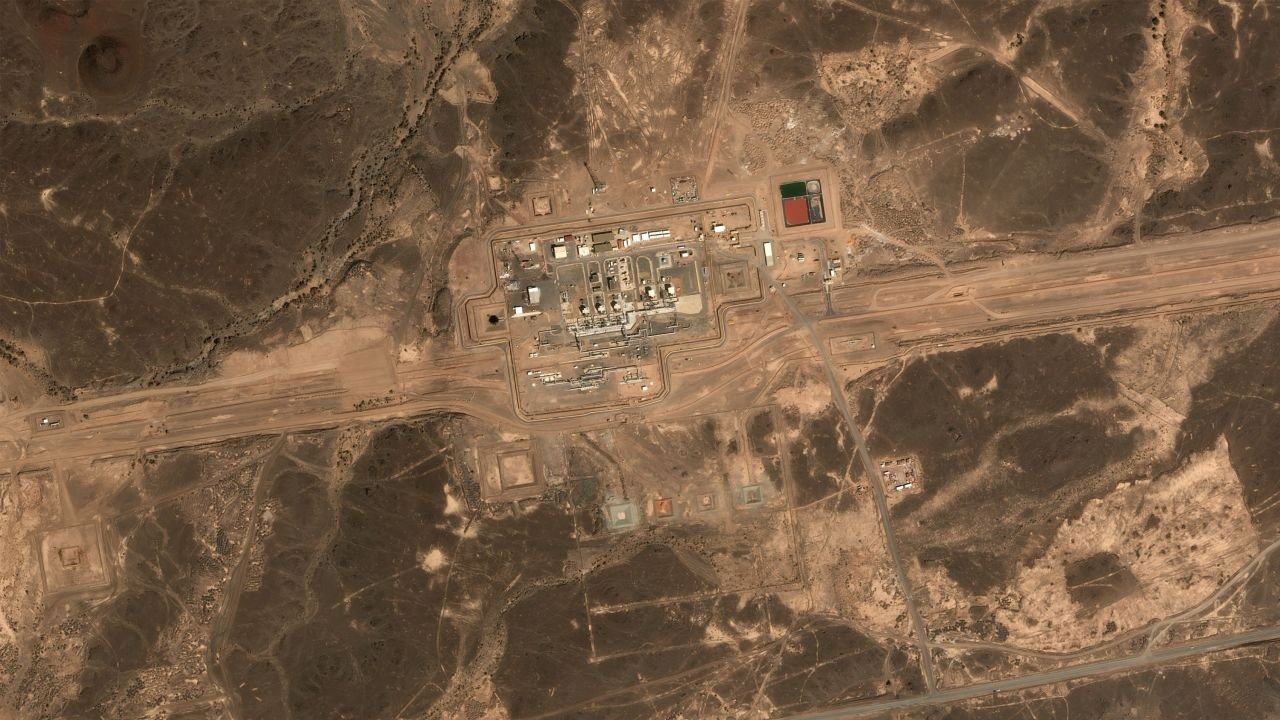
A vital oil pipeline network in Saudi Arabia was hit by projectiles on Thursday, according to two US officials familiar with the situation. Preliminary assessments indicate that the strikes targeted pumping stations situated adjacent to the pipeline infrastructure. Satellite imagery from Friday reveals significant fire damage at one facility, while footage from Thursday captured a separate station emitting plumes of thick, black smoke.
While the identity of the perpetrators remains unconfirmed, one official noted that the projectiles appeared to be drones launched from Iraq. The duration required for repairs remains uncertain, though experts and officials suggest that restoring pump stations is generally less complex than repairing the pipeline itself. Satellite data detected nine large fires near the East-West pipeline on Thursday, although at least six of these locations align with emergency flare pits used for oil and gas disposal.
This incident occurs as global oil prices have climbed above $100 per barrel, driven by extreme volatility linked to Middle Eastern instability. The East-West pipeline has become a critical artery for the kingdom since the onset of the US-Iran conflict, currently transporting approximately 5 million barrels of oil daily to the Red Sea port of Yanbu. This rerouting became necessary after Iran effectively closed the Strait of Hormuz, forcing the kingdom to bypass Persian Gulf tanker routes.
The vulnerability of this infrastructure is compounded by broader regional threats. Recently, an Iranian-aligned militia seized a strategic Red Sea port in Yemen, further endangering energy shipping lanes. Additionally, Houthi fighters have threatened to target any Saudi vessels attempting to navigate the Bab al-Mandeb strait, potentially jeopardizing the kingdom’s remaining export outlets.
In late July, Saudi Defense Minister Khalid bin Salman met with US President Donald Trump and Vice President JD Vance in Washington, DC. During these discussions, the Saudi delegation warned that Iran intended to leverage its proxy networks—including militias in Iraq and the Houthis—to escalate regional tensions. These concerns align with warnings from Behnam Ben Taleblu of the Foundation for Defense of Democracies, who noted that Iran-allied groups have previously utilized drones to pressure Arab nations into rejecting American military presence.
The attack coincides with a significant decline in Saudi oil production, which the kingdom recently reported to OPEC as having fallen to its lowest levels since 1990. US officials are currently working to gather intelligence on the strike. The Saudi government, state-run Aramco, the White House, and the State Department have not provided immediate comments, while US Central Command declined to address the incident. The report also notes that sources said, it was also not immediately clear how long it would take to repair the damage. The report also notes that the strike signals that the kingdom’s oil resources — and its ability to export those resources — are facing increasing threats as the Iran War continues. The report also notes that this week oil prices surged past $100 a barrel amid sharp swings driven by events in the Middle East. The report also notes that jennifer Hansler and Nadeen Ebrahim contributed to this report.