

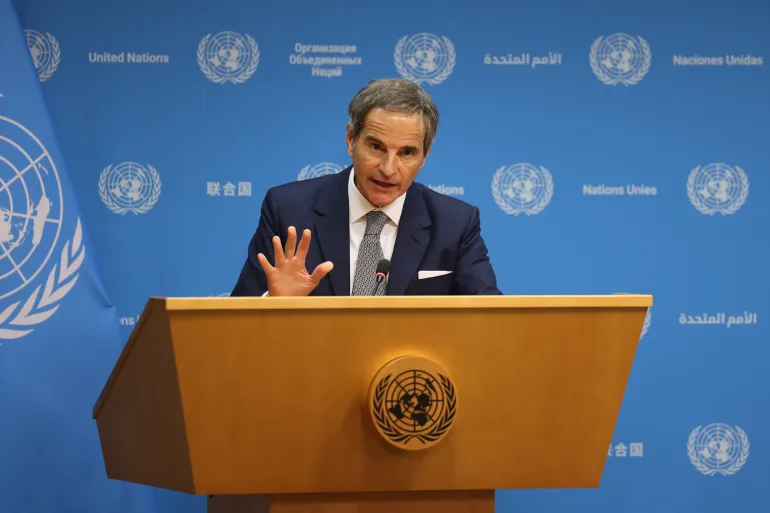
The International Atomic Energy Agency (IAEA) has issued a call for the “utmost urgency” in securing access to Iran’s nuclear facilities. In a quarterly report released on Tuesday, the United Nations watchdog emphasized that the current lack of information and inability to verify nuclear materials at these sites constitutes a serious proliferation concern.
This diplomatic friction follows the war launched by the United States in March, which Washington justified as a necessary measure to prevent Tehran from obtaining nuclear weapons—a goal Iran consistently denies. While the US has shifted its military focus toward controlling the strategic Strait of Hormuz, the status of Iran’s nuclear infrastructure remains a point of contention. The IAEA report specifically highlighted the lack of access to the Isfahan plant, which has faced multiple strikes by US and Israeli forces over the past year.
IAEA Director General Rafael Grossi stated his firm belief that these recurring crises and long-standing disputes must be addressed through a sustainable and verifiable diplomatic agreement. However, Tehran maintains that inspections of sites damaged by military action require special protocols. Mohammad Eslami, head of the Atomic Energy Organization of Iran, asserted on August 26 that the agency cannot inspect these facilities until it establishes specific criteria and procedures tailored for sites subjected to military strikes.
Tehran’s cooperation with the UN watchdog has been inconsistent since it suspended collaboration following US and Israeli attacks in June 2025. Although Iran signaled in September 2025 that it would permit inspectors to return, access to the bombed facilities has not been granted. This remains a critical issue, as Iran’s enriched uranium stockpiles remain largely unaccounted for, despite claims from US President Donald Trump last year that the nation’s nuclear program had been crippled and its facilities destroyed.
While Iran continues to insist that its nuclear technology is intended solely for civilian purposes, the IAEA has previously noted that the enrichment levels of Iran’s reserves exceed what is necessary for civilian use, though they have not yet reached weapons-grade status. The agency’s latest findings are scheduled for review during the board of governors meeting set to take place from September 21 to 25.