

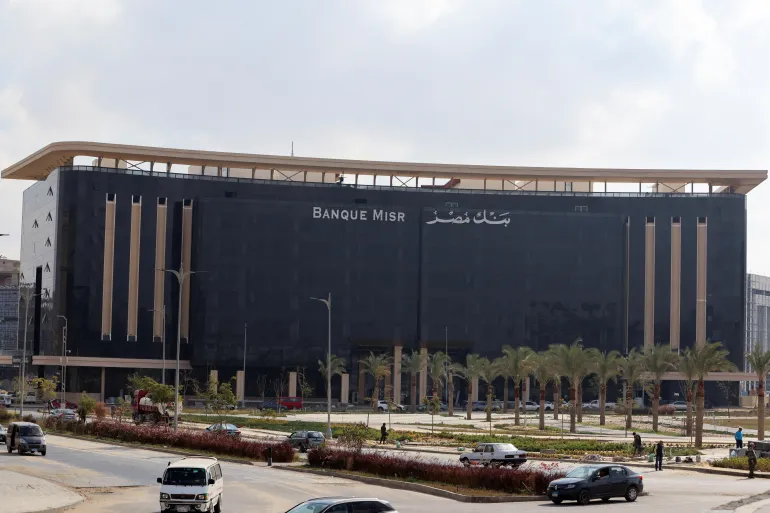
The United States government has announced plans to sever the UAE-based operations of Banque Misr from the American financial system. This regulatory action follows allegations that the Egyptian institution has served as a critical conduit for the Iranian government to conduct business and access global markets.
US Treasury Secretary Scott Bessent stated on Friday that the administration is committed to dismantling the economic lifelines Tehran relies upon. He characterized the move as a direct consequence for the bank, asserting that Banque Misr UAE had facilitated egregious support for the Iranian regime and its access to US dollars.
According to the US Department of the Treasury’s Financial Crimes Enforcement Network (FinCEN), an estimated $1.8 billion was processed through Banque Misr UAE for 103 companies between January 2024 and June 2026. Officials allege these entities are components of shadow banking networks used by Iran’s Ministry of Defence and the Islamic Revolutionary Guard Corps (IRGC) to evade sanctions and launder funds for Iranian leadership.
The proposed measure, which aims to revoke the bank’s correspondent banking access to US financial institutions, is currently subject to a 30-day public comment period. The Treasury noted that these regulatory steps are standard procedure, allowing for official review before a final determination is made. The restrictions are strictly limited to the UAE branches and will not affect the bank’s operations in Egypt or elsewhere.
Banque Misr issued a statement on Saturday confirming it is reviewing the notice. The bank emphasized that it is treating the data and estimates provided by the US with the utmost seriousness. It intends to engage with the US Treasury for further clarification, noting that its UAE branch remains operational for customers in the interim.
The Central Bank of Egypt (CBE) and the Egyptian Ministry of Foreign Affairs have initiated contact with American authorities regarding the situation. The CBE clarified that the impact is confined solely to the UAE branch’s dollar-denominated transactions with correspondent banks and does not extend to the broader Egyptian banking sector.
In response to the US announcement, the UAE central bank confirmed it has launched an urgent, in-depth investigation into the operations of Banque Misr within its jurisdiction. The regulator stated that it expects all licensed banks to protect the UAE’s financial system from reputational risks and to adhere to international financial laws.
This development occurs alongside broader US efforts, known as Operation Economic Outcast, to increase financial pressure on Iran during a period of stalled truce negotiations. Last week, the US Treasury sanctioned nearly 60 additional individuals and entities accused of assisting Iran in generating oil revenue, procuring weaponry, and conducting cyber operations.
Iranian officials have dismissed the latest sanctions as ineffective. Economy Minister Ali Madanizadeh stated that the measures would fail, while government spokesperson Fatemeh Mohajerani affirmed that President Masoud Pezeshkian’s administration would navigate these challenges. An IRGC spokesperson described the economic pressure as evidence of US failure on the battlefield.
Analysts in Tehran, including Ali Akbar Dareini of the Centre for Strategic Studies, suggest that Iran has developed extensive methods to circumvent such restrictions. He argued that the US strategy is based on miscalculations and that Iran remains confident in its ability to withstand the pressure.
Beyond the action against Banque Misr, the US Treasury’s Office of Foreign Assets Control (OFAC) has also sanctioned Reza Mohammad Taeedi, the general manager of the Dubai branch of Iran’s Bank Melli. The US alleges that Bank Melli has facilitated billions of dollars in transactions for the IRGC-Qods Force.
Additionally, the US has sanctioned the Hong Kong-based firm Kameng Trading Limited, accusing the company of assisting sanctioned Iranian entities in accessing the global financial system. These coordinated efforts underscore a widening US campaign to disrupt the multi-jurisdictional shadow networks that Iran utilizes to maintain its economic operations abroad. The report also notes that and today, we are taking the first step in holding it accountable for its continued, egregious support of the Iranian regime,” he said, banque Misr UAE decided to find out the hard way. The report also notes that and will not impact any other branches of the bank, the US government’s proposed punishment is expected to come into effect in 30 days after a public comment period. The report also notes that who else has the US taken action against. The report also notes that on Monday August 24, the United States announced sanctions on Iran and various global entities doing business with the country, in what officials called an “economic D-Day” and officially dubbed “Operation Economic Outcast” in an effort to isolate Tehran, ahead of Friday’s sanctions. The report also notes that at least 60 entities across the Middle East, Asia and Europe have been targeted in the latest sanctions as part of the economic pressure campaign that could further disrupt energy markets and rattle the global economy. The report also notes that analysts say, have pushed the Trump administration to try economic sanctions, but these are unlikely to compel Iran into meeting the demands, the long-term implications of the war. The report also notes that “The United States is returning to economic pressure because military force has failed to deliver the quick victory it expected,” Negar Mortazavi, senior fellow at the US-based Center for International Policy, said last week.