

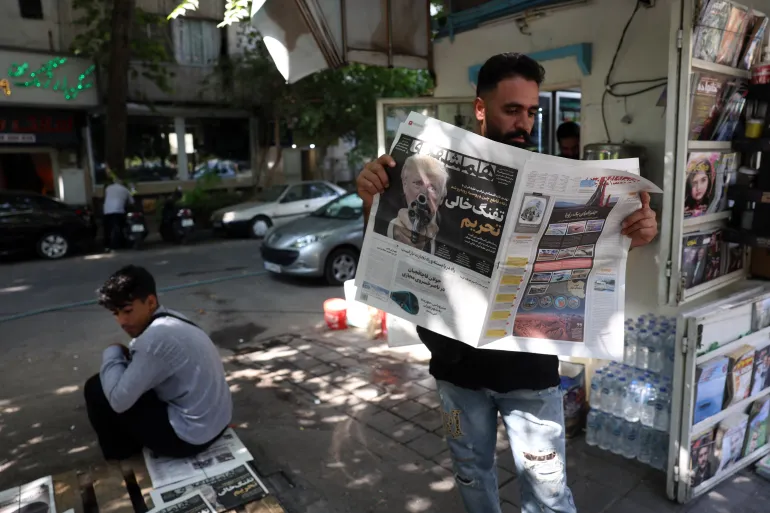
Iran has issued a stern warning to neighboring countries, stating that any nation participating in the United States’ campaign to cripple the Iranian economy will be treated as an enemy. Mohsen Rezaei, secretary of Iran’s Supreme National Security Council, delivered the ultimatum during an interview with state broadcaster IRIB on Saturday.
Rezaei emphasized that Tehran would consider regional states as adversaries if they align with Washington’s aggressive economic strategy. This development follows a declaration by US President Donald Trump on Wednesday, in which he vowed to launch the “most crushing economic operation” against Iran as part of the broader hostilities that have persisted since February 28, when the US and Israel initiated their first wave of military strikes.
The administration’s pressure campaign includes a pledge from President Trump to impose “tremendous economic consequences” on any country that provides a “lifeline” to Iran. Treasury Secretary Scott Bessent reinforced this stance, stating, “You’re either with us or against us.”
Outlining Iran’s regional strategy, Rezaei described a three-stage approach. The initial phase involves diplomatic negotiations and attempts to persuade neighbors to distance themselves from American influence using “pleasant language,” as Tehran seeks to avoid expanding the conflict. While countries siding with the US would be granted time to reconsider their positions, Rezaei warned that in the third stage, Iran would “definitely act.”
Tehran believes the US is attempting to fracture Iranian domestic unity by leveraging economic hardship to incite public unrest, which the government claims is intended to facilitate the effectiveness of American F-35 aircraft operations. These tensions have persisted despite efforts to find a resolution; negotiations have largely stalled following the collapse of a June 17 memorandum of understanding that aimed for an “immediate and permanent termination of military operations.”
The conflict has significantly impacted global trade, particularly regarding the Strait of Hormuz. Since Iran restricted traffic through the vital shipping lane early in the war, global prices for essential goods like oil and fertilizer have surged. While regional states have sought alternative export routes to bypass the strait, Rezaei cautioned that Iran is prepared to target these new logistics channels if those nations actively participate in the US economic war.
In response to the mounting pressure, Iran’s Ministry of Foreign Affairs condemned the incoming US measures on Saturday, characterizing them as an unlawful assertion of “extraterritorial sovereignty” over United Nations member states. Furthermore, reports suggest that Tehran is considering expanding its target list to include US allies in Europe who have provided support for the Trump administration’s ongoing operations. The report also notes that “We’re telling all nearby countries not to join the US economic war. The report also notes that his remarks come on the heels of escalating economic threats from the administration of US President Donald Trump. The report also notes that then, we try to separate them from America with pleasant language, because we are not really looking to expand the war,” he said. The report also notes that a major shipping lane off the coast of Iran, has become an enduring sticking point between the US and Iran, control over the Strait of Hormuz.