

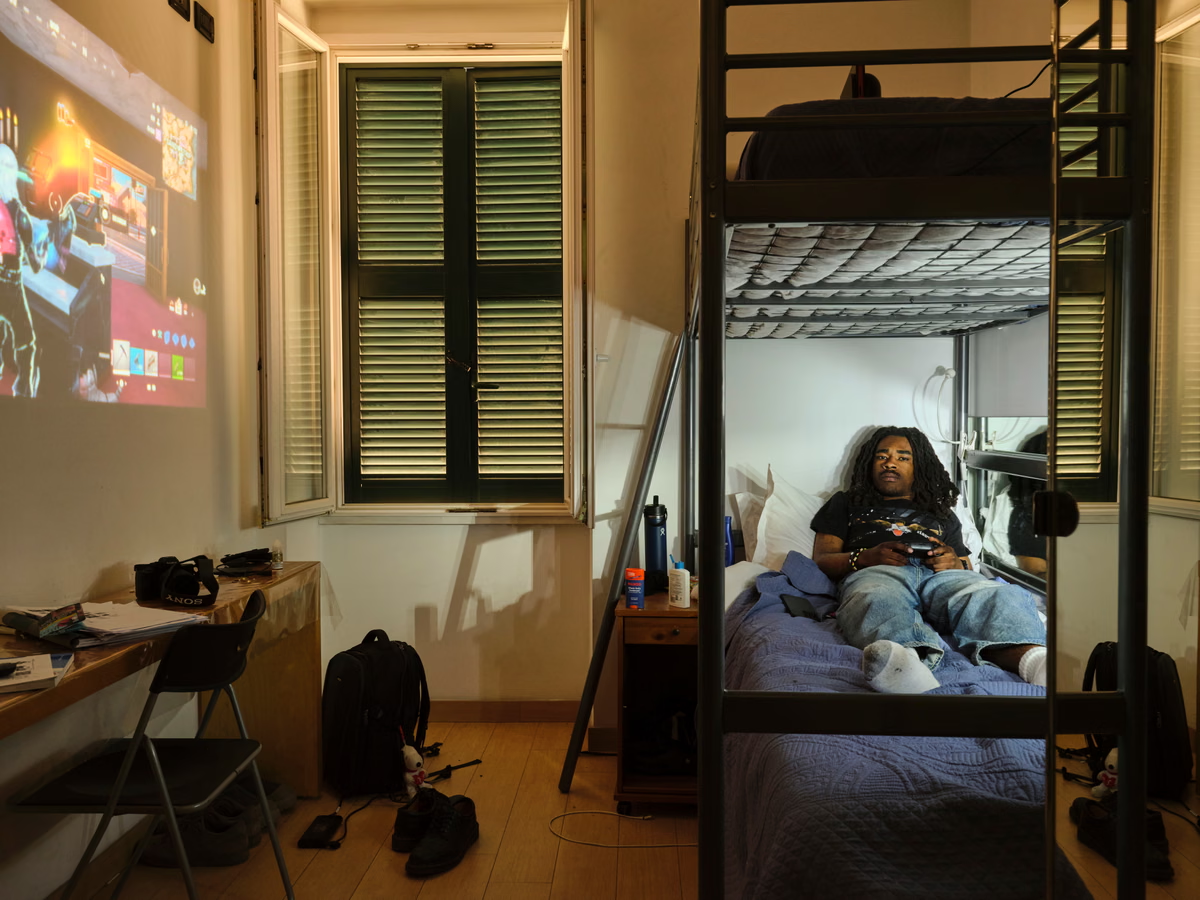
For the first generation of digital natives, identity is often split between two distinct realms: the physical sanctuary of the bedroom and the curated landscape of the internet. Italian photographer Niccolò Rastrelli, a member of Generation X born in 1977, sought to document this divide in his project titled IRL—a nod to the common acronym for “in real life.” Driven by a desire to understand the perspectives of younger people, Rastrelli spent several years working with Gen Z subjects, noting, “I’m older and don’t have children, so I want to understand their point of view.”
Rastrelli’s project features a diverse group of participants ranging from 14-year-olds to adults in their late 20s, primarily based in Italy, though he also traveled to the UK, Morocco, and France. Each portrait is presented as a diptych, pairing a photograph of the subject in their bedroom with a selection of screenshots from their phone. Rastrelli chose the bedroom as a focal point because he views it as a young person’s first independent space, a place where identity was traditionally forged before the advent of social media. He ensured the subjects “co-curated” these images, allowing them to present their rooms and digital feeds as they saw fit.
The photographer discovered that many participants maintain multiple accounts on a single platform to manage different levels of privacy. Lana, 16, explained that she feels free to be her authentic self only on her most private Instagram profile. Similarly, Stevie, a student from Pennsylvania currently studying in Rome, manages both a public and a private account, shifting his tone and identity depending on the audience. Others, like 23-year-old web developer Francesco, choose not to post on their own accounts at all.
While the UK prepares to enforce a ban on social media for those under 16 starting next spring, Italy currently has no such plans. Rastrelli’s observations suggest that Gen Z may not be as negatively impacted by these platforms as older generations often assume. He noted that many of his subjects actually use social media less frequently than members of his own generation, with the primary difference lying in the specific platforms they favor.
The participants’ relationships with technology vary significantly. Lana, who received her first smartphone at 11 after extensive negotiations with her parents, views Instagram as a digital diary. Sofia, an animation student, has limited online access due to parental restrictions on Instagram and TikTok, relying instead on WhatsApp to share her work. Roberto, a London-based personal trainer born in Ghana, did not receive a smartphone until he was 15 or 16, having used a basic device for parental tracking beforehand. He remains cautious about his digital footprint.
Other subjects use social media as a professional or creative tool. Mark, who was raised in Italy after being born in Nigeria, purchased his first phone at 12 through odd jobs. Once prone to editing his photos to remove features like his nose to avoid labels, he now uses Instagram primarily for research. Melina, a 3D animation student, uses the platform to discover artists and tutorials, while Anna, who received her first phone at 11, uses it to document the world around her, hoping to build a career in film. Andrea, a drag artist and theatre performer, maintains separate personal and professional accounts, where he presents himself without filters, retouching images only for editorial effect.
Rastrelli emphasizes that his goal was to capture the diversity within Gen Z. By documenting both the physical environment of the bedroom—filled with posters, instruments, and personal mementos—and the digital snapshots they curate, the project highlights how these young people navigate the complexities of self-presentation in an increasingly connected world. The report also notes that a younger millennial, was on the brink of teenhood, s ocial media arrived just as I. The report also notes that my friends and I signed up for accounts on Facebook, Myspace and Twitter, as well as less remembered sites such as the now defunct Bebo. The report also notes that we didn’t know what we were doing; no one did. The report also notes that for that matter – to see, we posted indiscreet messages and photos on public feeds that we wouldn’t want any future employer – or really anyone. The report also notes that and our parents and their parents, too, learned what it means to live with that world-changing phenomenon that we term social media, then gradually we. The report also notes that a process that is ongoing, we started to find different ways to adapt. The report also notes that past works include a project exploring the rising popularity around the globe of the youth subculture of cosplay. The report also notes that now he felt it was time to broaden his focus to a more ubiquitous experience: being on the “socials”.