

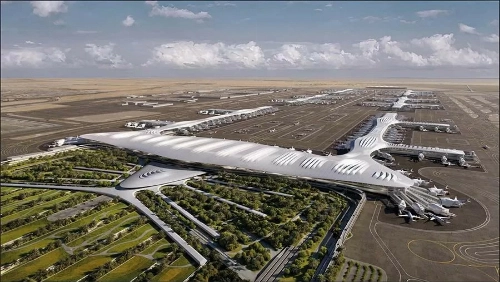
Dubai is embarking on a major infrastructure project to install the world’s largest automated passenger mover (APM) system at Al Maktoum International Airport. This extensive network, spanning approximately 50 kilometres, is designed to streamline transit between terminals and essential facilities, significantly enhancing operational efficiency as the airport scales up to become a global aviation powerhouse.
The contract for the first phase of this development has been awarded to the Japanese engineering firm Mitsubishi Heavy Industries (MHI). Working in a consortium alongside the Indian construction group Larsen & Toubro (L&T), MHI and its local subsidiary, MHI-MESC, will oversee the design, supply, and testing of the system. The project scope includes the integration of 165 automated vehicles and a sophisticated signalling network, with L&T managing the construction and implementation of various supporting subsystems.
The APM system will feature nine stations, serving as a critical link for millions of travelers and staff members. By reducing transfer times and improving terminal accessibility, the infrastructure is expected to be a cornerstone of the airport’s long-term functionality. The entire project is slated for completion in December 2031, aligning with Dubai’s broader strategic timeline for the facility.
These efforts are central to the city’s vision of transforming Al Maktoum International into the world’s premier aviation hub. With full operations projected to commence in 2032, the airport is being engineered to accommodate up to 260 million passengers every year. As construction progresses, the airport’s capacity will expand incrementally, with the automated transport network serving as a vital component in managing the massive influx of future air traffic. The report also notes that allowing passengers and airport users to move more efficiently between terminal buildings and other major facilities, it will connect nine stations within the airport.