

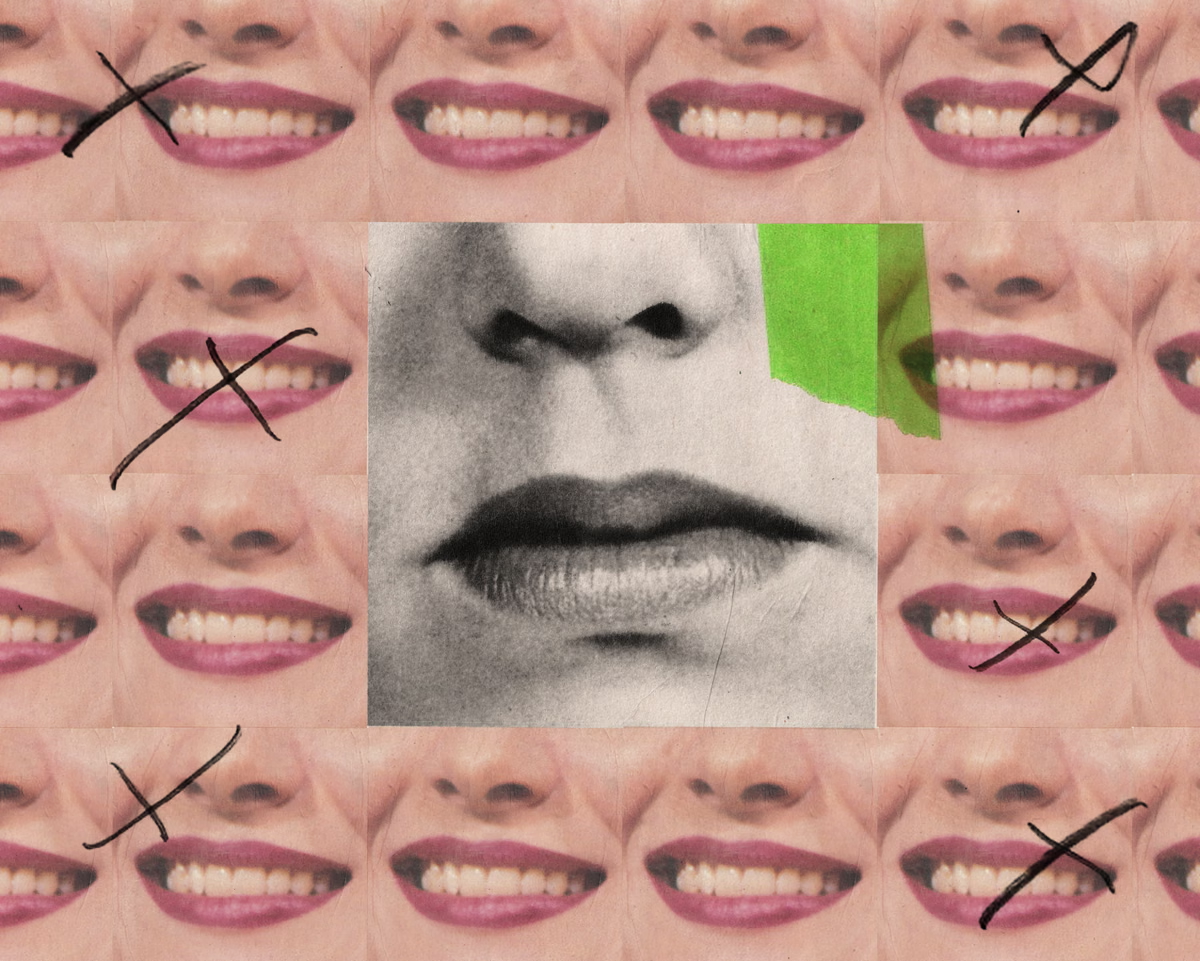
A few months ago, a visit to a local cafe with my 10-year-old daughter served as a stark reminder of the pressure to perform social niceties. When the owner greeted us with warmth, my daughter responded with a stony, disengaged expression. My immediate reaction was one of embarrassment and frustration; I felt she was being rude and expected her to mirror the owner’s enthusiasm. However, after pulling her aside for a firm lecture on manners, I realized she was simply in a bad mood and unaware of her own demeanor. I had wrongly assumed she was intentionally playing the role of a “sulky irreverent teen,” and I felt guilty for not handling the situation with more empathy.
This incident forced me to confront a difficult truth: by demanding she mask her true feelings to satisfy social expectations, I was training her to become an automaton. I was pushing her toward the very “split self” that psychologist Mary Pipher describes in her bookReviving Opheliaa phenomenon where girls create a “false self” to align with gendered norms. Ironically, I had written a book titledUgly: A Letter to My Daughterspecifically to warn her against this exact trap, yet I was inadvertently reinforcing it.
Research consistently shows that an obsession with being “nice” and prioritizing others’ comfort is emotionally taxing. It creates stress, hinders personal growth, and often leads to self-alienation. I had to ask myself why I felt my daughter was not entitled to her own bad mood. If she is forced to fake a smile or feign enthusiasm, she is merely participating in the gendered theatrics that lead to the psychological split Pipher warns about. While I value manners, there is a fine line between teaching respect and encouraging a form of servility that disproportionately affects girls.
I have spent the majority of my life as a people-pleaser, only beginning to push back against this urge in my late 40s. For years, I consistently violated my own boundaries and suppressed my true opinions just to ensure I was perceived as likable. My existential need to be liked was rooted in a feeling of abnormality; as a queer person, I believed that constant agreeability could mask my identity. I adopted feminine affectations to avoid the “angry lesbian” trope, fearing that any deviation from a cheerful, accommodating persona would invite judgment or even danger.
This struggle became particularly acute when I began substitute teaching in New York City public schools at age 48. Standing before a classroom of unimpressed students, I felt like an awkward teenager again, desperately trying to be “cool.” I found myself softening my voice and forcing a permanent smile, even when students were disruptive. I was terrified of being seen as the “angry woman” that journalist Rebecca Traister describes inGood and Mada figure society pathologizes as difficult, aggressive, or worse.
I eventually realized that my forced cheerfulness was not only ineffective but dishonest. I did not want to teach children that disrespect should be met with a submissive smile. Observing seasoned educators, I learned that true authority comes from setting clear boundaries, addressing misbehavior immediately, and balancing discipline with genuine encouragement. These teachers earned respect rather than just superficial likability, and I began applying these same principles to my own life.
Now that I have turned 50 and am navigating the daily challenges of perimenopause, I have become far less concerned with popular opinion. I am more comfortable with the discomfort of saying “no” and setting firm boundaries. If I am exhausted, I might tell friends, “Thanks for inviting me, but I feel like nesting today.” If a social plan is inconvenient, I am more likely to suggest a compromise, such as meeting halfway, rather than simply going along with someone else’s preference.
The pull of the likability norm remains, but I am now motivated by the need to model healthier behavior for my daughter. I want her to understand that it is acceptable to disappoint others if it means staying true to oneself. Recently, I have even seen her begin to adopt this mindset; she told a boy who liked her that she only wanted to remain friends, a small but significant step toward prioritizing her own agency over the pressure to please. The report also notes that my daughter looked on with a stony expression and ungiving eyes, instead of greeting her in kind. The report also notes that i was embarrassed and incensed by what I perceived as blatant rudeness. The report also notes that you could at least smile, I thought. The report also notes that that’s when it hit me: by dictating that she should comport herself contrary to how she was actually feeling, I was reinforcing society’s attempts to mold girls and women into automatons who reflexively try to please everyone but themselves. The report also notes that psychologists and studies indicate that an over-investment in people-pleasing and the quest to appear “nice” are emotionally costly. The report also notes that impede individual fulfillment and self-actualization, and can lead to self-alienation, they amplify stress. The report also notes that don’t get me wrong – I don’t think manners are trivial. The report also notes that smiling, holding the door, greeting people and expressing gratitude nurture mutual respect and affection between friends and strangers alike.