

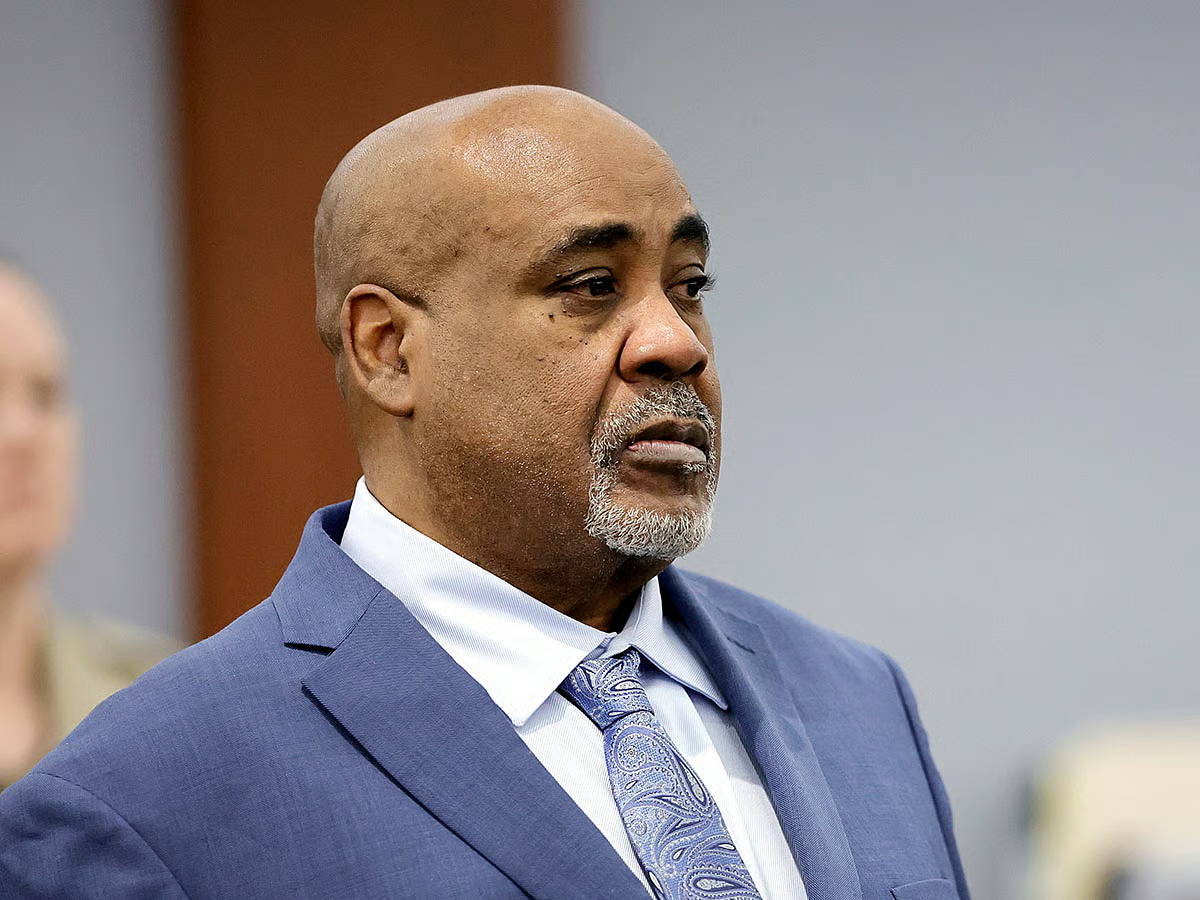
Thirty years after the fatal shooting of hip-hop icon Tupac Shakur, a Las Vegas courtroom has begun hearing arguments in one of the most high-profile cold cases in American history. Duane “Keffe D” Davis, 63, stands accused of orchestrating the 1996 attack. Davis, who has pleaded not guilty, faces a potential life sentence without the possibility of parole if convicted in a trial expected to span more than a month.
Prosecutor Binu Pilal opened the proceedings by characterizing the killing as a calculated act of gang retaliation. According to the state, Davis—a former leader of the South Side Compton Crips—ordered the hit after his nephew, Orlando “Baby Lane” Anderson, was involved in a physical altercation with Shakur earlier that evening. The prosecution alleges that on September 7, 1996, Shakur was captured on camera participating in a “humiliating beating” of Anderson at a Las Vegas hotel following a Mike Tyson boxing match.
The prosecution contends that Davis, while not the individual who pulled the trigger, was the mastermind behind the drive-by shooting. Pilal told the jury that Davis provided the firearm to occupants in the back seat of his vehicle and directed them to target the rapper. Roughly two and a half hours after the initial confrontation, a white Cadillac pulled alongside Shakur’s car, and gunfire erupted, resulting in the fatal wounding of the 25-year-old artist.
The case against Davis relies heavily on his own past statements. Over the years, Davis has discussed his involvement in various interviews with media outlets, law enforcement, and in his 2019 autobiography. In these accounts, he admitted to being in the front seat of the Cadillac and handing a weapon to those in the rear, though he stopped short of identifying the specific shooter. All other individuals present in the vehicle that night are now deceased.
Despite these prior admissions, the defense maintains that the claims were merely exaggerated stories crafted by a ghostwriter to boost book sales. Davis has consistently backtracked on his previous confessions, insisting that his public remarks were nothing more than “bluster.”
The trial is expected to shed light on the intense 1990s rivalry between Death Row Records, founded by Marion “Suge” Knight, and Sean “Diddy” Combs’ East Coast-based Bad Boy Records. Shakur, who had signed with Death Row, was a central figure in this coastal feud. Prosecutors allege that Death Row was supported by the Mob Piru gang, while the rival South Side Compton Crips, led by Davis, were employed as security for Bad Boy Records.
The investigation into the shooting remained stalled for decades due to a persistent lack of physical evidence. It was only following the publication of Davis’s memoirs that authorities were able to revive the case. As the trial progresses, jurors are tasked with weighing the historical narrative of the gang conflict against the defendant’s current denials.
Shakur’s death remains a subject of significant cultural debate, with fans and investigators alike long questioning the circumstances surrounding the incident. The proceedings serve as a final attempt by the state to secure accountability for the rapper’s death three decades later. The report also notes that jurors heard Monday, as one of America’s most anticipated trials got under way, 30 years after the murder, las Vegas: Rapper Tupac Shakur was shot dead in an act of gang revenge ordered by a mobster who later boasted of it. The report also notes that and now, nearly 30 years later, we’re going to ask you to finally hold Duane Davis accountable,” he told the jury. The report also notes that davis, 63, denies all charges in the trial, which could last over a month. The report also notes that also known as 2Pac, is one of America’s most celebrated cold cases, prompting endless debate among music fans over who did it and why, the killing of Shakur. The report also notes that known for hits like “California Love” and “All Eyez on Me,” Shakur — the son of a Black Panther — was raised in Harlem and Baltimore, but quickly became the epitome of a California bad boy when he signed with Los Angeles-based Death Row Records.