

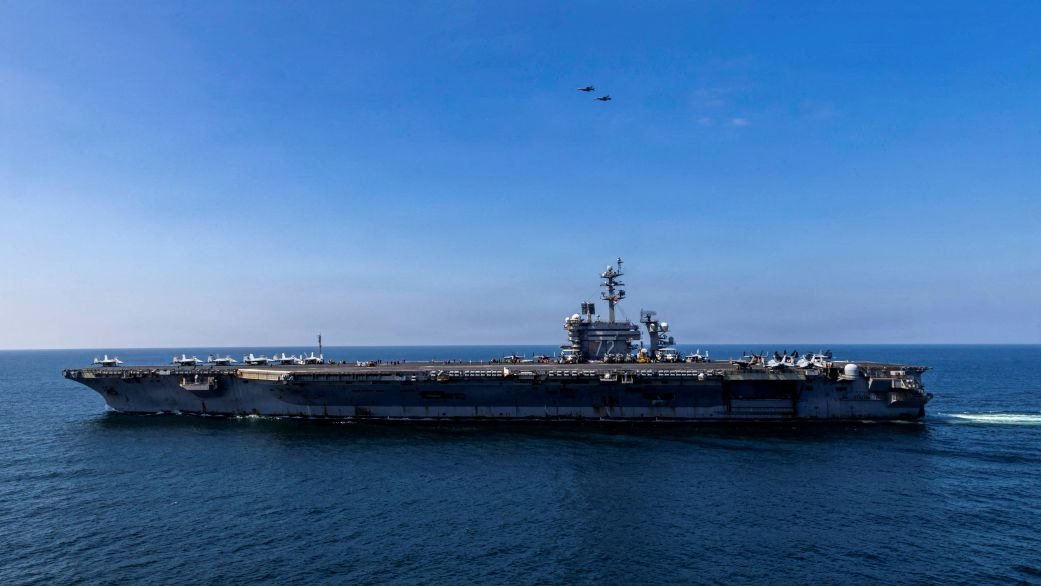
Stepping onto the USS Abraham Lincoln at the port of Duqm, Oman, on July 7, the atmosphere was defined by the backdrop of an escalating conflict with Iran. The arrival coincided with a period of heightened tension, marked by an official message noting that the timing was impeccable. Despite the gravity of the situation—which has resulted in the deaths of 18 US service members since February—the crisis often felt distant from the daily routines of the roughly 5,000 crew members aboard the aircraft carrier.
The deployment has drawn significant public and political attention. Defense Secretary Pete Hegseth has publicly stated that reports regarding conditions on the ship have been completely misrepresented, while President Donald Trump recently remarked that the mission duration has been not nearly long enough. These comments have resonated poorly with many sailors who are currently navigating the extended nature of their service. The ship is currently operating in a highly contested environment where combat actions have disrupted traditional supply hubs, forcing the Navy to prioritize logistics under difficult circumstances.
Daily life on the vessel is a study in contrasts. While the ship is not facing a total crisis, it has grappled with significant supply chain disruptions. Earlier in the war, Iranian strikes in Bahrain forced a period of rationing, leading to reports of sailors losing weight. Food service has since stabilized, with the crew consuming between 17,000 and 18,000 meals daily from a 14-day rotation of frozen stock. Despite the availability of morale-boosting events like ice cream socials, many sailors expressed a longing for home-cooked meals, citing specific cravings for items like Chinese food, Chipotle, or a mother’s homemade bolognese.
Living conditions remain a point of contention. While some areas are well-maintained, other parts of the ship show signs of wear, including plumbing issues and reports of black mold. Navy officials maintain that mold is not a chronic issue and that sailors are responsible for cleaning their own berthing areas. During the visit, the crew experienced a no fly day, providing a brief window for downtime. However, the claustrophobic nature of the ship, with its narrow passageways and the constant noise of jet operations, remains a persistent reality for those living in the floating city.
Mental health and morale are heavily influenced by the uncertainty of the deployment’s end date. Many sailors, nearly half of whom are in their mid-20s or younger, described their service as a repetitive cycle of 12-to-16-hour days. One sailor described the profound loneliness of a nine-month-plus deployment, noting that while bonds are formed, the lack of a firm return date is a primary source of anxiety. Leadership has intentionally avoided setting specific return dates to prevent the disappointment caused by previous schedule changes, though this caution has inadvertently heightened stress.
Retired Admiral James Stavridis, who oversaw operations in Afghanistan and Libya, noted that certainty of mission is a critical factor in maintaining morale. He observed that while past deployments in Iraq and Afghanistan were long, they generally had a clear end game that helped ground the soldiers. The presence of Wi-Fi on the ship also changes the dynamic, allowing sailors to communicate their frustrations home in real time, which increases external accountability and public scrutiny of their conditions.
As the USS George Washington prepares to provide relief, a sense of cautious optimism has begun to emerge among the crew. Experiences on the ship vary significantly based on rank, age, and specific job responsibilities. Navy officials have noted that while suicidal ideations tend to spike shortly after boarding, they typically decrease as sailors adjust to the environment. For those struggling, resources remain available, including the Suicide & Crisis Lifeline in the United States, reachable by calling or texting 988. The report also notes that what struck me was how little the crisis — which has led to the deaths of 18 US service member s since it began in February — registered onboard. The report also notes that or talk to all of the roughly 5,000 crew members, though the Navy allowed us to roam freely for the most part with an escort and talk to whomever we wanted, i didn’t get to see every nook and cranny of the ship. The report also notes that sailors told me, their meals were reduced to tuna mixed with noodles, or corn dogs, for a stretch. The report also notes that i hadn’t even finished my first walk-through on the aircraft carrier when I learned that Iran hit a third tanker in the Strait of Hormuz and that US Central Command, which is carrying out the Pentagon’s war strategy, was gearing up to respond. The report also notes that i did my first live shot from the flight deck within an hour of boarding. The report also notes that rising rhetoric on both sides as a tentative peace agreement between the US and Iran crumbled, in the news while they did: US strikes on Iran from other naval assets. The report also notes that in the cafeteria (known as the mess deck), top enlisted crew members were remarkably calm. The report also notes that even with Wi-Fi onboard, most hadn’t been following the news.