

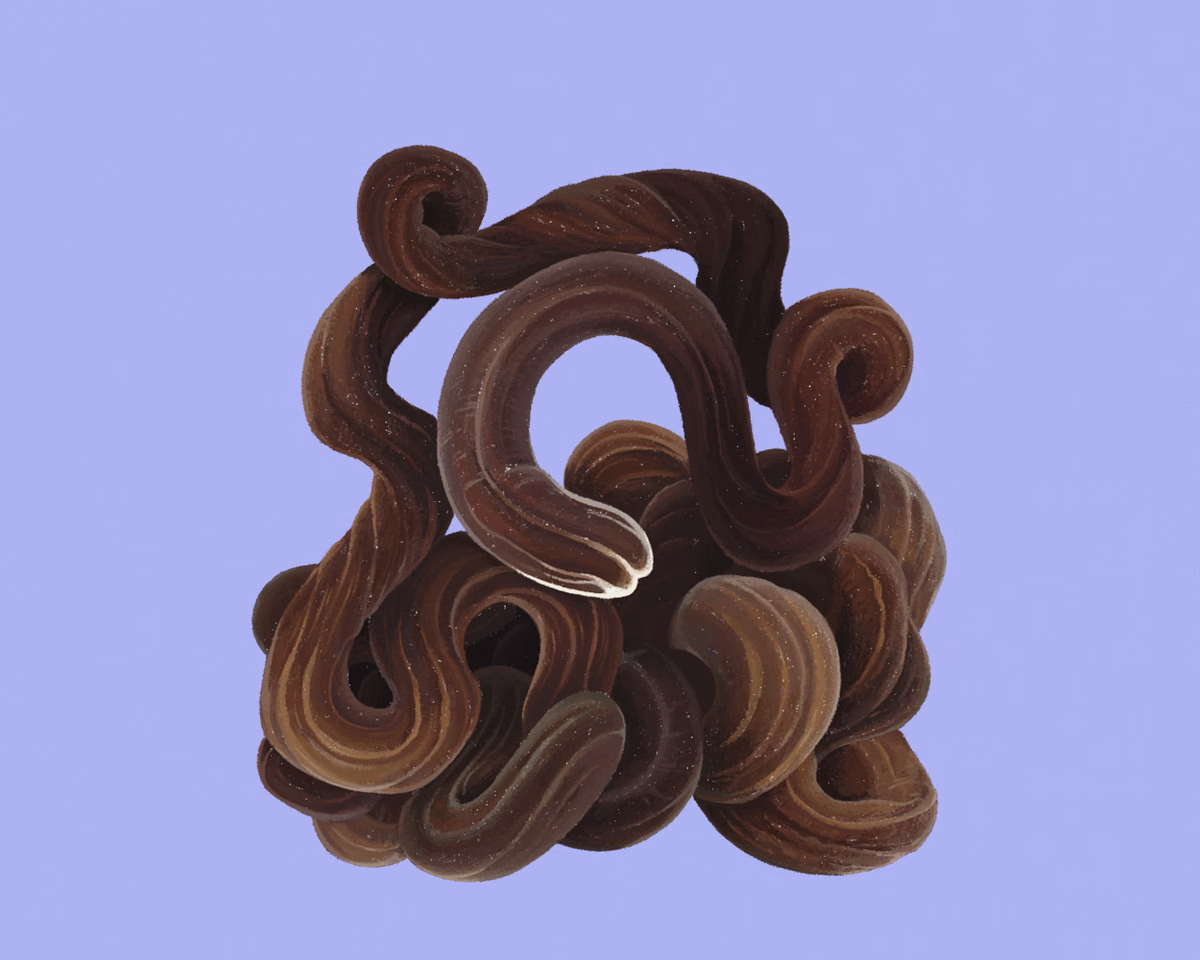
For those who appreciate nature’s most unusual biological feats, the bootlace worm, known scientifically as Lineus longissimus, represents one of the most remarkable marine invertebrates on the planet. As part of the Invertebrate of the Year 2026 competition, which runs from 3-12 August and profiles thousands of reader-nominated species, this creature is finally receiving the attention it deserves as a vital branch of the tree of life.
The physical dimensions of the bootlace worm are truly staggering. It can stretch far beyond the length of an Olympic swimming pool. In fact, one worm, found washed ashore after a storm at St Andrews, was recorded at an incredible 55 metres in length. While some sceptics suggest the specimen may have been artificially elongated due to the species’ extreme elasticity, a more usual length is a mere 15 metres. Despite this immense reach, its width is just 5–10mm.
Beyond its size, this super-long worm possesses a formidable defensive mechanism: the ability to discharge toxic slime. When threatened, the blackish-brown worm releases a mucus that carries a pungent, sewage-like odor. Although the Swedish archbishop and naturalist Olaus Magnus first noted its toxic slime back in 1555, it wasn’t until 2018 that the worm’s toxins were fully described by Swedish scientists.
These toxins, identified as alpha-nemertides, were evolutionarily designed to paralyse and kill crabs. However, researchers have discovered these compounds are also effective against cockroaches while remaining largely harmless to mammals. This specific biological activity has opened the door to the possibility that the worm’s mucus could serve as the foundation for a new generation of environmentally targeted insecticides.
The bootlace worm belongs to the phylum of nemerteans, or ribbon worms. This phylum contains more than 1,250 described species of worms which are found everywhere from intertidal zones to great ocean depths – a little-heralded but rich and vital branch of the tree of life. As a voracious predator, the bootlace worm is highly effective at hunting, often swallowing segmented annelids whole.
One reader who nominated the species described it as a neglected but quite amazing branch on the tree of life. The longest of all wormy creatures (up to 15m?!) and only a few mm wide, it is celebrated by enthusiasts as a worm that can stretch and stretch and stretch. It remains one of the many amazing creatures contributing to Britain’s coastal heritage, proving that even the most overlooked invertebrates can hold the keys to future medical and scientific breakthroughs. The report also notes that every day we will profile one of the thousands of amazing invertebrates that our readers have nominated, from 3-12 August. The report also notes that but for a select group who admire extending ladders, giraffes and the Odyssey, one of the longest animals in the world is bound to appeal, it’s the shuddery stuff of nightmares for some. The report also notes that there are likely to be many more useful chemicals and medicines still to be discovered within the invertebrate world.