

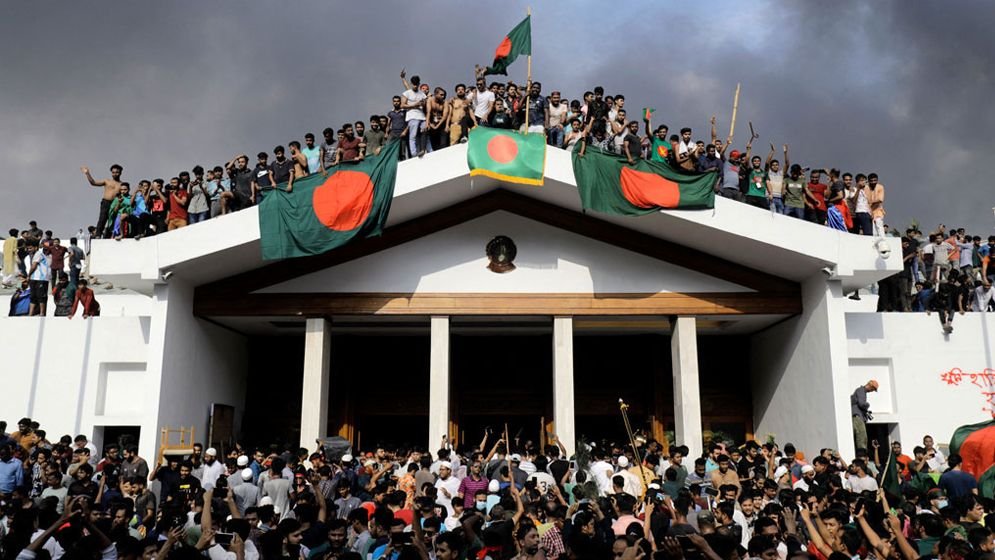
Although the calendar marked the date as August 5, the streets and social media platforms of Bangladesh were flooded with a symbolic term following the collapse and departure of Sheikh Hasina’s government: ’36 July.’ While this defies the standard Gregorian calendar, for the protesters, it represents an undeniable historical truth and a lasting monument to their victory.
The movement originated on July 1, 2024, as students began protesting for reforms to the government job quota system. The situation escalated on July 16, when police and armed cadres affiliated with the Awami League launched attacks on demonstrators, resulting in six deaths across the country. Despite the implementation of a ‘complete shutdown’ and a subsequent Supreme Court ruling addressing the quota issue, the protests evolved into a singular demand for the government’s resignation.
Throughout the month, the heavy loss of life solidified a resolve among the demonstrators: the ‘month of July’ would not end until their demands were fully realized. Consequently, they refused to transition into August, choosing instead to view the new month as an extension of their ongoing struggle. This unique form of protest saw August 1 rebranded as ’31 July,’ August 4 as ’34 July,’ and ultimately, the day of the government’s fall on August 5 was cemented as ’36 July.’
For the participants, ’36 July’ serves as more than just a chronological anomaly; it is a symbolic pledge to immortalize the blood and sacrifices of the martyrs. By toppling the autocratic regime through this mass uprising, the date has secured a permanent and significant place in the history of Bangladesh, representing the culmination of a movement that refused to let its momentum fade with the turning of the calendar page.