

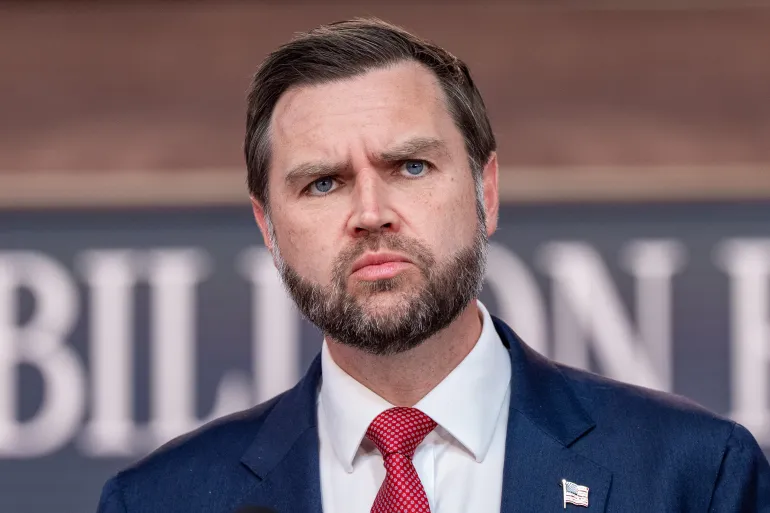
United States Vice President JD Vance has urged Iran to make a meaningful reduction in its uranium enrichment capacity to help broker an end to the ongoing conflict. Experts note that this stance could indicate Washington is softening its previous demand that Tehran completely abandon enrichment.
Vance’s remarks arrived alongside tougher messaging from other high-ranking American figures. Secretary of State Marco Rubio reaffirmed that Iran must be blocked from acquiring a nuclear weapon, while President Donald Trump cautioned that the conflict would conclude either through the nice way or the not-so-nice way. His comments come amid hardline rhetoric from other senior US officials.
Meanwhile, leadership in Tehran questioned whether Washington holds genuine intentions for dialogue as the US-Israel military campaign against Iran reaches its eighth month. Simon Mabon, an international relations professor at Lancaster University, told reporters that the likelihood of Iran pursuing a nuclear weapon has remained low.
Speaking to Reuters, Vance emphasized that Iran needed to prove its non-proliferation commitment by altering its enrichment activities. Questioning the necessity of 60 percent enriched fuel for a country claiming no nuclear weapons ambitions, he described building highly enriched fuel as a fundamental threshold issue. Vance told the Reuters news agency that Iran needed to demonstrate its commitment to not developing nuclear weapons by changing its enrichment programme. “If you don’t want a nuclear weapon, then why do you need 60 perce. Their goal is to bring down the Islamic Republic of Iran,” he said, according to Iran’s official IRNA news agency, on the contrary.
Uranium can serve as reactor fuel or, at much higher concentrations, for weaponry. The International Atomic Energy Agency noted that Iran had reached 60 percent enrichment, well below the roughly 90 percent threshold for weapons-grade material, and its May 2025 review found no evidence of an active structured nuclear program.
Vance mentioned that Washington remains in communication with Iranian President Masoud Pezeshkian and Foreign Minister Abbas Araghchi, though he noted uncertainty regarding how Iranian state decisions are made. Concurrently, Rubio accused Tehran during a press conference in Athens of letting pass several potential avenues for a settlement.
Rubio asserted that Iran’s economy is experiencing a total freefall under severe sanctions and claimed that Tehran has lost complete control over the Strait of Hormuz. Analysts suggest Washington’s strategy continues to rely on heavy pressure, even if Vance’s remarks leave questions about acceptable nuclear limits. It was “about to reach a place few countries in the world have been”, he argued, under “crippling” sanctions.
Pezeshkian countered on Monday by dismissing negotiations as futile, alleging that Washington uses diplomatic talks as a cover to target the Iranian government. During a meeting with Armenia’s foreign minister, he recalled that military action followed three previous rounds of talks, proving Washington’s ultimate goal is regime change rather than dialogue. “They have attacked us three times following talks so far; this demonstrates that they do not seek dialogue. “With an enemy that resorts daily to assassination, sanctions, pressure and threats – and breaks its promises – negotiations become futile, and our nation will not accept such an approach.”.
Despite this, Araghchi stated before foreign ambassadors in Tehran that only talks rooted in justice and fairness could resolve the dispute, leaving a potential opening for continued diplomacy. These positions follow an Iranian proposal delivered at the UN General Assembly in late September to reopen the Strait of Hormuz and restart talks, which Trump initially dismissed.
The latest proposal sought to build upon a June 17 memorandum of understanding that briefly paused hostilities before collapsing. By shifting timelines and sequencing, the fresh proposal aimed to halt fighting on all fronts, including Israeli operations in Lebanon, while prompting Washington to lift its naval blockade, remove oil sanctions, and release frozen assets.
The plan envisioned reopening the Strait of Hormuz within seven days followed by nuclear discussions. While experts suggest this might have given Trump a win ahead of the US midterm elections, disagreements regarding the sequence of actions persist.
Mabon observed that Washington’s heavy focus on enrichment might overshadow Tehran’s core priorities, which center on the blockade, sanctions relief, unfreezing assets, and regional conflict cessation. A limited enrichment pact would also draw parallels to the 2015 Joint Comprehensive Plan of Action forged under Barack Obama, from which Trump withdrew in 2018.
Mabon added that a nuclear agreement had been achievable at multiple junctures prior to the outbreak of the current war, including diplomatic efforts in January and February. With shipping through the Strait of Hormuz facing ongoing uncertainty following recent maritime incidents, broader obstacles to a lasting comprehensive settlement remain firmly in place.