

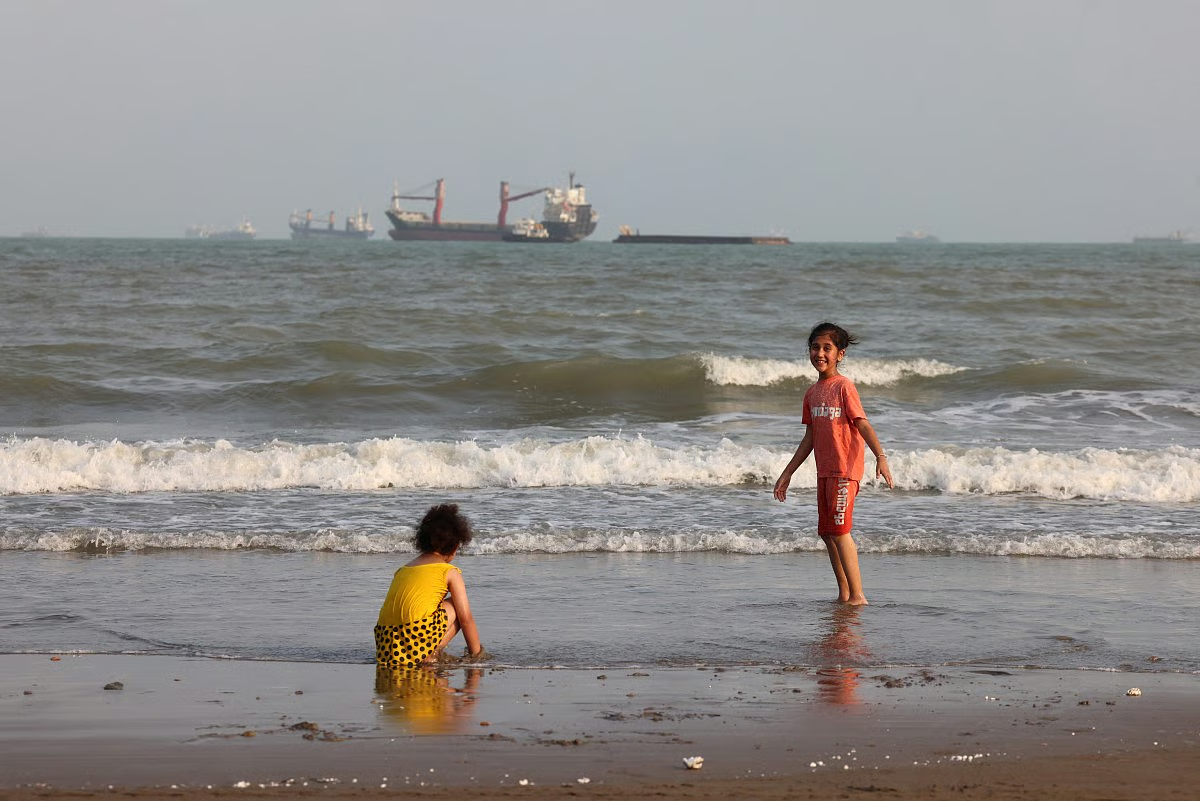
Heightened friction between the United States and Iran has placed the Strait of Hormuz at the center of a volatile standoff, prompting concerns across the UAE regarding potential impacts on regional air travel, energy markets, and maritime shipping. As of August 22, 2026, the situation remains fluid, with both nations trading warnings and military posturing.
During a recent campaign rally in South Carolina, US President Donald Trump characterized the Strait of Hormuz as “American territory.” He defended the current US campaign against Iran, asserting that Washington is committed to preventing Tehran from acquiring a nuclear weapon. While Trump suggested that Iran is interested in reaching a deal, he indicated that the US is unlikely to accept terms dictated by Tehran, adding that Washington will “see what happens” as it continues its pressure campaign. He also expressed a belief that oil prices would decline once the conflict is resolved.
Tehran has responded with defiance. Iranian Foreign Minister Abbas Araghchi dismissed the US pressure tactics, labeling them as economic warfare destined to fail. Simultaneously, the Iranian military has announced a shift toward a more offensive posture. Brigadier General Mohammad Akraminia, an army spokesman, cautioned that while Iran is not planning pre-emptive strikes, any attack against the country would be met with an immediate and broad response. Iran also claims to have significantly bolstered its defense industry, with officials stating that production of strategic defense equipment and wartime supplies has tripled over the past year.
The diplomatic and military landscape is further complicated by international involvement. While no formal NATO mission is underway, individual member states are coordinating efforts to secure freedom of navigation in the Strait. US Air Force General Alexus Grynkewich recently convened defense chiefs from allied nations to discuss potential contributions to this security initiative. Additionally, France and the UK are spearheading efforts to form a coalition aimed at ensuring safe passage through the waterway once hostilities subside.
Tensions have manifested in a strict enforcement of a blockade. According to US Central Command (CENTCOM), American forces have redirected 68 commercial vessels, boarded two, and disabled three others as of August 21. CENTCOM also released imagery showing an MH-60R Sea Hawk helicopter operating from the USS Ross, one of more than 20 warships currently supporting the blockade. Iranian officials have condemned these sanctions as a “declaration of war,” with Foreign Ministry spokesman Esmaeil Baghaei accusing the US of attempting to impose illegal extraterritorial sovereignty over independent nations.
For residents in the UAE, the most immediate concern involves travel disruptions. Flight schedules remain inconsistent as of Saturday, August 22, with various airlines continuing to adjust their operations across the Middle East. Travelers are advised to verify their flight status immediately before heading to the airport, even if their booking was previously confirmed. Passengers are encouraged to arrive at least three hours before their scheduled departure, or four hours for those flying with flydubai, to account for potential delays at security and immigration.
Travelers should ensure their contact information is up to date with their respective airlines and remain prepared for last-minute cancellations or schedule changes. As the situation evolves, monitoring official airport and airline channels remains the most reliable way to stay informed. The broader economic and security implications—ranging from energy price fluctuations to potential shipping delays—remain key areas for residents to watch as the standoff continues. The report also notes that here are the key developments to know this evening. The report also notes that potentially dropping below levels seen before the latest escalation, he predicted that oil prices would fall once the conflict ends. The report also notes that he stressed that the change in posture did not mean Iran was preparing pre-emptive attacks. The report also notes that deployed new capabilities and restructured its command to respond more quickly, akraminia said Iran had repaired damaged military systems. The report also notes that iran has doubled its production of defence weapons and equipment over the past year despite attacks on parts of its defence industry during the 12-day war, Defence Ministry spokesman Brigadier General Reza Talaei-Nik said, according to IRNA. The report also notes that he said domestic production had allowed Iran to rapidly replenish weapons and ammunition used during the conflict. The report also notes that talaei-Nik said Iran’s defence industry had grown from producing 31 basic products before the 1979 Islamic Revolution to more than 1,000 advanced systems, weapons and types of ammunition today. The report also notes that a spokesperson said NATO’s Supreme Headquarters Allied Powers Europe hosted the meeting to help countries coordinate possible support for navigation through the strategic waterway.