

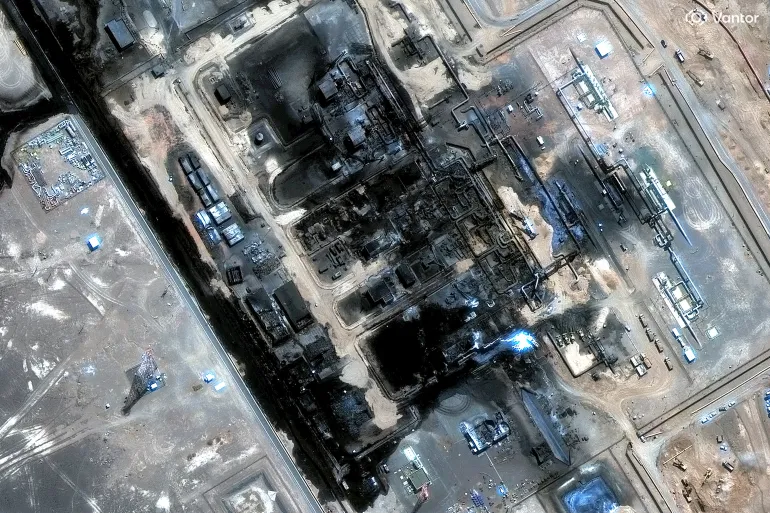
Saudi Arabia has suspended operations on its crucial 1,200km (746-mile) East-West pipeline following a drone attack last Thursday. The state, which utilizes this infrastructure to transport 4 to 5 million barrels of oil per day (bpd) from its eastern production fields to the Red Sea port of Yanbu, took the action as a “precautionary” measure after the strikes caused structural damage and injuries in the Medina and Riyadh regions.
Official reports indicate the drones were launched from Iraq’s southeastern Maysan province, an area situated near the Iranian border known for the presence of Iran-aligned armed groups. The Ministry of Foreign Affairs confirmed that both human injuries and infrastructure damage resulted from the incident. While some sources suggest repairs might span five to six weeks, others remain optimistic that operations could resume on a shorter timeline.
This disruption exacerbates an already fragile energy landscape, as the pipeline had been a primary route for bypassing the Strait of Hormuz since the escalation of the US-Israel war on Iran in February. Before the current conflict, the Strait of Hormuz was responsible for moving over 20 million bpd, or more than one-fifth of global oil supply. Current estimates suggest those volumes have plummeted to between 6 and 9 million bpd.
The Petroline, commissioned in 1981, possesses a maximum capacity of 7 million bpd. However, as Houthi forces intensified their Red Sea operations, actual usage fluctuated; by August, flow rates had dropped to approximately 2 million bpd. In the preceding months of the conflict, Saudi Arabia had successfully diverted 4 to 5 percent of the global supply westward to mitigate risks, but that flexibility is now severely compromised.
Available stock levels provide only a narrow window of relief. Experts note that Yanbu maintains sufficient reserves for five to seven days of exports, with supplementary supplies potentially available through Egyptian storage facilities at Sidi Kerir and Ain Sukhna. However, these are merely temporary buffers in a market struggling with historically low inventories.
The International Energy Agency (IEA) has highlighted that Saudi production reached a thirty-year low in August. Global supplies are projected to fall by 5.7 million bpd this year—roughly 6 percent of the total market—as disruptions persist across the Red Sea and the Strait of Hormuz. While strategic reserve releases and existing stockpiles have kept Brent crude within the $70–$90 range recently, fears of further depletion remain high.
Analysts warn that if reserves fall to critical levels, oil prices could potentially surge toward $150 per barrel. Research firm Gavekal has sounded an alarm regarding the facility at Yanbu, which processes over one million bpd; they stated that if this hub goes offline due to persistent drone threats, “this would be a disaster for the world at a time when global refining capacity is already critically tight.”
This latest attack mirrors a March incident near an Aramco-ExxonMobil refinery in Yanbu, which briefly halted crude loadings. While that previous event saw a rapid recovery, the current closure signifies a growing vulnerability for Saudi Arabia’s western infrastructure. If the pipeline remains offline, the kingdom’s ability to offset lost Gulf exports will be severely constrained, further tightening the global market at a time when recovery options are rapidly diminishing. The report also notes that and estimates of how quickly the pipeline can return to normal operations vary, the extent of the damage is not yet clear. The report also notes that also known as the Petroline, is a 1,200km (745-mile) long oil pipeline built in 1981 that carries crude oil from the kingdom’s eastern oil fields near Abqaiq across the Arabian Peninsula to the Red Sea port of Yanbu, bypassing the Strait of Hormuz, the East-West pipeline. The report also notes that although actual flows have been lower in recent months – about two million bpd in August according to Kpler – the lowest monthly level since January as Houthi attacks made the Red Sea route difficult to use, it has a maximum capacity of seven million bpd. The report also notes that that represents about 4 to 5 percent of global supply and allowed the world’s second largest oil exporter to bypass the Strait of Hormuz when shipping conditions deteriorated. The report also notes that in June, the IEA said continued drawdowns could hit critical levels with experts saying that if inventories approach exceptionally low levels, Brent could potentially rise to $150 a barrel.