

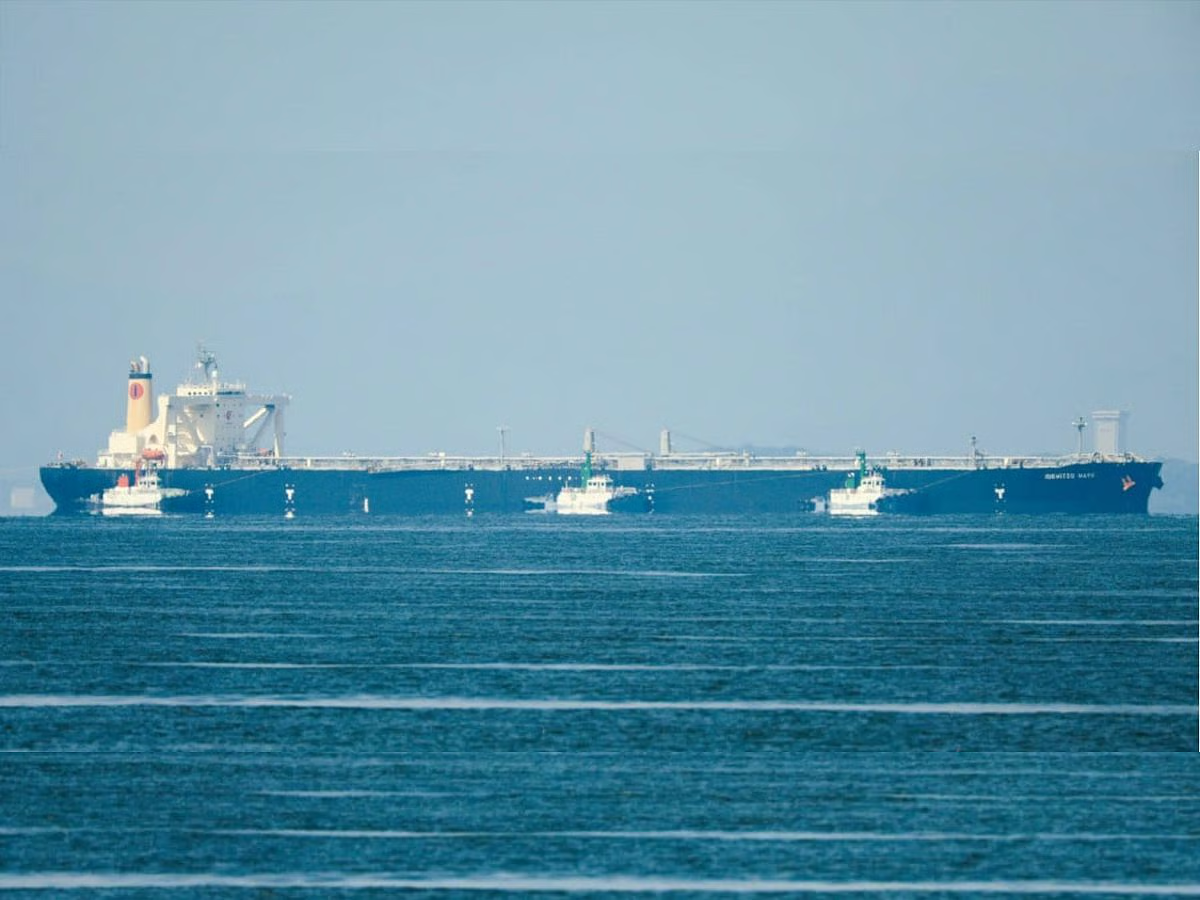
Oil prices showed little movement on Thursday as global markets balanced optimism regarding a potential diplomatic breakthrough between the United States and Iran against persistent uncertainty surrounding the Strait of Hormuz. As the world’s primary chokepoint for oil and LNG transit, the waterway remains a critical factor in current energy valuations.
Market data as of 9:54 a.m. Tokyo time on Thursday, August 6, indicated Brent crude trading at $79.38 per barrel, marking a slight decline of 7 cents or 0.09%. Simultaneously, West Texas Intermediate (WTI) was priced at $75.01, down 21 cents or 0.28%.
This period of consolidation follows a significant market sell-off earlier in the week, triggered by reports from Qatar that draft proposals for a potential US-Iran agreement were circulating among mediators. On Tuesday, Brent crude experienced a sharp 5.3% decline to settle at $79.36, while WTI dropped 5.7% to $75.77, both reaching three-week lows. According to Reuters, Tuesday’s settlement for Brent represented the lowest price point since July 13.
Qatar confirmed on Wednesday that diplomatic efforts to resume negotiations between Washington and Tehran are advancing. The proposed agreement is reportedly centered on restoring commercial navigation through the Strait of Hormuz. While the potential for a resolution has stabilized Brent prices around the $80 mark, analysts note that the market is not yet pricing in a definitive end to the crisis.
The stakes remain high, as the reopening of the waterway could significantly boost global oil supplies and reduce the geopolitical risk premium that has inflated crude prices. However, reports from the Associated Press on Thursday suggest that while the two nations appear closer to an arrangement, substantial disagreements persist. One proposed mechanism involves Iranian control over inbound shipping and Omani oversight for outbound traffic, a framework that Washington has historically opposed.
Traders currently find themselves navigating between two distinct outcomes: the successful implementation of a deal or a total collapse of negotiations. The recent price drop reflects an unwinding of the geopolitical risk premium rather than a normalization of physical supply chains. During the height of the conflict, tanker traffic through the region plummeted, driving Brent prices above $100 per barrel.
For consumers, particularly across Asia, a sustained reopening of the Strait could eventually lower import costs and alleviate pressure on domestic fuel prices. However, experts caution that any relief would not be immediate, as refiners and shipping firms would require evidence of reliable and consistent traffic before adjusting their operations.
The market has effectively transitioned from pricing in a war premium to a peace premium, though it remains highly sensitive to updates from Washington, Tehran, Doha, and Muscat. Should the current draft lead to a ceasefire and a functional shipping mechanism, further downward pressure on prices is expected. Conversely, a breakdown in talks could see the geopolitical premium return rapidly.
Ultimately, $80 per barrel has emerged as the psychological battleground for the energy market. For today’s traders, diplomatic developments have become significantly more influential than standard inventory reports, keeping the sector in a state of cautious anticipation.
At about 9:54 am Thursday, Aug.
OilPrice.com reported that Brent subsequently stabilised around $80 as traders assessed the prospect of a diplomatic resolution.
The war caused tanker traffic through Hormuz to fall dramatically and pushed Brent above $100 a barrel during the initial supply shock.
Brent is now hovering around $79, compared with the triple-digit levels reached during the most severe phase of the crisis.
But the market remains vulnerable to a violent reversal.
Brent tops $79: Oil edges higher as markets weigh talks
Oil plunges nearly 5% as Trump calls off Iran attack