

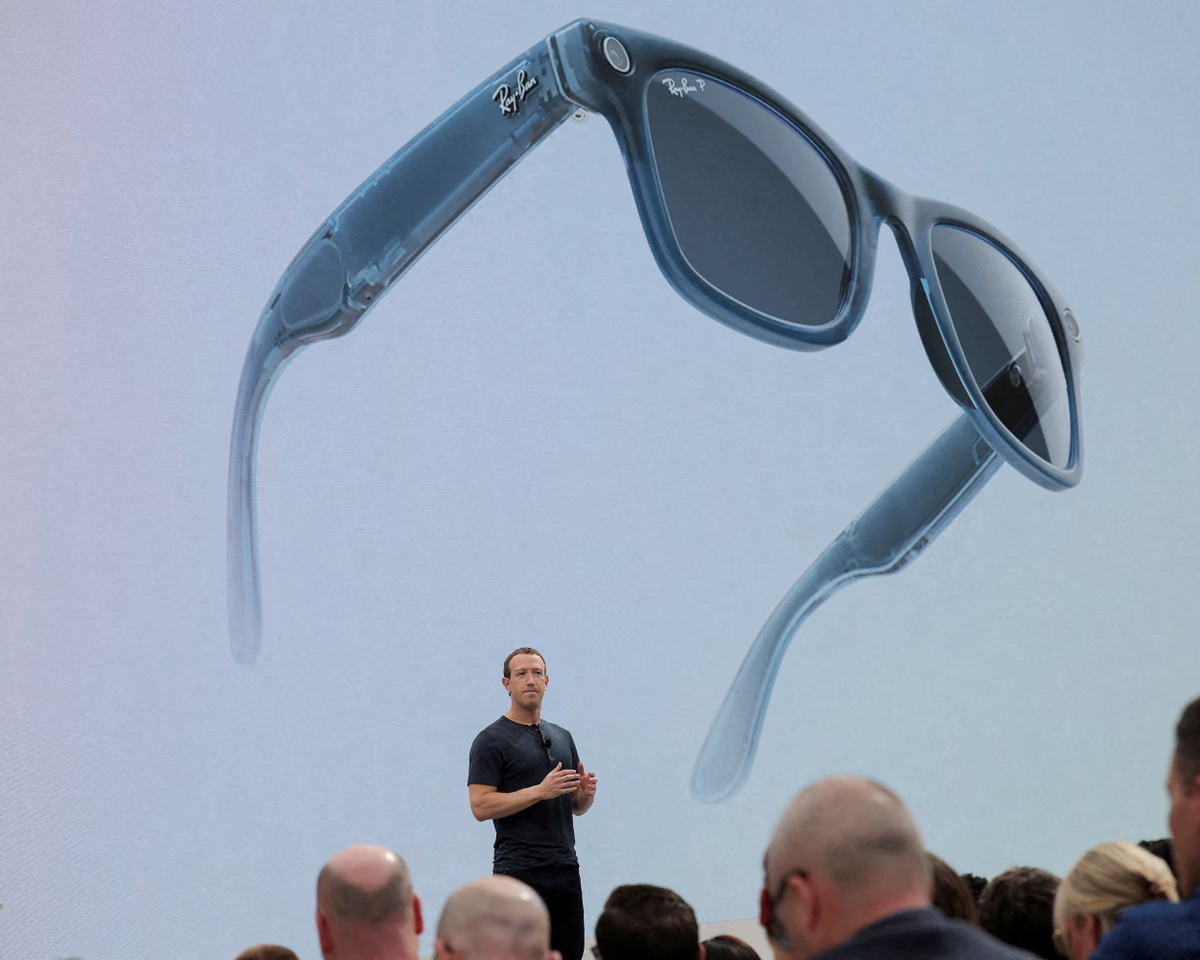
It was intended to be a simple, aesthetic video capturing the atmosphere of the Tour de France finale, but for content creator Oliver Hooson, the result was an unexpected wave of vitriol. After posting footage of himself preparing coffee, the comments section was quickly flooded with accusations. “PERV,” read one comment. “Out here pushing creep glasses,” said another. This reaction highlights a growing trend where Meta’s smart glasses, despite being marketed as a high-tech lifestyle accessory, are increasingly labeled as “pervert glasses” by a public deeply concerned about surveillance and privacy.
The controversy surrounding the eyewear has reached a fever pitch this summer, particularly after a high-profile collaboration with Kylie Jenner encouraged influencers to showcase the devices. The backlash has been swift, forcing many creators to address the controversy directly. Rida Tharana, an Instagram influencer with 1.6 million followers, publicly “took accountability” for her involvement in a Meta promotional campaign. She explicitly criticized men who misuse the technology to “record and harass women,” acknowledging the harm caused by the normalization of such devices in public spaces.
Hooson, who shares home design and cycling content with his 224,000 followers, admits he was naive about the implications of the product. “It was a real ignorant move,” he says, noting his disdain for the way the glasses are being weaponized against women who are “mainly being filmed against their knowledge.” The fallout was immediate for his personal brand; he estimates he lost between 50 and 100 followers following the video. He now views the derogatory label “pervert glasses” as a necessary “defence mechanism” used by the public to discourage the adoption of the technology. “If everybody gets round that they are pervert glasses, which evidently they have, then it’s a really easy way of limiting sales and the usage of them,” he argues.
Despite the intense online scrutiny, the commercial success of the product remains significant, with Meta reporting sales of 7 million pairs in 2025 alone. Meta maintains that the devices include privacy features, such as a small, flashing LED light that signals when recording is active. A company spokesperson stated, “We designed our AI glasses with privacy and safety features built in from the start – informed by engagement with safety experts, including women’s safety organisations.” However, critics argue that these safeguards are insufficient to prevent malicious use in real-world scenarios.
The reports of misuse are varied and alarming. In one documented case, a woman reported to the BBC that a man had recorded her and subsequently demanded payment to delete the footage from social media. Other reports have surfaced regarding individuals discovering they were being recorded during intimate or private appointments, such as waxing sessions. Furthermore, law enforcement in Scotland recently launched an investigation into a far-right TikToker accused of using the glasses to film sexualized comments directed at young women and to record a Sikh shopkeeper without consent while making extremist remarks.
Parenting influencer Deena Lang experienced the backlash firsthand after acquiring a pair for her son, initially viewing them as a helpful tool for travel and translation. Her perspective shifted during a public cooking class. After reviewing her footage, she was “horrified” to see people giving her “dirty looks or side-eye” because they felt uncomfortable with the device. “I didn’t really know what they were capable of,” she admits, noting that she felt “a lot of embarrassment” for wearing them in public. While she acknowledges that the glasses offer genuine utility for people who are blind, she concludes that “the negatives just far outweigh the positives.” She has since relegated her pair to a drawer, stating, “I don’t believe that we are in an age where technology like this can exist without people with bad intentions making use of it.”
The societal rejection of the glasses has extended beyond social media comments. Various establishments across the UK, including prominent pub chains like Wetherspoons, have implemented bans on the devices to protect the privacy of their patrons. These institutions are responding to a growing consensus that the potential for harassment and non-consensual surveillance is too high to ignore. The trend of banning the glasses in restaurants, theatres, and pubs signals a broader cultural pushback against wearable recording technology that lacks clear boundaries.
For creators like Hooson, the experience has been a sobering lesson in the ethics of digital content creation. He originally received the glasses at a PR event and was inspired by high-end chefs using them to film their creative processes. He found the footage “stupid, poetic and beautiful to watch” and simply wanted to share his own hobbies. However, the realization that his content was being perceived as a threat to public safety has changed his stance entirely. “Would I rather just not have that little fun point-of-view shot for the greater good? Yes, I would definitely get rid of them,” he says, signaling a retreat from the technology that many influencers are now finding to be more of a liability than an asset. The report also notes that documenting the moment with Meta’s “spy glasses”. The report also notes that they sold 7m pairs in 2025 alone, while the glasses have proved unpopular with some online. The report also notes that for me, that was a real awakening.” She posted the footage to her 110,000 followers on Instagram with faces blurred out to act as a “cautionary tale”. The report also notes that amid the buzz of the Tour de France finale, Oliver Hooson filmed himself whipping up a delicious-looking flat white for a fellow cycling enthusiast. The report also notes that leading to a flurry of influencers showing off their trendy, Kardashian-approved goggles, things reached a peak this summer when Kylie Jenner collaborated with Meta to launch a pair. The report also notes that some content creators have been forced to apologise for plugging the specs. The report also notes that sometimes making disparaging, misogynistic comments afterwards, self-described pickup artists have used the glasses to film themselves trying to chat up women in public without their knowledge. The report also notes that “It definitely caught me off guard.