

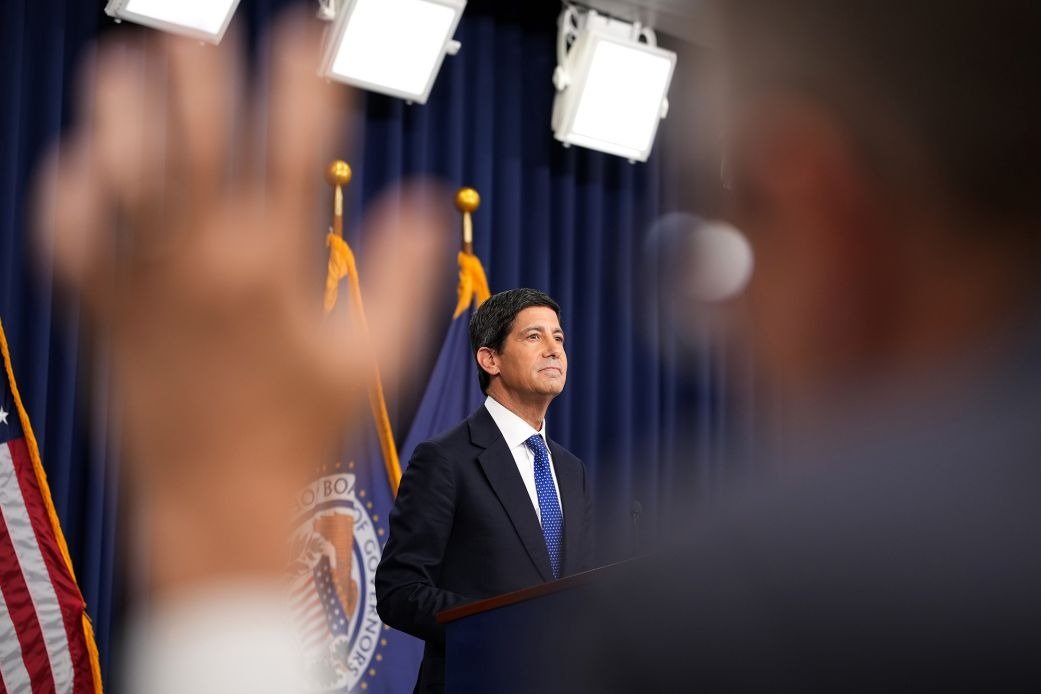
In its first interest rate hike since 2023, the Federal Reserve acted on Wednesday to address five years of stubborn inflation. The central bank moved in response to an ultimatum from the bond market, which had signaled that if the Fed did not raise borrowing costs, market yields would do so independently.
Fed Chairman Kevin Warsh described the decision as a result of an internal assessment regarding the national economy and employment projections, downplaying suggestions that the central bank was forced by external actors. “Sometimes the market tries to prejudge our outcomes,” Warsh noted during a Wednesday briefing. “I will observe market prices and see what they have to say, but today was our decision.”
However, market experts argue that the bond market effectively dictated the outcome. “The Fed raised rates today, but the bond market got there first,” stated Karen Manna, a fixed-income strategist at Federated Hermes. “In many ways, the bond market has been leading the Fed rather than the other way around.” By Tuesday, the benchmark 10-year Treasury yield had hit a 19-year high, reflecting investor anxiety that the Fed had lost its credibility in managing its mandate to control inflation.
The dilemma for the central bank is that its primary inflation drivers—energy costs fueled by the conflict with Iran and Ukraine’s strikes on Russian diesel refineries—are beyond its control. Michael Pearce, chief US economist at Oxford Economics, noted that the central bank typically “looks through” such supply shocks because they are temporary and rate hikes are often ineffective at combating them. “The Fed cannot control energy prices,” Pearce explained. “The economy is solid and can withstand a few rate hikes, but the risk is higher interest rates begin to weaken the labor market.”
Concerns over the effectiveness of the hike were echoed by economists at Goldman Sachs, who argued that the case for increasing rates was weak because demand remained steady and the economy was not overheating. They suggested that once the supply-related energy issues are resolved, current interest rates might become unnecessarily high, artificially burdening consumers and businesses.
Despite these risks, Chairman Warsh defended the move as a necessary step to ensure price stability, which he argued will foster sustainable long-term growth. “I don’t believe that we need to do harm to the labor markets to achieve our objective,” Warsh stated. He emphasized that the focus remains on keeping unemployment in check while curbing inflationary pressures.
Ultimately, the Federal Reserve found itself in a position where inaction could have caused the bond market to go haywire, likely driving yields even higher and punishing borrowers. As political strategist James Carville once observed, the bond market possesses the unique power to “intimidate everybody,” a reality that continues to influence the trajectory of US monetary policy. The report also notes that and the Fed chairman – who made it his mission to let markets do their thing without his intervention – remained mostly silent, they demanded even more yield as oil prices crept above $100. The report also notes that “The Fed was boxed into a corner,” said Chris Zaccarelli, chief investment officer for Northlight Asset Management. The report also notes that and an interest rate hike is a powerful weapon that could help squash it, americans have suffered from a persistent inflation problem for five years. The report also notes that but it’s a blunt tool that comes with a nasty side effect: It can unintentionally turn the job market into collateral damage. The report also notes that and the reasonably strong job market and robust consumer spending probably gave the Fed enough room for error, so the bond market got its wish Wednesday. The report also notes that raising interest rates risks slowing down the American economy without anything to show for it.