

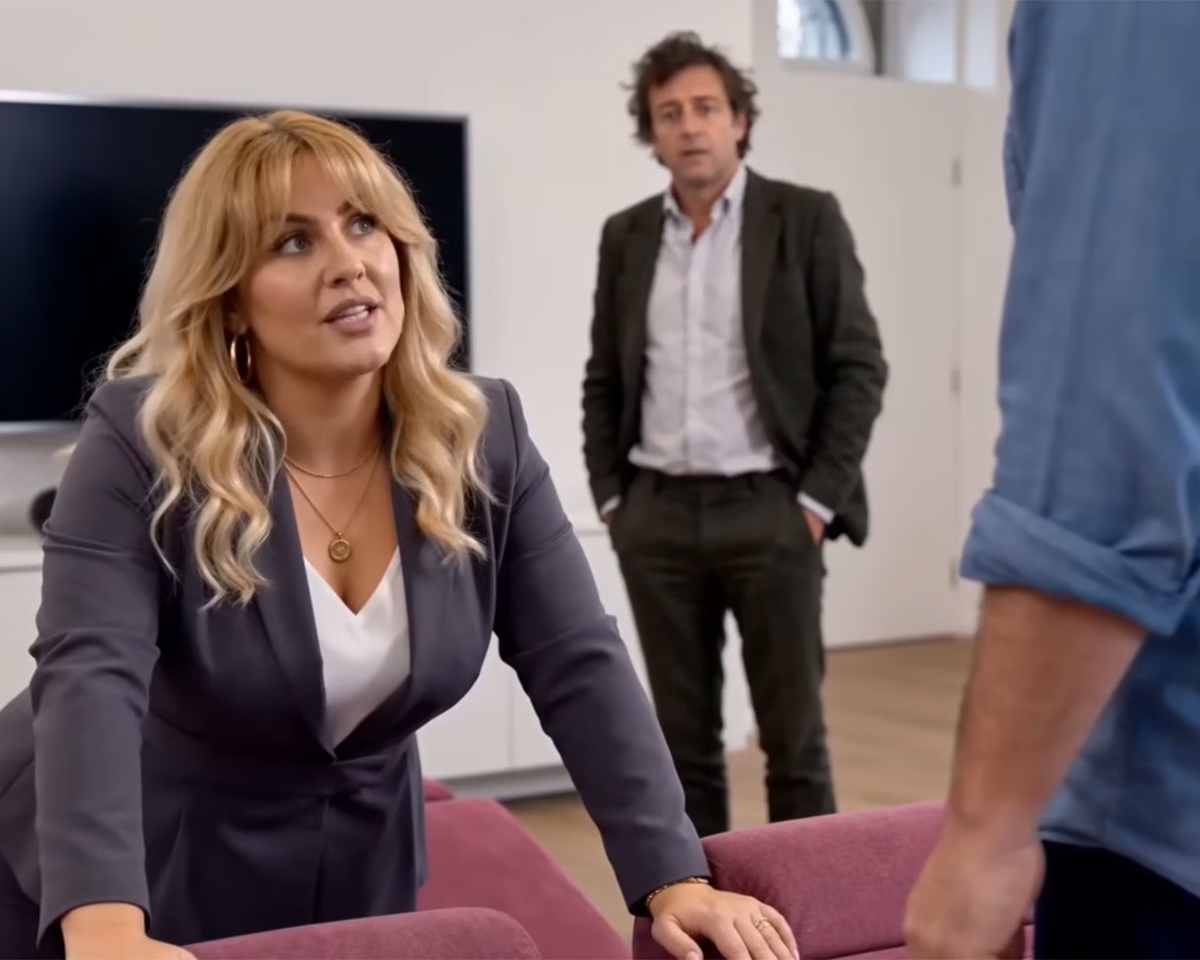
An Anthropic researcher previously estimated a greater than one in 10 chance that artificial intelligence could lead to the extinction of humanity within the next ten years. After viewing the recently premiered sitcom “No Big Deal,” which arrived on YouTube on Friday, that dire prediction feels arguably optimistic. As the 376th person to witness this production, I strongly advise against becoming the 377th viewer; this experience serves more as a cautionary tale than a recommendation.
Marketed as “The Office meets Dragons’ Den,” the show functions as a workplace comedy centered on angel investors evaluating various business pitches, including a crude toilet analysis tool and a specialized sofa. The characters are rendered as unsettling, dead-eyed waxworks that speak with the monotone cadence of a GPS navigation system. The visual experience is equally jarring, characterized by erratic shot-to-shot continuity, shifting background noise, and characters who move with a disturbing, robotic smoothness.
Surprisingly, the show claims a human writer: Andrew Dickinson. A former angel investor, Dickinson initially intended to develop the project as a standard television production. Faced with the time-consuming and expensive realities of traditional media, he pivoted to AI tools to bypass these hurdles. While the motivation to seize control of the production process is understandable given how difficult it is to get a traditional show greenlit, the result is an unmitigated failure that lacks humor, depth, and human emotion.
Even if the script were handled by the most talented actors in the world, the underlying technology renders it unwatchable. The technical flaws are glaring: dialogue fails to sync with lip movements, and characters often sit motionless like deactivated machines during inactive moments. Even basic physical movements, such as a simple fist shake in a 2026 setting, appear glitchy and deformed, as if the subjects are suffering from electrical interference. When characters are not rendered with photorealistic stillness, they move with a mechanical quality that highlights their artificial nature.
The tragedy of the project lies in the producer’s belief that he can circumvent traditional talent without consequences. By embracing this approach, Dickinson is merely accelerating his own professional obsolescence, as the technology eventually will not require human writers either. This trajectory represents a bleak future for entertainment where creative development is abandoned in favor of cold, algorithmic output.
Ultimately, “No Big Deal” fails on every level because it lacks the developmental nuance that makes television engaging. The show is entirely unwatchable, providing an early, grim look at what happens when human creativity is surrendered to software. If we truly have less than a decade before existential threats to humanity manifest, spending time engaging with such joyless, AI-generated content is an insult to that precious remaining window of time. The report also notes that one Anthropic researcher claimed there is a greater than one in 10 chance that AI will end all of humanity as we know it within the next decade, a s you will no doubt be aware. The report also notes that i was apparently only the 376th person to watch it. The report also notes that more a warning to avoid it if your algorithm ever decides it hates you enough to suggest this, this is by no means a recommendation that you become the 377th. The report also notes that however, now that I’ve given it some thought, I think this statistic might actually be a little conservative. The report also notes that and if I ever have to do it again I’m genuinely going to die of boredom, this is because I have just watched an episode of a sitcom created by AI.