

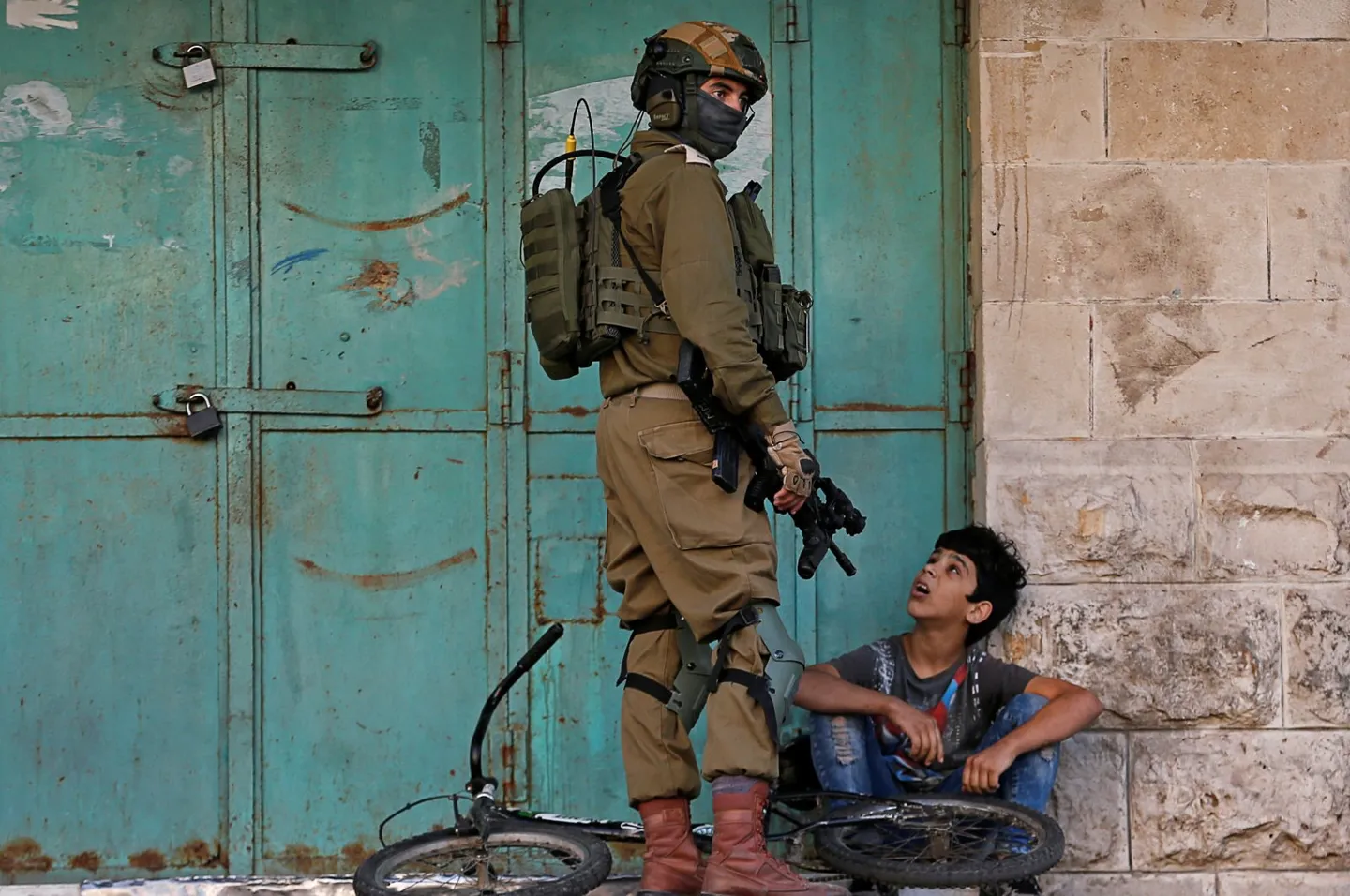
For 19-year-old Ahmad, the end of his 15-month detention by Israeli forces was not a true liberation. Arrested at 16 on August 6, 2024, and released on November 3, 2025, the teenager says, “I left one prison and entered another.” His experience reflects a reality faced by many Palestinian children in the occupied West Bank, where the trauma of incarceration extends well beyond the prison gates. He was arrested on August 6, 2024, at 16, and released on November 3, 2025, at 18. And eventually they started avoiding me,” Omar said, i had conflicts with many of them.
Since October 7, the number of Palestinian children detained by Israeli authorities has surged significantly. As of early August, approximately 370 children were held in facilities such as Megiddo and Ofer prisons. According to the Palestinian Centre for Prisoners’ Advocacy, Israeli forces detained 276 children during the first half of 2026 alone, operating within a military court system that subjects minors to interrogation and prosecution.
The physical and mental toll of this system is evident in the daily lives of those released. Ahmad, who endured detention in Damon, Ofer, and Megiddo, recalls being subjected to beatings, stress positions, and prolonged exposure to gas, while suffering from untreated scabies for four months. Back in Balata Camp, his anxiety remains profound. “If the army enters the city, I instantly disappear from the area. I’m afraid of going back to prison. I’m afraid of what is inside, of the hardships I experienced in there,” he explains. He notes that for days after his release, he could barely sleep or eat normally, as his body struggled to adjust to a life without the severe deprivation he faced while incarcerated. But the numbers say little about what happens after the prison gates open. Release can mean returning to interrupted education, disrupted routines and strained relationships while carrying the physical and psychological effects of detention, for children who have spent months or years behind bars.
Younger children face similar struggles. Brothers Omar, 13, and Faisal, 14, spent only five days in Megiddo Prison, yet the experience has disrupted their education, work, and social ties. Omar, who previously worked at a local shop, has been unable to return to work, noting that the shop owner feared the presence of someone associated with detention would attract further military intervention. He remains in chronic pain after being struck in the head with a rifle butt prior to his imprisonment: “The impact affected my head, and ever since then, I have experienced pain whenever I rest my head on a pillow.”
The social alienation is a frequent hurdle for these children. Omar reports that friends have drifted away, leaving him isolated at home due to his fear of being taken again. Faisal echoes this sense of displacement, stating that his life worsened after his release. “Every night, I struggle to sleep because I keep remembering what happened, the beatings, the humiliation, and the experiences I went through in prison. The hardest part has been trying to return to my normal life,” he says. My friends stopped spending time with me. “Whenever I go outside into the neighborhood, I am afraid that the army might come and arrest me again, or that soldiers might come on foot and take me away,” Omar says.
The system under which these children are processed frequently involves administrative detention, allowing for indefinite, renewable imprisonment without charge or trial based on undisclosed evidence. By March 2026, Israel Prison Service data indicated that 191 Palestinian minors were held under these conditions, a record high since tracking began in 2008. These figures do not account for children held in military interrogation centers, nor do they clarify the number of detainees from Gaza.
Critics point to a systemic disparity where Palestinian minors in the West Bank are governed by military law, where the age of criminal responsibility is 12, while Israeli settler children in the same area are subject to civilian juvenile courts. A UNICEF review of the military detention process concluded that the ill-treatment of Palestinian children appears widespread, systematic, and institutionalized.
For survivors like Ahmad, the psychological weight remains a barrier to reintegration. He actively avoids discussions regarding the military or other prisoners to protect himself from triggers. “Anyone who starts talking about the army, I get up and leave the gathering. And if someone brings up a story about a prisoner, I distance myself from those conversations. I tell them, ‘I don’t know.'”