

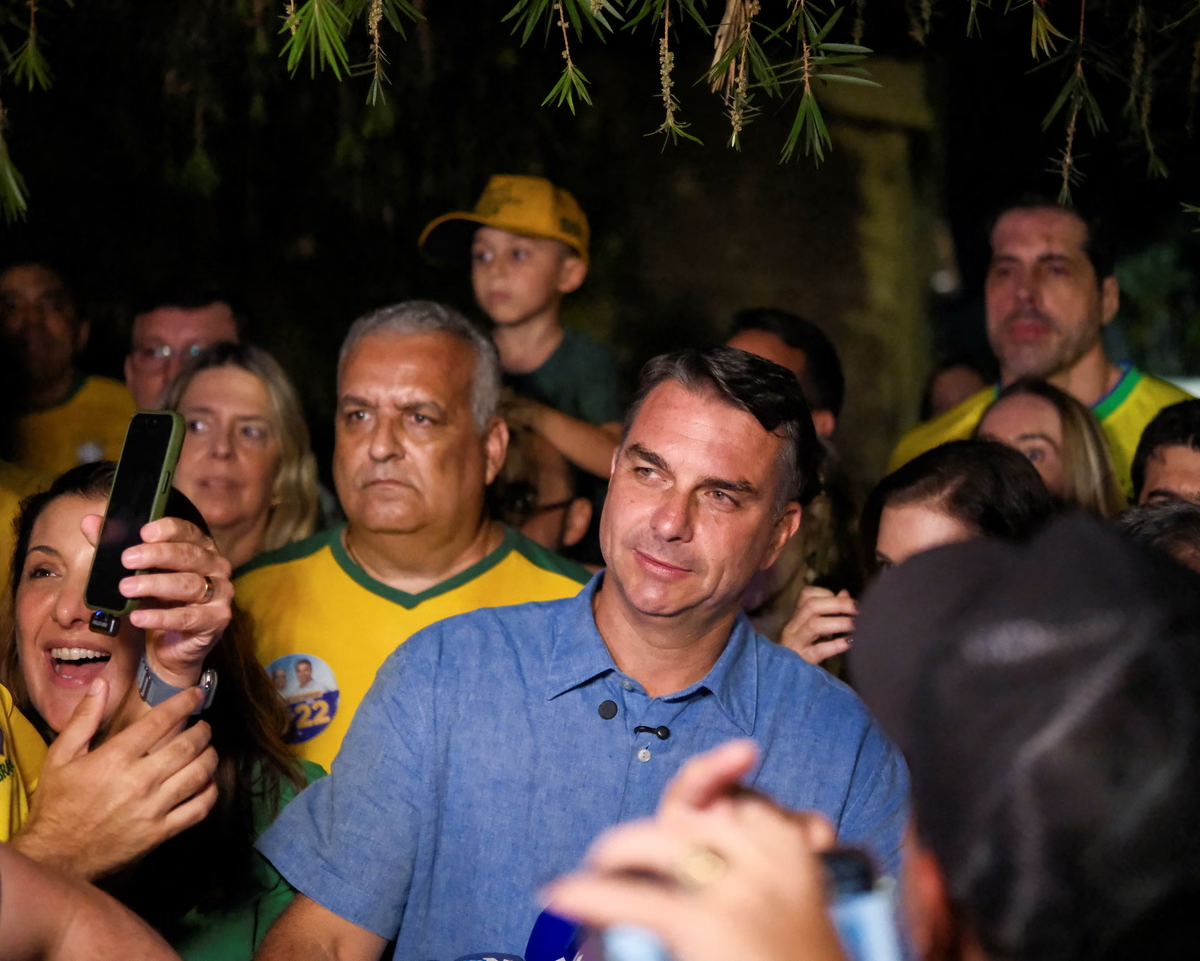
Flávio Bolsonaro has surged to a commanding position in Brazil’s presidential election, securing an unexpected first-round lead over incumbent Luiz Inácio Lula da Silva. The 45-year-old right-wing contender captured 47.03% of the vote, totaling 56.1 million ballots, compared to 45.16% and 53.8 million votes for the 80-year-old Lula. With the runoff scheduled for October 25, history weighs heavily against the incumbent; no runner-up since the 1985 return of Brazilian democracy has managed to overturn a first-round deficit to win the presidency. According to “We are experiencing a revolution … The far right is growing in a very consistent way, election after election,”, Lago, calling the election the worst for progressive and moderate centrist parties since the late 80s. Thanks to positive voter memories of his first two terms, from 2002 to 2010, lago believed Lula had managed to interrupt the advance of Bolsonaro’s populist movement in 2022. Back then, a global commodities boom allowed Brazil’s first working-class president to fund major social welfare programmes that helped millions escape poverty. “But it was just an interregnum,” Lago said. According to “I think he will be freed and I think he will be very important during Flávio Bolsonaro’s [presidency],”, Lago. “Flávio will be running the country and [Jair] Bolsonaro will be doing what he has always done: leading the revolution.”.
Political scientist Miguel Lago described the results as a catastrophic night for the left, stating that while political miracles are theoretically possible, he does not foresee Flávio Bolsonaro losing the upcoming final ballot. Donald Trump, a longtime supporter of the Bolsonaro family, praised the result from Washington, calling it a significant, albeit close, victory. Trump suggested the upcoming runoff would remain highly competitive. Speaking outside the White House on Monday, Donald Trump told reporters: “Well, it’s a big victory: close but a very, very big victory.
This electoral performance marks a major comeback for the Bolsonaro political clan, led by 71-year-old patriarch Jair Bolsonaro. Despite currently serving a 27-year sentence for his role in plotting a coup following his 2022 loss, the former president saw several family members secure office. His wife, 44-year-old Michelle Bolsonaro, was elected to the senate, while his sons Carlos and Jair Renan, alongside his brother Renato, secured legislative seats. The success extended to other key Bolsonaristas, including the re-election of São Paulo governor Tarcísio de Freitas and the election of Sérgio Moro as governor of Paraná. Bolsonaro’s youngest son, 28-year-old Jair Renan Bolsonaro, and the ex-president’s 62-year-old brother, Renato Bolsonaro, both won seats in the lower house of congress. Both men were ministers during Bolsonaro’s 2018-22 government.
The Liberal party (PL) is poised to hold the largest bloc in the 81-seat senate, with 28 seats. When combined with other hard-right allies, the movement will command a majority of 43 seats. This shift stands in stark contrast to the losses suffered by high-profile pro-Lula candidates, including former environment minister Marina Silva and former planning minister Simone Tebet. Social media influencers Nikolas Ferreira and Lucas Pavanato also made history, receiving over 3 million votes collectively to become the most supported congresspeople in the nation’s history.
Analysts suggest that controlling the senate could facilitate an amnesty for Jair Bolsonaro, potentially allowing him to emerge from his house arrest in Brasília and resume his leadership role. Experts anticipate he will play a pivotal part in a future Flávio Bolsonaro administration. Furthermore, the senate majority could assist Eduardo Bolsonaro—who is currently in self-imposed US exile following a conviction for coercion—in returning to political life, with reported ambitions to become foreign minister. Who has close ties to Donald Trump’s Maga movement, was sentenced in absentia to four years in prison earlier this year for coercion – the result of his lobbying the Trump administration to interfere in his father’s coup trial, the 42-year-old.
The shift toward the far right was celebrated by international allies, including Argentine President Javier Milei and Israeli Prime Minister Benjamin Netanyahu, who expressed hope for restoring robust bilateral ties. Domestically, Lula has attempted to project resilience, vowing to launch a renewed campaign that focuses on the differences between his platform and his rival’s record. The incumbent aims to challenge Flávio Bolsonaro’s past, specifically targeting allegations of corruption and ties to paramilitary groups—charges the candidate has denied.
Lula’s path to victory faces significant hurdles, as he must mobilize the 33 million citizens who abstained from the first round. Additionally, Flávio Bolsonaro is expected to benefit from the consolidation of votes previously cast for other right-wing candidates such as Ronaldo Caiado, Renan Santos, and Romeu Zema, who combined for over 5.5 million votes. Researchers noting high levels of voter apathy among the unaligned suggest that convincing these individuals to support the left will be a monumental task.