

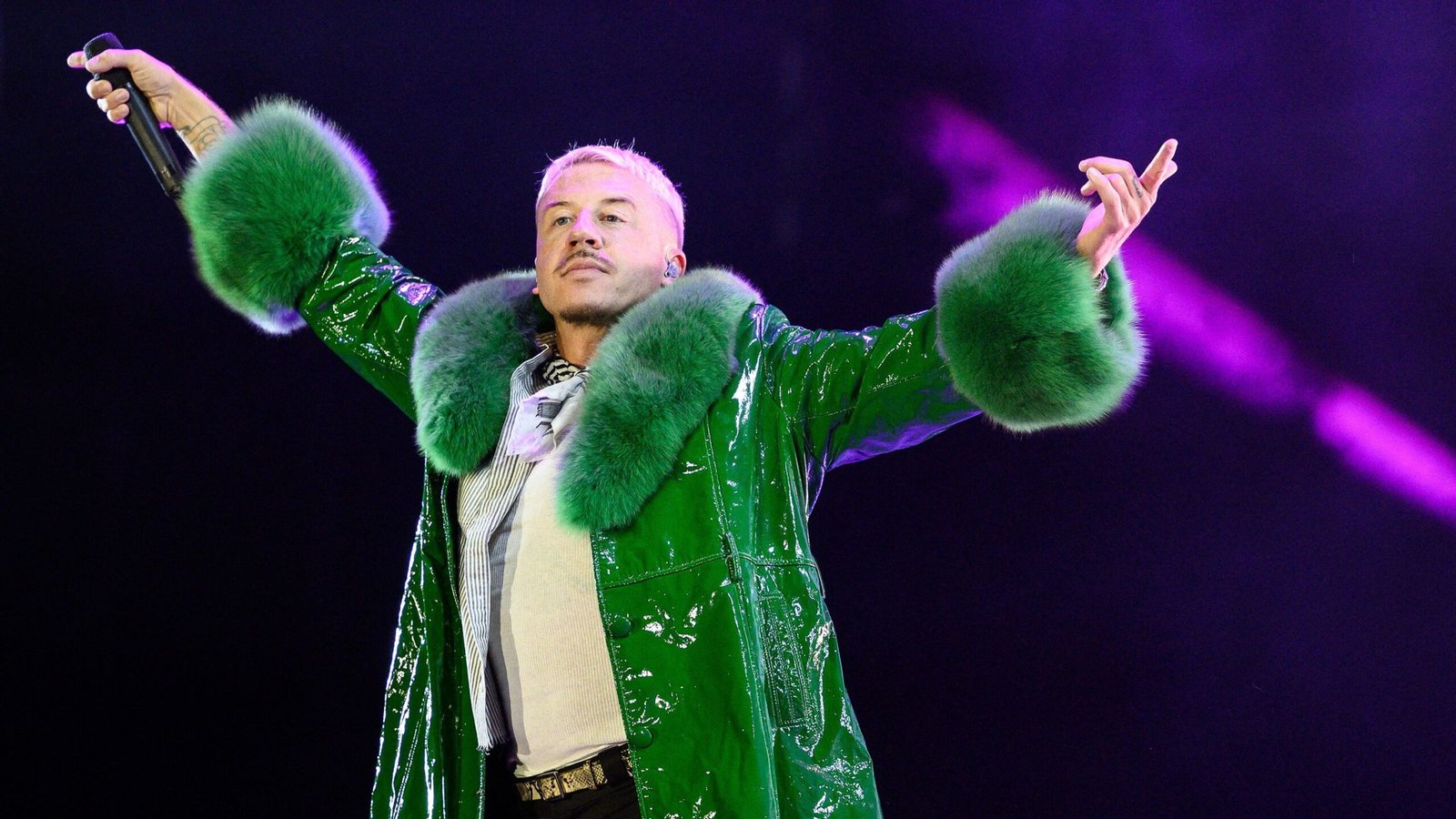
Ed Sheeran’s American concert tour has faced significant upheaval after rapper Macklemore was removed from the lineup, prompting a wave of resignations from supporting acts. Artists including producer Finneas, Irish singer-songwriter Aaron Rowe, the Irish group Beoga, and the Danish band Lukas Graham have all withdrawn from their scheduled opening slots in a move of solidarity with Macklemore and the Palestinian cause.
The controversy stems from Macklemore’s vocal support for Palestine, specifically his remarks during recent performances at MetLife Stadium in New Jersey, where he declared, “Free Palestine” and appeared onstage wearing a keffiyeh. Macklemore, known for the 2012 hit “Thrift Shop,” has been a frequent participant in pro-Palestinian advocacy since the conflict in Gaza intensified after October 7. In 2024, he released the song “Hind’s Hall,” referencing the student-led occupation of a Columbia University building named after Hind Rajab, a 5-year-old Palestinian girl killed by Israeli forces.
Robert Kraft, the billionaire owner of the New England Patriots, confirmed that he initiated the decision to ban Macklemore from performing at Gillette Stadium in Massachusetts. In a formal statement, Kraft cited “Macklemore’s recent actions” and “a broader history of antisemitic rhetoric and imagery” as the basis for the exclusion, noting that the performer’s presence would be offensive to the Jewish community. While Kraft alluded to a 2014 incident where Macklemore donned a hooked nose, wig, and beard—a costume critics labeled as an antisemitic caricature—he did not clarify if this specific event drove the current ban. Macklemore has previously apologized for that costume, describing it as a random selection.
Addressing the fallout, Macklemore claimed that Kraft pressured Sheeran by organizing other venue owners to issue an ultimatum: if Macklemore remained on the tour, Sheeran would be barred from performing at their respective stadiums. Kraft, a staunch supporter of Israel who previously pulled funding from Columbia University over protest management, stood by the decision, arguing that his actions were not intended to diminish Palestinian suffering but to reject what he characterized as dishonest, one-sided narratives that ignore Hamas’s role in the conflict.
Ed Sheeran, through an Instagram statement, distanced himself from the decision, insisting that the removal of Macklemore was forced by concert promoters and venue owners. Sheeran emphasized that he was “not complicit” in the move and addressed criticism regarding his public neutrality on the Israel-Palestine conflict. He stated that his silence did not imply a lack of personal conviction or care for the situation, noting that promoters threatened to cancel entire shows if Macklemore’s support for Palestine continued from the stage.
The situation has raised broader concerns regarding free speech and corporate control over artistic expression. Lee Rowland, executive director of the National Coalition Against Censorship, acknowledged that while private stadium owners possess the legal right to determine their performers under the First Amendment, the move signals a troubling trend toward self-censorship. Rowland warned that artists may increasingly feel compelled to sanitize their performances to avoid offending venue operators, ultimately limiting public discourse.
Macklemore’s removal impacted seven scheduled tour dates across the United States. As of now, the remaining venues involved in the tour have not responded to requests for comment regarding their stance on the policy. The incident highlights the growing tension between industry stakeholders and performers over the political speech allowed on major stadium stages, with activists and artists continuing to debate the impact of such bans on public advocacy. The report also notes that macklemore, a rapper best known for 2012’s “Thrift Shop,” has publicly advocated for Palestinian rights since Israel began its years-long bombing campaign in Gaza after the October 7 attacks. The report also notes that “A big part of the reason why I wanted to do this tour in the first place, was so I could stand up in stadiums like this and say two words that are very near and dear to my heart: Free Palestine,” he said, according to v. The report also notes that kraft did not respond to a question about whether he was referring to that incident or to something else when he accused Macklemore of past antisemitism. The report also notes that criticism of Israel, criticism of apartheid, being against genocide in no way is a criticism of you.”, he added that “to all of my Jewish brothers and sisters. The report also notes that macklemore has regularly performed at pro-Palestinian rallies since 2023. The report also notes that his comments at Sheeran’s show prompted criticism from the singer Pink and a petition against his appearances.