

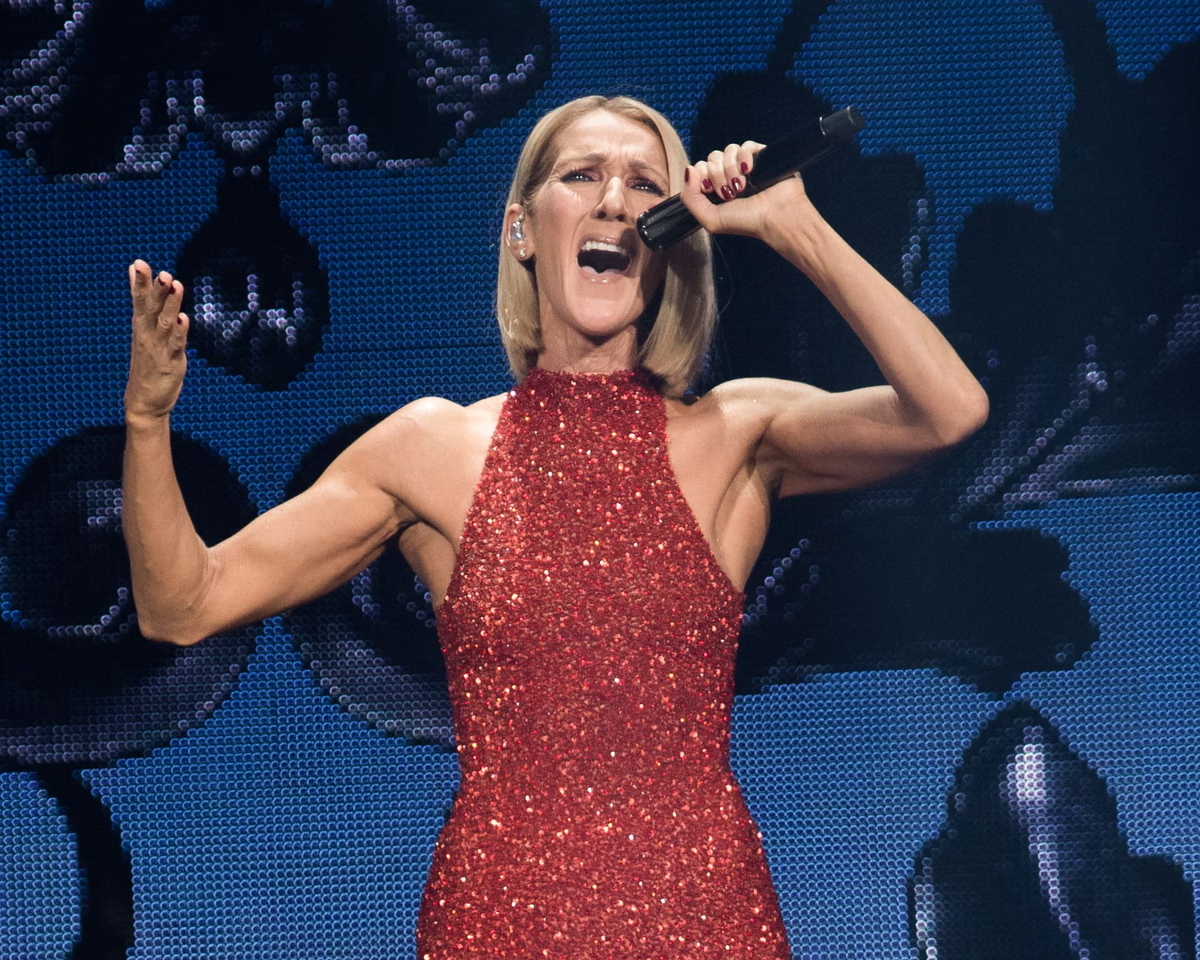
Céline Dion has long been defined by her status as a powerhouse vocalist, yet her career has also been marked by a willingness to experiment. A prime example is the music video for “Ashes,” an atmospheric ballad from the “Deadpool 2” soundtrack, where she playfully subverts her own image alongside Ryan Reynolds in his antihero persona.
Her journey began with “Where Does My Heart Beat Now?” (1990). Debuted at the 1989 Eurovision Song Contest, this track served as the standout cut from “Unison,” her first English-language album released just two years after she began learning the language. It remains a masterclass in power balladry, featuring mammoth drums and a soaring vocal performance.
Dion has frequently defied expectations, such as on the album “1 Fille et 4 Types.” Collaborating with four Francophone songwriters, including Jean-Jacques Goldman, she explored sounds ranging from distorted slide guitars to wailing harmonicas and Bo Diddley beats. Similarly, her 2016 title track, recorded before the death of her husband, René Angélil, offers a poignant reflection on time and loss, anchored by a restrained, deeply emotional vocal.
Her catalogue is filled with cinematic moments. The Oscar-nominated “The Prayer,” which exists in versions featuring Andrea Bocelli and Josh Groban, remains a lavish showstopper from the film “Quest for Camelot.” Meanwhile, “To Love You More,” originally recorded for a Japanese television drama, showcases her ability to command a melody with a sprightly string arrangement.
Reflecting on her life as a mother, “A New Day Has Come” (2002) was her first release following maternity leave. Critics noted its lullaby-like quality, with lyrics such as “Where there was weakness I found my strength / All in the eyes of a boy” serving as a “gentle exhale.”
Dion’s commitment to her Francophone roots remained steadfast even after her English-language success. “Pour Que Tu M’Aimes Encore,” from the bestselling album “D’eux,” became one of her signature songs, proving her enduring connection to her native tongue. Her fearlessness in covering established classics is equally notable; her house-infused take on Roy Orbison’s “I Drove All Night” (2003) is a testament to her vocal confidence.
Collaborations have also defined her legacy. Her duet on “Beauty and the Beast” (1991) with Peabo Bryson became the definitive version of the Disney classic, while her pairing with Barbra Streisand on “Tell Him” remains a landmark moment. Her cover of the Bee Gees’ “Immortality” and her dramatic rendition of Eric Carmen’s “All by Myself” further highlight her ability to claim well-known songs as her own.
The 1999 hit “That’s the Way It Is,” crafted by a team of Swedish songwriters including Max Martin, offered a lighter, pop-oriented sound that resonated globally. However, it is “My Heart Will Go On” (1997) that stands as her most recognizable achievement. A number one hit in over 25 countries with more than 18 million copies sold, the “Titanic” theme is defined by her gradual build from a fragile whisper to an explosive, cinematic climax.
“Because You Loved Me” (1996) serves as the quintessential Dion ballad, slowly developing before soaring into a gospel-influenced finale. Similarly, “The Power of Love”—a song she transformed into a personal tribute to her relationship with Angélil—showcases her ability to imbue every note with raw sincerity.
Topping the list is “It’s All Coming Back to Me Now” (1996). Writer Jim Steinman famously claimed the song was inspired by a scene in “Wuthering Heights” where Heathcliff dances with a corpse on a beach. While that scene is purely a product of Steinman’s imagination, the song’s overblown, dramatic intensity requires exactly the kind of total emotional commitment that Dion consistently delivers. The report also notes that a viral mashup of the track with the Whispers’ disco classic And the Beat Goes On propelled it back into the singles chart 22 years later. The report also notes that she seemed weirdly liberated and more willing to take risks, when Céline Dion’s era as a foolproof hitmaker ended. The report also notes that mammoth drums, Dion absolutely belting it out, it’s a superior power ballad: huge chorus. The report also notes that but it’s worth revisiting, it has been overshadowed by her later successes. The report also notes that but The Colour of My Love’s diversion into camp club anthem territory is surprisingly good – she makes a fine disco diva and the house remixes, by MK and E-Smoove, are great, dancefloor-focused pop isn’t what Dion is famous for. The report also notes that e-Smoove’s piano-powered Mission mix is the pick.