

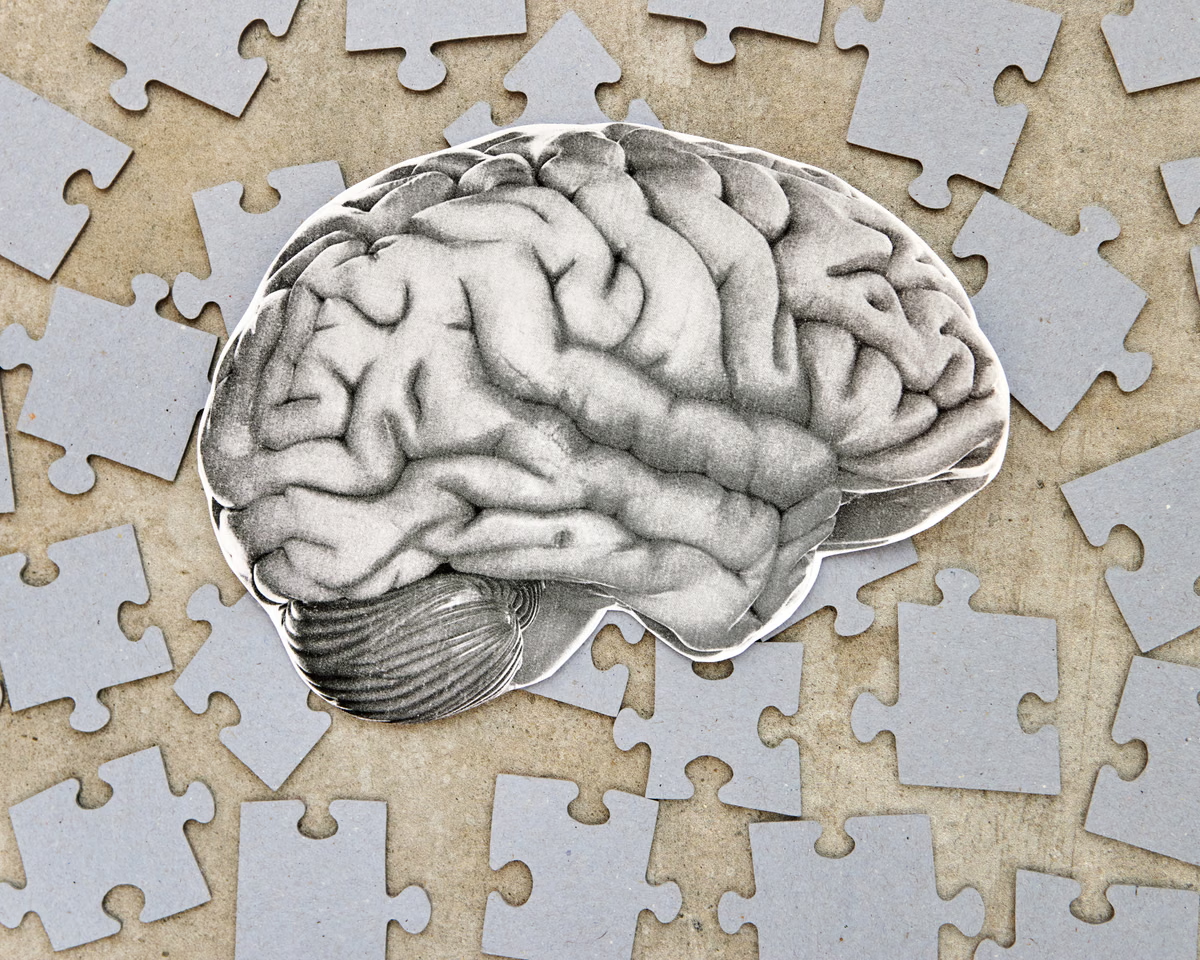
Dr. Norman Swan argues that shifting our perspective on cognitive ageing is essential, noting that “changing the way you think about the brain cliff can literally change the way you think and remember.” He suggests that we should move away from the concept of “cognitive decline” and instead focus on “cognitive change.” Many people mistakenly compare their current mental function to their performance in their 20s, which is an invalid benchmark. While fluid intelligence—the speed and problem-solving ability often associated with youth—does peak early, it is less significant than crystallized intelligence, which encompasses wisdom and experience and continues to improve throughout our lives.
A critical component of brain health is a process called scaffolding. As we age, the brain constructs networks of nerves that act as infrastructure to protect and enhance cognitive abilities. This scaffolding, which eventually extends into the prefrontal cortex, helps us delay the “brain cliff.” The prefrontal cortex is vital for decision-making, emotional control, and memory integration. To support this growth, Swan advises that we should actively encourage scaffolding while avoiding behaviors that hinder it.
In his research, Swan interviewed seven “cognitive super-agers,” ranging from a 95-year-old illiterate shoemaker to a 94-year-old woman still working at a McDonald’s in Japan. Despite their diverse backgrounds, they shared common traits, particularly in how they manage stress. These individuals prioritize problem-solving and avoid rumination, a habit that occupies valuable brain space with circular, unproductive thoughts. Factors like depression and alcohol consumption can damage the prefrontal cortex, potentially accelerating cognitive decline.
Swan emphasizes that the ideal time to begin protecting the brain is during our 40s and 50s. He recommends regular exercise to boost brain plasticity and an anti-inflammatory diet rich in leafy greens, berries, fermented foods like yogurt, and low in red meat. These choices support the microbiome and aid the absorption of bioactive compounds. Additionally, he highlights the importance of the “default mode network,” which activates when the brain is at rest. Allowing the mind to wander and engaging in “mental time travel”—reflecting on the past, staying grounded in the present, and imagining the future—appears to stimulate scaffolding.
Contrary to popular belief, genetics play a surprisingly minor role in cognitive trajectory. Swan notes that among his super-agers, only one individual had a family history that might have been relevant, and even he was actively engaged in brain-maintaining activities, such as learning to draw and building new social connections. This underscores the significant impact of environment and lifestyle choices.
Reflecting on his own life, Swan has made several adjustments: he is more vigilant about stress management, has reduced his alcohol intake, and monitors coronary risk factors like blood pressure and cholesterol. He also makes moderate to vigorous exercise a non-negotiable part of his routine.
Addressing the concept of retirement, Swan is clear: it is detrimental to brain health. He argues that the evidence shows cognitive decline often accelerates after retirement. He clarifies that “retirement” should not mean retreating to the couch, but rather transitioning into new, complex activities, volunteering, or learning new skills. As long as one remains mentally active and engaged, they are not truly retired. For those struggling with stress or rumination, he suggests that cognitive behavioral therapy, guided by a clinical psychologist, can be an effective tool for change. The report also notes that dr Norman Swan: There are three things you need to know which are not widely known. The report also notes that it leads to an assumption that we’ve declined into deficit. The report also notes that especially when we’re in midlife (40s and 50s), that’s not actually what’s happened. The report also notes that not deteriorated, our brains have changed. The report also notes that secondly, as the years pass, our thoughts move address. The report also notes that the third idea is that we should do as much as possible to encourage the scaffolding and as little as possible to get in its way. The report also notes that what should you be doing at that age and is it ever too late to start.