

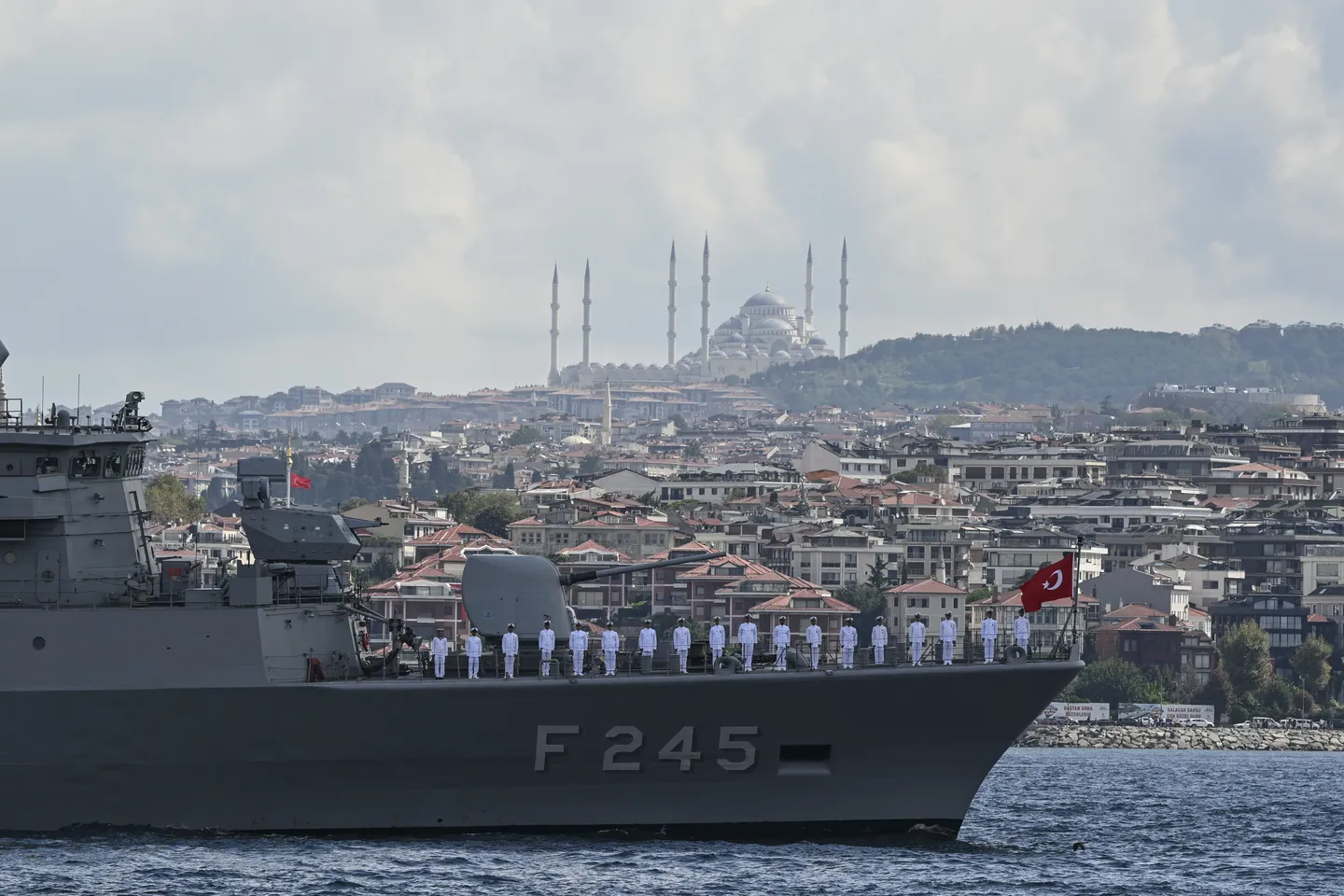
Türkiye is currently observing its 104th Victory Day, a national milestone that commemorates the pivotal 1922 military campaign that transformed a nation facing partition into a sovereign, independent state. This annual celebration, which also serves as Turkish Armed Forces Day, highlights the enduring connection between the country’s historic struggle for survival and the military’s central role in its national identity.
The roots of this commemoration lie in the aftermath of the First World War, a period when the Ottoman Empire faced collapse and the Entente powers moved to partition Anatolia. By May 1919, the situation grew dire as Greek forces, supported by the Allies, landed in Izmir and began an inland advance. In response, a grassroots resistance movement emerged, driven by the conviction that the future of Anatolia should be determined by its own people rather than by foreign delegations.
By August 1922, this resistance had evolved from scattered militias into a disciplined force capable of reclaiming its territory. The turning point arrived with the Great Offensive, launched on August 26. Turkish troops rapidly broke through Greek lines, capturing Afyonkarahisar the following day. On August 30, the Turkish army encircled and decisively defeated the core of the opposing forces at Dumlupinar in what is remembered as the Battle of the Commander in Chief. This victory cleared the path for the liberation of Izmir on September 9 and set the stage for the Mudanya Armistice, the Lausanne negotiations, and the eventual declaration of the Republic of Türkiye in 1923.
President Recep Tayyip Erdogan has characterized this victory as the resurrection of the nation, marking the moment when the country chose its own terms of survival. This historic success established a lasting national instinct: that sovereignty must be actively secured rather than merely assumed. This philosophy has guided a century of state-building, moving the nation from a position of vulnerability to one of strategic autonomy.
The evolution of this independence is perhaps most visible in the country’s modern defense sector. Once reliant on foreign suppliers, Türkiye now produces over 85 percent of its military equipment, ranging from advanced drones and naval vessels to armored platforms. In 2025 alone, the nation’s defense and aerospace exports exceeded $10 billion. These advancements support Türkiye’s status as NATO’s second-largest military by active personnel and have enabled it to become a key defense-industrial partner globally.
This growing influence was further demonstrated this August through a new joint defense agreement signed with Saudi Arabia and Pakistan, centered on collective deterrence. By participating in such regional security architectures, Ankara is increasingly shaping its own security environment rather than simply reacting to external pressures.
While the soldiers fighting at Dumlupinar in 1922 were focused on the immediate, existential question of whether Anatolia would remain their home, their victory laid the groundwork for everything that followed. From the establishment of the Republic to the development of a robust industrial base, the legacy of that August battlefield continues to define Türkiye’s path. Today, the 104th anniversary stands as a testament to a nation that refused to surrender its future and remains steadfast in its determination to shape its own destiny. The report also notes that august 30 marks the decisive battle in 1922 that halted the Greek advance in western Anatolia and paved the way for the final stages of the Turkish War of Independence, the withdrawal of occupying forces, and, ultimately, the establishment of the Republic of Türkiye. The report also notes that including commemorations of Mustafa Kemal Ataturk and of the soldiers who fought in the campaign, victory Day is being marked by ceremonies and public events across the country. The report also notes that it is necessary to look beyond the battlefield itself, to understand why August 30 remains so deeply embedded in Türkiye’s national identity. The report also notes that not by delegations in European capitals, the resistance that emerged in Anatolia was centred on a single refusal: its future would be decided by the people living there. The report also notes that the Turkish forces were ready to turn the tide, by August 1922. The report also notes that reaching Izmir on September 9 and reclaiming the city where the invasion had begun, the Turkish forces pressed their advance westward. The report also notes that that is how Turkish officials continue to view the significance of August 30.