

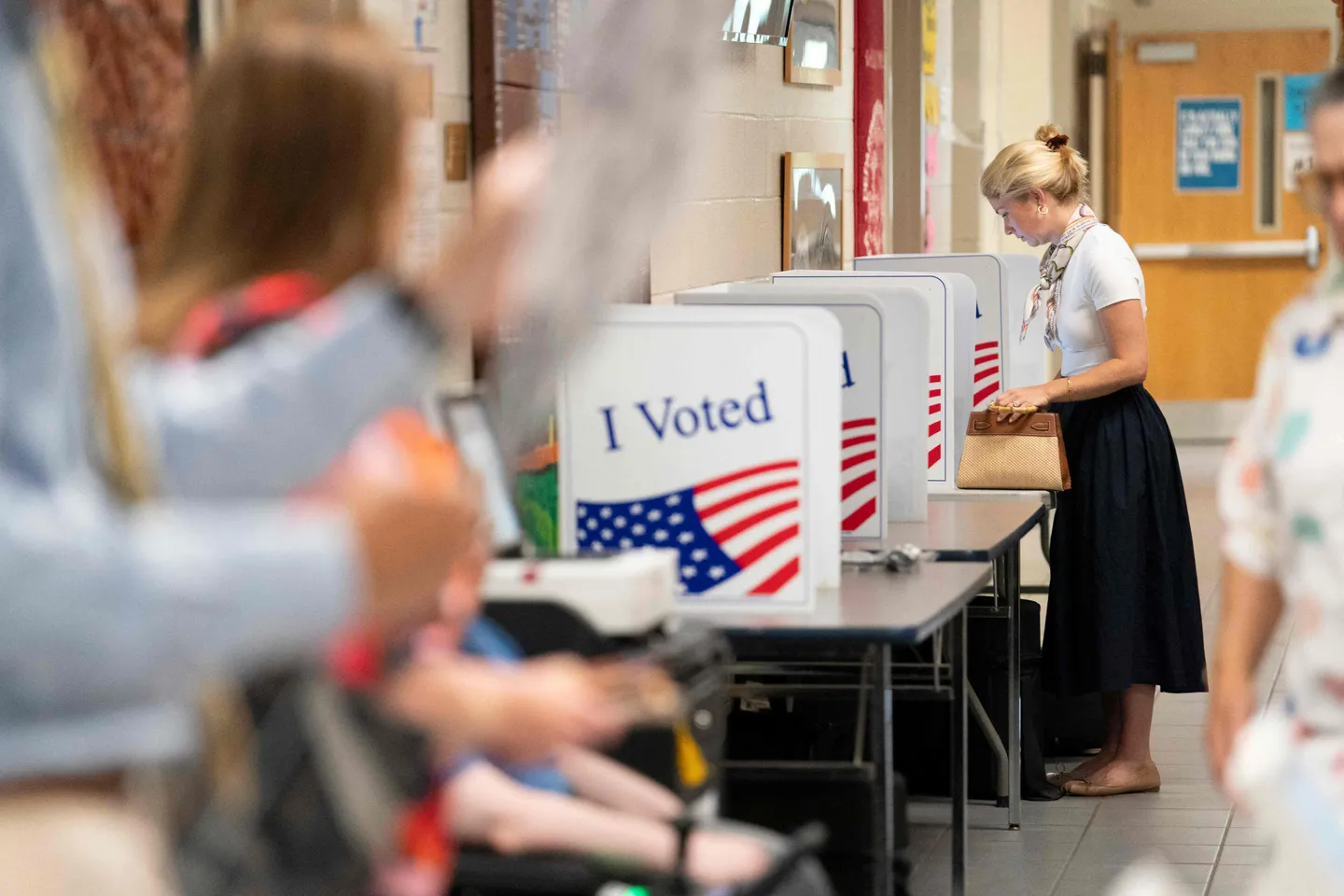
With only 66 days remaining until the 2026 midterm elections, the battle for control of the US Congress has entered a critical phase. Republicans currently maintain narrow majorities in both chambers, holding 219 seats in the House of Representatives compared to 213 for the Democrats, with three vacancies still pending. In the Senate, the GOP holds a 53-45 advantage, though this margin effectively narrows to 47 when accounting for two independents who caucus with the Democrats.
To secure control of both chambers, Democrats need to flip just three House seats and four Senate seats. Current polling data suggests a challenging environment for the GOP; the RealClearPolitics average shows Democrats leading by 6.4 points on the generic congressional ballot, a margin that has historically been sufficient to secure dozens of seats. Furthermore, the nonpartisan Cook Political Report recently reclassified races in Texas and Iowa from “lean Republican” to “toss-up,” citing concerns over candidate Ken Paxton’s approval ratings and the impact of rising fertilizer costs on Iowa’s agricultural sector.
Financial stakes have reached unprecedented levels, with corporate donors contributing a record $646 million to political campaigns during the 18-month period ending in June. This figure represents a 40 percent increase over the total spending seen during the 2024 presidential cycle, according to data from the watchdog group Public Citizen.
On the campaign trail, the parties are emphasizing starkly different narratives. In a swing district near Detroit, Democratic candidate Christina Hines noted that voters are primarily concerned with the high cost of living, specifically fuel, groceries, and healthcare. Hines highlighted the financial strain on families, noting that filling a minivan currently costs $73. Conversely, Republican Representative Mike Lawler is focusing his campaign in New York on the rise of democratic socialism, arguing that it represents a central platform for his opponents.
Strategic messaging reflects these priorities. While Democrats are attempting to refocus on economic relief, Republicans are heavily emphasizing the perceived threat of left-wing ideology. An analysis of Republican National Committee talking points from this month shows the word “Democrat” mentioned 73 times, while “gasoline” appears only once. This comes as national gas prices have remained above $4 for five consecutive weeks, averaging $4.18 last week. RNC talking points explicitly blame the Biden administration for these costs, asserting that “President Trump is fixing what Biden broke.”
Vice President JD Vance has echoed these themes, recently visiting Ohio to discuss homeownership and warn against the influence of radicals. Vance claimed that if such individuals gain control of Congress, they would implement the “craziest agenda America has ever seen.”
Internal dynamics within the Democratic Party remain a point of contention. At least eight members or supporters of the Democratic Socialists of America (DSA) have secured nominations this season, including seven for the House and Senate candidate Angie Nixon in Florida. While these candidates represent a small portion of the 257 seats currently held by Democrats, party officials are wary of the political fallout in swing districts.
Public perception of the DSA remains mixed. A July CNN/SSRS poll indicated that only 2 in 10 adults hold a favorable view of the organization, while roughly one-third view it unfavorably. However, approximately 7 in 10 Democrats or Democratic-leaning voters expressed that they would feel “enthusiastic” or “okay” about a candidate identifying as a democratic socialist.
As the election approaches, the focus shifts to the logistics of voting. Mail-in ballots will become available in 17 states and Washington, DC, during the latter half of September, with the rest of the country following in October. Early in-person voting is set to begin even sooner, with Minnesota and South Dakota opening polling stations on September 18—46 days before Election Day.
Lawmakers will have limited time in Washington to address these issues, as both chambers are scheduled to be out of session for nearly all of October and the first week of November. This planned recess is intended to allow members to return to their home districts to campaign during the final stretch of the election cycle. The report also notes that washington, DC — Sixty-six days remain before Americans vote in the crucial 2026 midterms, and Republicans hold narrow majorities in both chambers, leaving control of Congress closely contested. The report also notes that the numbers tell a nervous story for Republicans. The report also notes that the Senate map still favours Republicans on paper: most of the competitive seats sit in territory Trump won comfortably. The report also notes that but what’s left is bracing for a fight, mid-decade redistricting has shrunk the number of genuinely competitive districts. The report also notes that money is pouring in to match the stakes. The report also notes that “It costs me $73 to fill up our minivan right now,” she said. The report also notes that this is just not acceptable for working families.”. The report also notes that radical politics is exactly what Republican Representative Mike Lawler wants to talk about in his New York battleground district, some 600 miles away.