

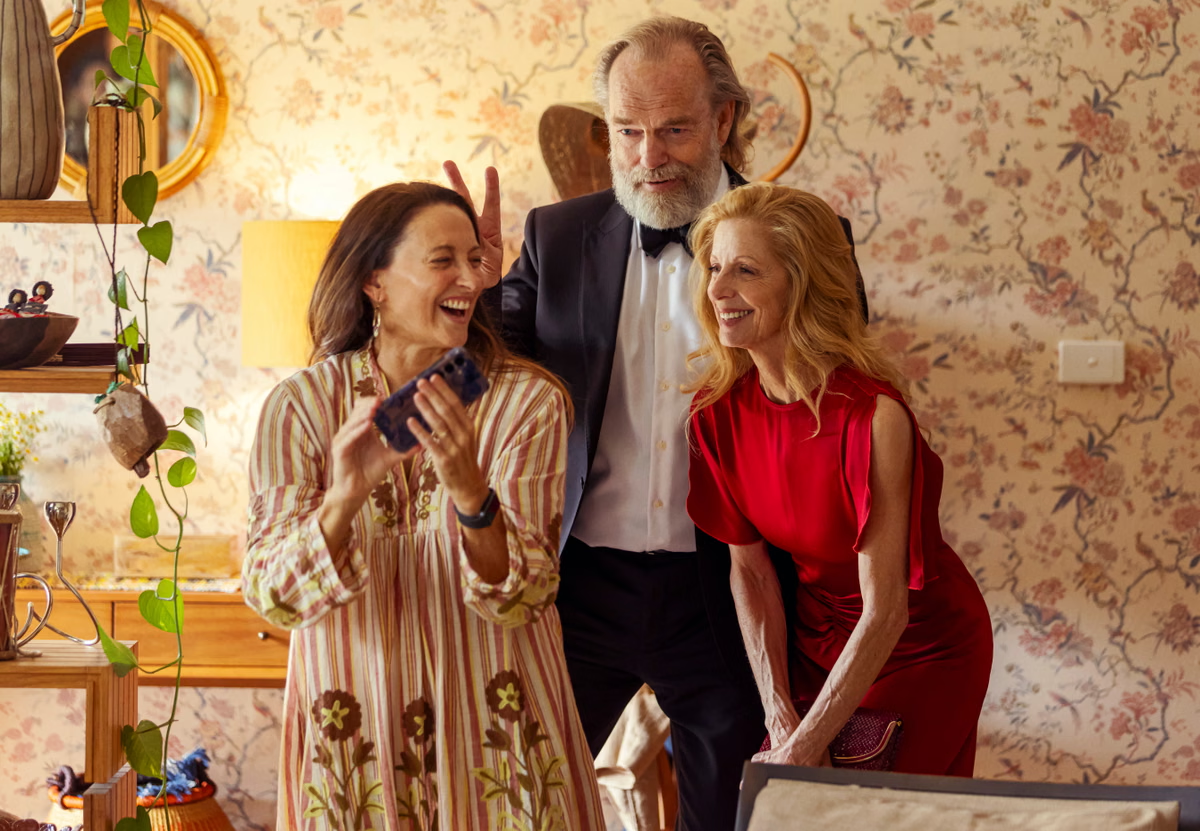
Television has increasingly ventured into uncharted narrative territory, shifting focus toward stories that explore the complexities of aging. Following a trend of successful character-driven dramas, the new Australian six-part series Dalliance stands out as a remarkable addition to this landscape. Written by Pip Karmel, Chris Lee, Liz Doran, and Jock Serong, and directed with nuance by Emma Jackson and Matt Saville, the show offers a refreshing and honest look at a group of friends navigating their 60s.
The story centers on Billy, a jovial retired cameraman played by Hugo Weaving, who serves as the catalyst for reuniting a circle of long-time friends. The narrative kicks off in Sydney Harbour, where Billy encounters Dani, a caterer, while attempting to evade his brother, Gary, played by David Wenham. Gary, a former jailbird and addict, is pursuing Billy over a dispute involving money and an inheritance. Their strained relationship is captured in Gary’s blunt assessment: “Chalk and cheese,” he remarks, adding, “If chalk hated cheese’s guts.”
After Billy wins a long-odds bet for Dani, the two form an unlikely bond, leading to a pact where Dani “borrows” Billy to serve as her plus-one for an upcoming event. This arrangement, which his wife Rose (Georgie Parker) approves of with the clear stipulation of “no sex,” sets the stage for the series. Their shared evening unfolds through a series of unforced, naturalistic flashbacks that reveal the deeper history of the group.
The ensemble cast brings to life a rich tapestry of relationships. Billy’s rugby league friends include the playboy Mani (Kirk Torrance), the domesticated Luke (Wayne Blair), and Rex (Russell Dykstra), who is in a relationship with the younger Dylan (Ryan Panizza). The women of the group—Sarah (Catherine McClements), Adele (Carolyn Bock), and Rose—share the kind of easy, rhythmic banter that only develops over decades of friendship. Set in 2018, the show captures these characters as they navigate life’s ups and downs, from marital decisions and dating apps to the realities of aging.
Dalliance is less concerned with traditional plot mechanics, such as mysteries or crimes, and more focused on character portraits. It explores the profound benefits of long-term connections and the wisdom that comes with age. While the characters face moments of conflict—often resolving them with a mix of humor and intensity, such as the threat to “cut your balls off” if a mistake is repeated—the series ultimately emphasizes the resilience of human bonds. It is a heartfelt, beautifully written exploration of the harvest one reaps after a lifetime of investment in relationships, work, and family. The report also notes that it stars Hugo Weaving as bonhomous retired cameraman Billy who is the catalyst for the reunion of enough old friends – all in their 60s – to provide viewers with a feast of storylines, hilarious and heartbreaking by turn. The report also notes that the latter married to Luke for 34 years, both date from the same era – as does Rose – and they have the rude, easy banter and rhythms that only decades of shared his, sarah (Catherine McClements) and Adele (Carolyn Bock). The report also notes that it’s 2018, but as Sarah notes, what is there in it that can go off. The report also notes that television continues its brave expeditions into unknown narrative lands, w ith Dalliance. The report also notes that directors, stars and, oh my goodness, sometimes it was just wall-to-wall womanity, you know?) in the post-Weinstein years, it was first forced to venture into women’s stories (using female writers. The report also notes that previously unassailable figures were toppling like ninepins and investors needed to take refuge in those unlikely to have problematic pasts who were likely to tank projects the moment any reporter turned a beady eye upon them. The report also notes that and were often capable of anchoring quite interesting, intelligent or funny shows, women were not as boring as we had been led to believe.