

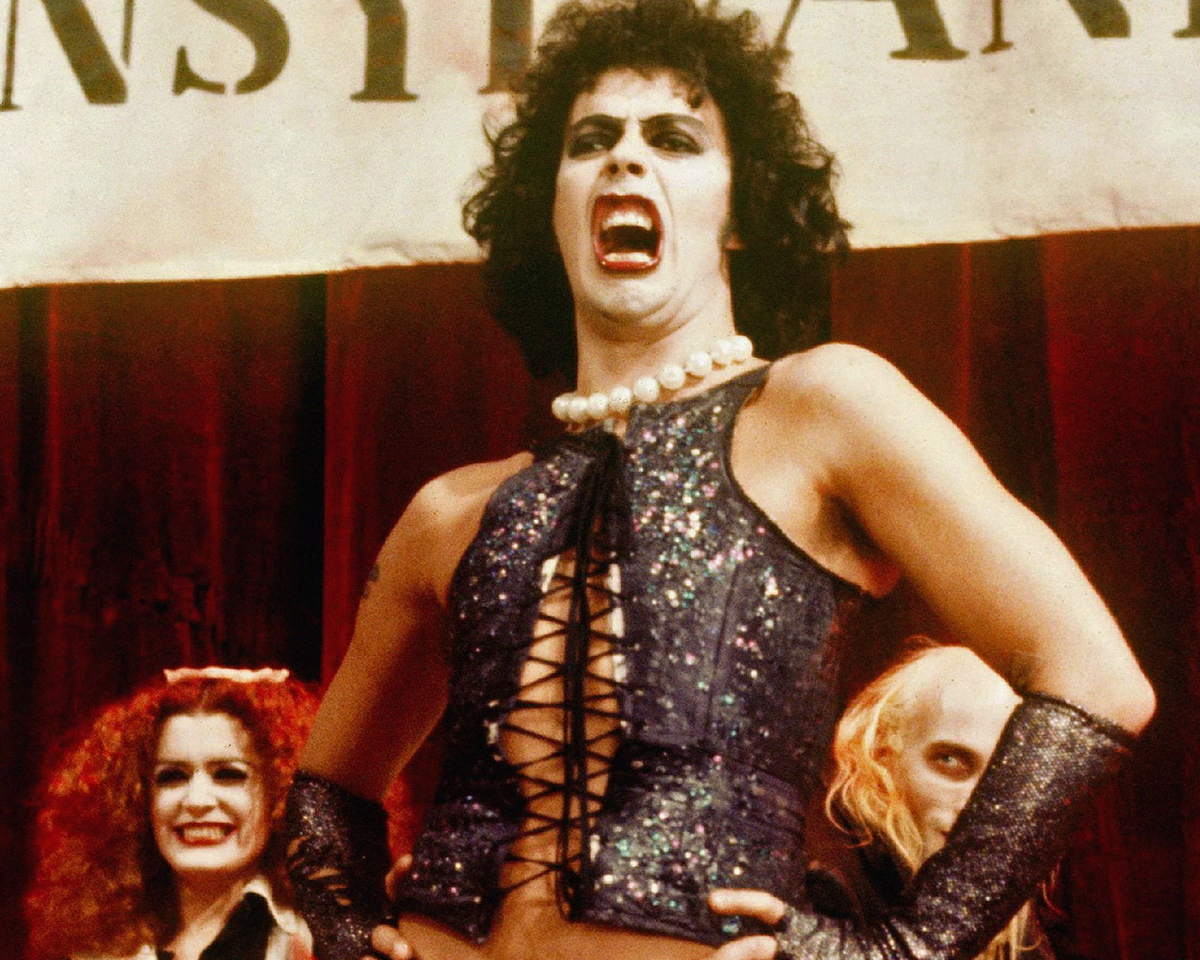
Tim Curry, a performer of immense range and vocal talent, occupied a unique space in the pre-history of contemporary gender fluidity and trans identity. While he earned Tony nominations for his diverse stage work—including roles as Salieri in Amadeus, Alan Swann in My Favorite Year, and King Arthur in Monty Python’s Spamalot—he remained most indelibly linked to his portrayal of Dr. Frank-N-Furter in the 1975 film adaptation of The Rocky Horror Picture Show. As the “sweet transvestite from Transsexual, Transylvania,” Curry’s vampiric, fishnet-clad character challenged the rigid, dull conventions of the era, positioning him as a central figure in the sexual peacock movement that emerged alongside the glam rock of David Bowie and Marc Bolan.
The journey of the film itself was far from guaranteed. Curry recalled the grim atmosphere during early private screenings with 20th Century Fox executives, where the silence in the room signaled a lack of institutional faith. However, the film found its footing through the vision of publicity director Tim Deegan, who recognized the potential for the movie to anchor the burgeoning “midnight” circuit in New York. This grassroots success, fueled by audience participation and word-of-mouth, effectively launched the underground cult film scene, paving the way for future classics like Eraserhead, Pink Flamingos, and Night of the Living Dead.
Despite the massive cultural impact of the role, Curry often noted that the character’s iconic status acted as a double-edged sword. He frequently discussed how the intense typecasting stymied his film career for years, forcing him to rely heavily on voiceover work for income. Nevertheless, he acknowledged the role provided a form of financial security, likely bolstered by royalties from the million-selling soundtrack. The film’s campy, B-movie aesthetic—which included subtle nods to the post-war sword-and-sandal era, such as references to bodybuilder Steve Reeves—perfectly captured the subversive, playful spirit of the 1970s.
Curry’s career remained resilient, and he found a new wave of cult appreciation in the 1985 mystery film Clue. Playing the manic butler Wadsworth, he navigated the movie’s three alternative endings with the same theatrical precision that defined his stage career. While he often felt that no subsequent screen role could replicate the brief, explosive impact of Dr. Frank-N-Furter, his body of work stands as a testament to his versatility.
Ultimately, Tim Curry’s contribution to pop culture extended beyond a single performance. As a star who bridged the gap between underground proto-punk sensibilities and mainstream theater, he provided a generation with a blast of subversive, unapologetic fun. His passing, alongside his notable work in projects like Stephen King’s It, marks the end of a career that spanned five decades of stardom, characterized by a constant evolution from the stage to the screen. The report also notes that he was an icon – though maybe now a dimly remembered icon – of the 70s underground cinema and proto-punk. The report also notes that the screen version of the 1973 stage show, he was the sensational Dr Frank-N-Furter in the thoroughly outrageous Rocky Horror Picture Show (1975). The report also notes that this was the drop-dead gorgeous “sweet transvestite from Transsexual, Transylvania” in mascara and fish-nets, a vampiric sex outlaw who challenges the dull complacency of the timid American teen couple, Janet and Brad, p. The report also notes that the issues of trans identity and gender fluidity couldn’t have been more contemporary, and Tim Curry was an integral part of what might be called their pre-history in pop culture, o ver the past decade. The report also notes that but it was his strange destiny to be remembered for one role: at once indelibly prominent and weirdly peripheral. The report also notes that these hapless straights had got lost and found themselves in his exotic domain.