

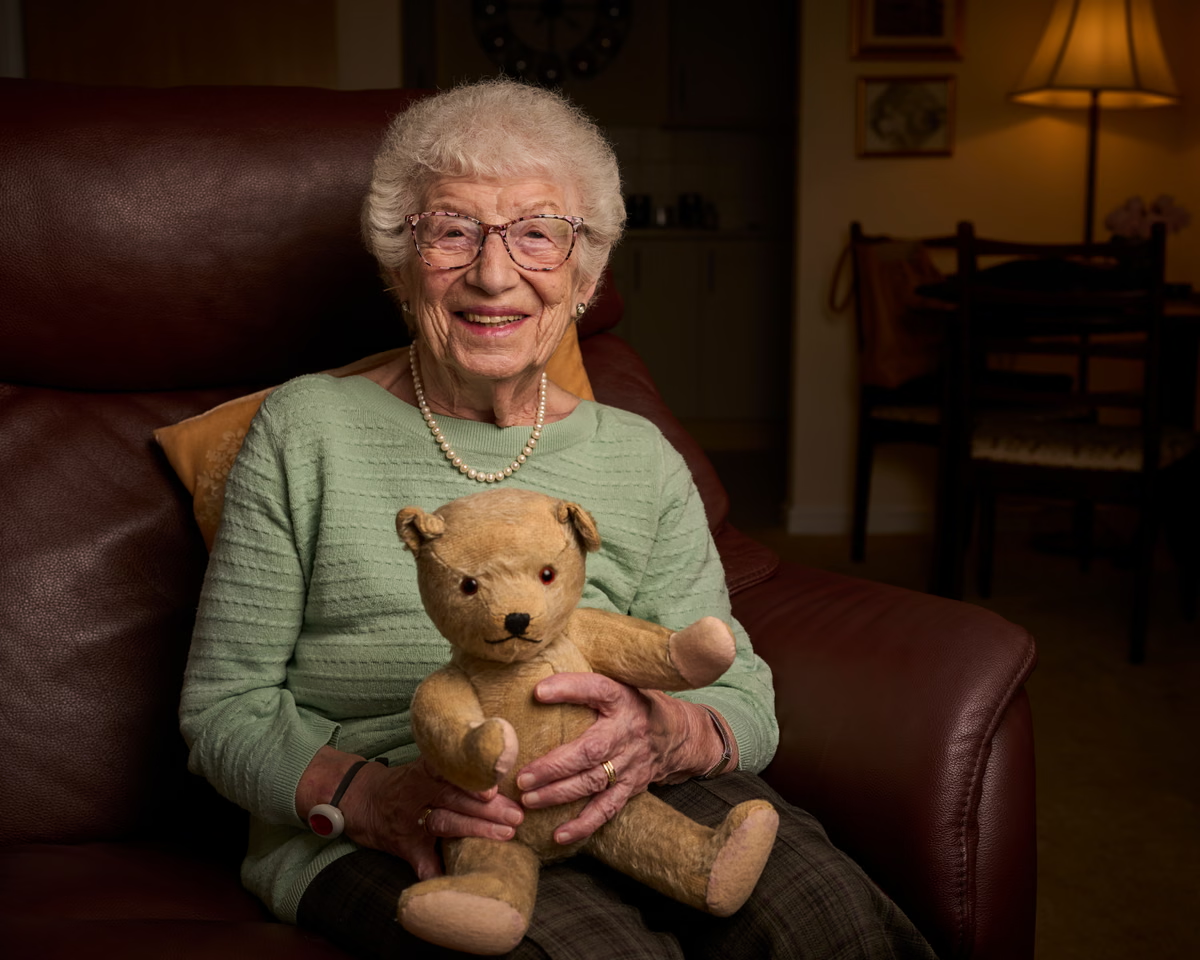
Gabriele Keenaghan, a 99-year-old retired head teacher from North Shields, is preparing for an emotional journey back to Vienna to mark her centenary. The trip will bring her back to the Westbahnhof railway station, the site where she last saw her family in April 1939 before boarding a Kindertransport train to Britain. At the time, the 12-year-old was instructed that tears were forbidden, a memory that remains vivid as she reflects on the terrifying sight of Nazi soldiers in black uniforms patrolling the platform.
Reflecting on the impending visit, Keenaghan admitted she has not fully processed how she will feel, though she anticipates it will be an emotional experience. Because her actual birthday falls in November, when the Austrian climate is harsh, she has decided to celebrate early, joking that she will follow the tradition of the late Queen Elizabeth II by having two birthdays. She will be accompanied on this journey by several generations of her family, including her daughters, Pat and Christine.
The trip was nearly derailed after Lufthansa cancelled flights from Newcastle, but the family was assisted by a benefactor who provided a private jet. Keenaghan, who was awarded the British Empire Medal for her contributions to Holocaust education, hopes that sharing her story will continue to promote tolerance and diversity. She remains skeptical about whether society truly learns from the past, pointing to the current state of the world as evidence of ongoing challenges.
Keenaghan’s childhood was upended when the Nazis invaded Austria. An only child, she was initially unaware of her Jewish heritage, as her mother, Hildegard, was Catholic and her father, Josef, was a Jewish stove manufacturer. Following her mother’s sudden death in 1935, she was attending a Catholic convent school when authorities arrived to reassign students. She recalled being the only girl left in the hall after others were called away, only to be told she was being transferred to a Jewish school and forced to wear a yellow star. She described the experience as bewildering and painful, noting that she was frequently targeted with antisemitic abuse.
Her father, Josef, was eventually deported to the Łódź ghetto in Poland and is believed to have been murdered in an extermination camp; she never saw him again. Her grandmother, also named Gabriele, organized her escape through the Kindertransport, a rescue effort that brought approximately 10,000 Jewish children to the UK. After arriving in Britain, Keenaghan learned the language quickly and eventually worked as a nanny in Woldingham, Surrey. She has vivid memories of the euphoria on VE Day, when she joined the crowds in London to celebrate alongside the royal family.
Throughout her life in the north-east of England, where she raised her own family and became a middle-school head teacher, she returned to Austria annually to visit relatives. However, she had avoided the Westbahnhof station until now. Her daughters hold faint memories of their great-grandmother, whom they affectionately called “Noddy Grandmother” because she would nod along to conversations despite not speaking English. As Keenaghan prepares to revisit the site that changed her life, she remains focused on the importance of remembering history to prevent its repetition. The report also notes that “People had been told that there were to be no emotional scenes, they didn’t want any emotion shown by anyone. The report also notes that fortunately, a good samaritan came to the rescue offering the use of a private jet, and the family admit they have been bowled over by the generosity. The report also notes that “The authorities came into the convent to tell us which schools we had to go to. The report also notes that at the end, I was the only one left standing. The report also notes that “I hadn’t realised that my father was a Jew. The report also notes that i don’t think I even knew what being a Jew meant.”. The report also notes that she remembers, she left with 150 other children, taking the train to the Netherlands and then a boat to Harwich, alone and scared but also probably excited.